


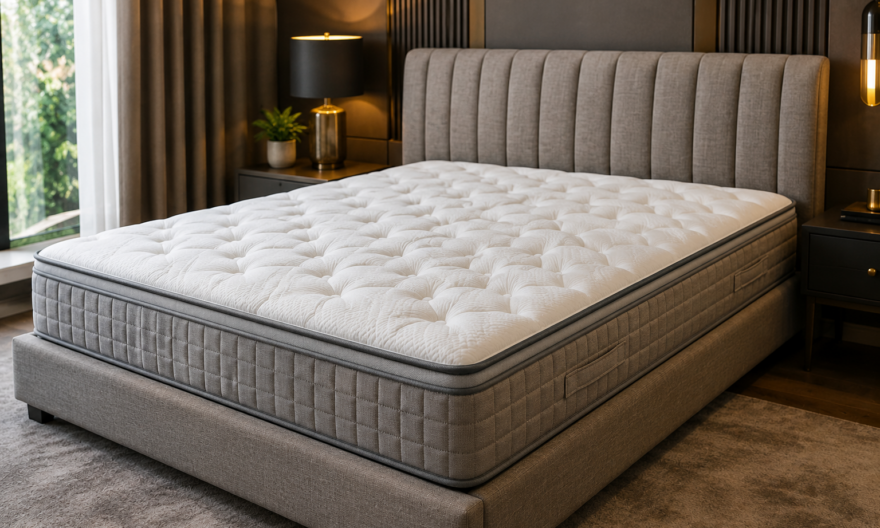
Memory foam, latex, and hybrid mattresses each use distinct materials and construction methods that affect how they feel, perform, and last over time. Memory foam contours to the body and absorbs motion. Latex offers responsive bounce with natural breathability. Hybrids combine innerspring coils with foam or latex layers to balance support and comfort. The right choice depends on sleeping position, body weight, and heat sensitivity.
If you’ve been searching for the right mattress in Singapore, you’ve likely come across all three types — and probably felt confused by the conflicting claims. A latex mattress Singapore shoppers tend to favour often sits in a different price bracket and comfort category than memory foam or hybrid options. Understanding what’s actually inside each mattress makes the decision far less overwhelming.
How Memory Foam Mattresses Are Built
Memory foam — formally known as viscoelastic polyurethane foam — was originally developed by NASA in the 1960s to improve seat cushioning. Today, it’s one of the most widely used mattress materials globally, prized for its pressure-relieving properties.
A memory foam mattress typically consists of two to three layers:
- Comfort layer: High-density memory foam that responds to body heat and weight, moulding to your shape
- Transition layer: Medium-density foam that prevents you from sinking too deeply
- Base layer: High-density support foam that provides overall structure and durability
The defining characteristic is slow recovery — when you press into memory foam, it takes a moment to return to its original shape. This is what makes it exceptional for pressure point relief, particularly around the hips and shoulders.
What Memory Foam Does Well
- Excellent motion isolation — ideal for couples with different sleep schedules
- Strong contouring for side sleepers and those with joint pain
- Absorbs and reduces partner disturbance throughout the night
Where Memory Foam Falls Short
- Traditional memory foam retains heat, though gel-infused and open-cell variants reduce this significantly
- Can feel restrictive for combination sleepers who shift positions often
- Not naturally responsive — moving around requires more effort compared to latex
How Latex Mattresses Are Constructed
Latex mattresses use rubber derived from the Hevea brasiliensis tree or synthetic alternatives. There are two main processing methods, and the difference matters more than most buyers realise.
Dunlop latex is poured in a single continuous process, which causes heavier particles to settle at the bottom. The result is a denser, firmer core — excellent for support. Talalay latex uses a vacuum and flash-freezing process, distributing particles more evenly throughout. This creates a lighter, more consistent feel with a slightly softer, more buoyant texture.
A quality latex mattress in Singapore will typically feature either:
- 100% natural latex throughout (the premium option)
- A natural latex comfort layer over a Dunlop support core
- Blended or synthetic latex in more budget-conscious configurations
Why Latex Suits Singapore’s Climate
Singapore’s year-round heat and humidity make breathability a key factor when choosing a bed mattress. Natural latex is inherently more breathable than traditional memory foam. Its open-cell structure and pin-core perforations allow air to circulate continuously, helping to regulate sleeping temperature — an important consideration for local buyers.
Latex also resists dust mites and mould naturally, which matters in a humid tropical environment. For allergy-sensitive sleepers, this is a meaningful advantage over synthetic alternatives.
What Latex Does Well
- Responsive and buoyant — easier to change sleeping positions than memory foam
- Naturally cooler due to open-cell airflow and pin-core design
- Durable — high-quality natural latex can last 10 to 15 years with proper care
- Resistant to dust mites, mould, and mildew — suited to tropical climates
Where Latex Falls Short
- Heavier than foam options, making rotation and moving more difficult
- Higher upfront cost, particularly for 100% natural Talalay configurations
- Not suitable for those with latex allergies (though synthetic options exist)
How Hybrid Mattresses Are Built
A hybrid mattress combines a coil spring support system with one or more foam or latex comfort layers. The goal is to offer the responsiveness and airflow of innersprings alongside the pressure relief of modern foam or latex materials.
The core of most hybrids uses individually pocketed coils — each spring wrapped in its own fabric pocket. This allows each coil to move independently, which improves motion isolation compared to traditional open-coil systems. The comfort layers above the coil base vary widely, and this is where brands differentiate most.
Pocket Coils vs. Open Coils — What’s the Difference?
Open-coil (Bonnell) systems connect all springs, so movement transfers across the mattress. Pocketed coils respond individually to weight, reducing motion transfer and offering more targeted support. For couples buying a mattress online in Singapore, pocketed coil hybrids are generally worth the premium over open-coil models.
What Hybrids Do Well
- Better airflow than all-foam options due to the coil layer
- Responsive edge support — useful for sitting on the side of the bed or for those who sleep near the edge
- Suits a wide range of sleeping positions, particularly back and stomach sleepers
- Balances contouring comfort with structured support
Where Hybrids Fall Short
- Heavier and bulkier, which complicates delivery and rotation
- Higher price point than all-foam equivalents at the same quality tier
- Coil lifespan depends heavily on spring gauge and construction quality
Memory Foam vs. Latex vs. Hybrid: Side-by-Side Comparison
Here’s a practical breakdown of how the three mattress types compare across the factors that matter most to Singapore buyers.
| Feature | Memory Foam | Latex | Hybrid |
|---|---|---|---|
| Pressure Relief | Excellent | Very Good | Good |
| Motion Isolation | Excellent | Good | Good (pocketed coils) |
| Breathability | Moderate (gel variants better) | Very Good | Excellent |
| Responsiveness | Low | High | High |
| Edge Support | Moderate | Good | Excellent |
| Durability | 7–10 years | 10–15 years | 8–12 years |
| Best For | Side sleepers, couples | Hot sleepers, allergy-prone | Back/stomach sleepers, couples |
| Price Range (SGD) | Mid | Mid–High | Mid–High |
Which Mattress Type Suits Which Sleeper?
There is no universally “best” mattress — only the best mattress for a specific sleeper profile. Here’s a practical guide:
Side sleepers benefit most from memory foam or soft-to-medium latex. The pressure relief at the shoulder and hip contact points reduces discomfort and prevents numbness over long sleep periods.
Back sleepers need balanced support to maintain spinal alignment. Medium-firm latex or a hybrid with a quality coil system works well, keeping the lumbar region supported without excessive sinkage.
Stomach sleepers require firmer surfaces to prevent the hips from sinking below the spine. Firm latex or a hybrid with a sturdy coil base are typically the better options.
Couples with different preferences will find that hybrids or latex mattresses with zoned support offer the most versatility — particularly if one partner runs hot or shifts positions frequently during the night.
Understanding Firmness Ratings in Context
Firmness is subjective and body-weight dependent. A mattress rated medium-firm may feel soft to a 90kg sleeper and firm to someone weighing 55kg. When buying a luxury mattress in Singapore, it’s worth identifying whether the brand uses industry-standard firmness scales or defines firmness relative to their own product range — both approaches exist in the local market.
A general rule: lighter sleepers tend to need softer surfaces to feel adequate pressure relief, while heavier sleepers require firmer support to prevent excessive sinkage and spinal misalignment.
What to Look for When Buying a Mattress Online in Singapore
Purchasing a mattress online without trying it first requires a different level of due diligence. These are the practical checks worth doing before committing:
- Trial period: Look for a minimum 100-night sleep trial — this gives enough time to adjust and assess comfort
- Certifications: OEKO-TEX® certification or CertiPUR-US® certification confirms that foam materials meet safety and emissions standards
- Return policy: Confirm whether returns are free, collection-based, and whether a full refund applies
- Warranty length: Quality mattresses typically carry a 10-year warranty; shorter periods may indicate lower confidence in durability
- Material transparency: Reputable brands disclose foam density (kg/m³) and latex type — if this information isn’t available, ask before buying
Happie offers a curated range of mattresses built for Singapore’s climate and sleeping habits — including options in memory foam, latex, and hybrid configurations. Their product pages are detailed enough to compare materials and constructions directly, making the decision considerably easier for first-time buyers and upgraders alike.
Frequently Asked Questions
Is a latex mattress better than memory foam for hot sleepers in Singapore?
Yes, in most cases. Natural latex has an open-cell structure and pin-core perforations that allow better airflow than traditional memory foam. In Singapore’s humid climate, this breathability advantage is meaningful and makes latex a consistently popular choice among heat-sensitive sleepers.
How long does a latex mattress typically last?
High-quality natural latex mattresses generally last between 10 and 15 years with proper care and regular rotation. Synthetic and blended latex options tend to have a shorter lifespan of around 7 to 10 years, comparable to quality memory foam.
What is the difference between Dunlop and Talalay latex?
Dunlop latex is denser and firmer, produced through a simple continuous pour process. Talalay latex is lighter and more consistent in feel, using vacuum and flash-freeze processing. Dunlop is typically used in support cores; Talalay is favoured for comfort layers where a softer, more buoyant feel is desired.
Are hybrid mattresses worth the extra cost compared to all-foam options?
For back and stomach sleepers, couples, or anyone who finds all-foam mattresses too warm, hybrids often justify the price difference. The coil system improves airflow and edge support significantly. However, for side sleepers prioritising pressure relief and motion isolation, a quality all-foam or latex mattress may offer better value.