

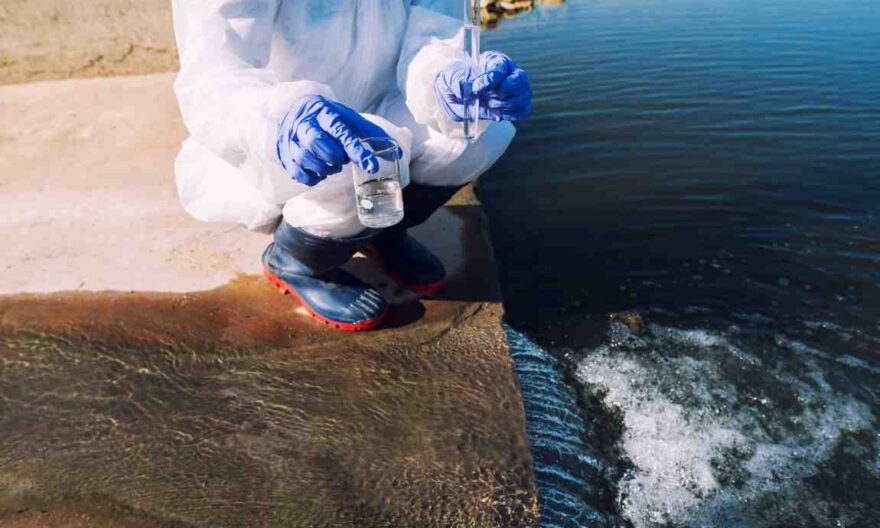
Treated wastewater can be safely reused for a variety of industrial applications, including cooling tower make-up water, boiler feed, landscape irrigation, and process cleaning. Structured wastewater treatment can greatly reduce fresh water consumption, discharge costs, and compliance with ever-tightening environmental regulations in Malaysian industries.
Why Malaysian Industry Can No Longer Afford to Ignore Water Recycling
Malaysia gets plenty of rain, but the truth is that the pressure on fresh water is growing. The country’s water supply infrastructure is under pressure from rapid industrialization, urban growth, and climate variability. SPAN said non-revenue water losses and increasing industrial demand continue to put pressure on distribution systems throughout Peninsular Malaysia.
For manufacturing facilities, the financial stakes are just as urgent. Industrial water tariffs in Malaysia differ from state to state and depend on usage volume, but facilities that use large volumes for process use are facing higher utility bills. The use of treated effluent for internal reuse is not only an environmental decision; it is a commercial decision.
What is Industrial Wastewater Reuse?
Industrial wastewater recycling is the collection, treatment, and reuse of used water within the plant instead of its complete discharge. The treated water does not have to be of drinking water quality, but only of a quality threshold that is required for the planned reuse application.
This is a major difference. Many facilities over-engineer their treatment targets when it’s not needed. A good system is well designed to match the intensity of treatment to the end use requirements and to keep the capital and operating costs in proportion.
Common Industrial Uses of Treated Wastewater Reuse
Not all reuse applications have the same water quality requirements. In Malaysia, industrial plants generally recycle treated effluent in the following manner:
Make-Up Water Cooling Towers
Cooling systems are one of the largest uses of fresh water in manufacturing plants. Treated wastewater with controlled levels of conductivity, pH, and biological oxygen demand (BOD) can be used as make-up water, greatly reducing the need to draw on freshwater. This represents one of the most economical reuse pathways there is.
Boiler Feed Water
Further polishing of the treated effluent, typically by reverse osmosis or ion exchange, can achieve boiler feed specifications. This is especially true for plants in the food and beverage, textile, and chemical industries, which have a consistent demand for steam.
Equipment and Floor Cleaning
Secondary treated water that satisfies basic hygiene thresholds is suitable for general cleaning inside industrial premises. The application requires minimal additional processing and provides immediate volume savings.
Landscape and Greenspace Irrigation
Treated effluent can be reused for irrigating the landscaped perimeters of industrial parks and manufacturing campuses. In Malaysia, the treated effluent for land application must comply with the Standard B discharge parameters as specified under the Environmental Quality Act 1974 and the guidelines given by the Department of Environment (DOE).
Non-contacting Process Water
In some manufacturing processes, water is used that does not come into contact with the product itself, such as for rinsing the outside of equipment, cooling conveyors, or suppressing dust. These are good candidates for water reuse in Malaysia, where freshwater substitution is easy to implement.
The Treatment Technologies that Enable Reuse
Conventional effluent treatment is more than reuse-grade treatment. The goal changes from meeting discharge standards to producing water appropriate for a particular secondary use. Common technologies implemented in Malaysian industrial facilities include:
- Membrane Bioreactor (MBR): Integrating biological treatment and ultrafiltration membranes to provide a consistently high-quality effluent suitable for most non-potable reuse applications.
- Reverse Osmosis (RO): Dissolved salts, heavy metals, and trace contaminants are eliminated. Critical to boiler feed and reuse of high-purity process water.
- Activated Carbon Filtration: Essential for reuse applications where aesthetics or operations are critical. Removes residual organics, color, and odor.
- Ultrafiltration (UF) polishes secondary-treated water by removing suspended solids and microbial loads, which extends the life of downstream reverse osmosis (RO) membranes.
- Disinfection (UV/Chlorination): The final step in the treatment process to ensure microbiological safety before the water is returned to operational systems.
The optimum combination is a function of the quality of the incoming effluent and the intended reuse standard. The best starting point is a site-specific treatability study.
How much water—and money—could be saved?
The savings vary by industry, but the figures are meaningful. A typical middle-sized manufacturing plant in Malaysia can realistically treat and reuse 40 to 60 percent of the 500 to 1,000 cubic meters of fresh water it uses each day. That amounts to annual savings of RM70,000 to RM300,000 depending on volume and system design, at Selangor’s industrial water tariff of about RM1.00–RM1.50 per cubic meter (Syarikat Bekalan Air Selangor, SYABAS tariff structure).
Besides direct savings on tariffs, facilities also benefit from cost savings on their effluent discharge fees because the reuse of treated wastewater reduces the volume and load discharged to public sewers or receiving water bodies, both of which have regulatory cost implications under Malaysia’s sewerage charges framework.
Regulatory Context: What Malaysian Industries Should Know
The Environmental Quality (Industrial Effluent) Regulations 2009 is the primary regulatory instrument for industrial effluent in Malaysia and is administered by the DOE . “These rules do set discharge standards but do not prohibit or require internal water reuse and are for the most part left to voluntary efficiency efforts.”
However, the National Water Policy and 12th Malaysia Plan (2021–2025) for Malaysia include explicit targets on water demand management and industrial water efficiency. Facilities proactively implementing industrial water recycling systems are aligned with national policy direction and are better positioned for future compliance requirements as regulations tighten.
The DOE’s Green Technology Financing Scheme (GTFS) and incentives under MIDA (Malaysian Investment Development Authority) also encourage capital investment in water recycling infrastructure, making the present a practical time to act.
Wastewater Reuse: Building the Business Case
Sustainability managers and facility owners often run into internal resistance when proposing projects for water reuse. The business case is built on three pillars:
| Pillar | What to Measure | Why It Matters |
|---|---|---|
| Save Money | Reduction of tariffs for freshwater, reduction of discharge fees | Directly boosts operational margins |
| Risk Mitigation | Less exposure to supply disruptions and tariff increases | Ensures continuity of production |
| ESG Compliant | KPIs of water intensity, sustainability reporting measures | Enhances credibility with investors and customers |
Typically the payback period for reused wastewater is in the range of two to five years when all three pillars are integrated, which is competitive with most capital investments for improvements in industrial processes.
Beginner’s Guide: Practical Steps
Moving from intention to implementation doesn’t have to be complicated. A structured approach mitigates risk and accelerates results:
- Have a water audit done. Map all sources of inputs, uses, and discharge points for freshwater. Define volumes, quality parameters, and potential reuse streams.
- Set reuse targets. Identify operational areas where treated effluent can be substituted for fresh water, as well as quality thresholds.
- Pay for a testability test. Test your actual effluent against the target reuse quality to choose the right treatment train.
- Evaluate technology alternatives. Compare MBR, RO, and hybrid configurations for capital cost, footprint, energy use, and reliability.
- Hire a specialist solution provider. Work with engineers who have experience in DOE compliance and industrial process requirements in Malaysia.
- Optimize and observe. Install real-time monitoring to measure the volume, quality consistency, and cost savings of treated wastewater reuse over time.
Water: Making It Work Harder
Malaysian manufacturers are facing increasing pressure from customers, investors, and regulators to demonstrate responsible water stewardship. Recycling wastewater is no longer a niche sustainability initiative. It is a proven operational strategy that reduces costs, lowers risk, and improves environmental credentials all at the same time.
The technology is proven, the regulatory incentives are there, and the financial returns are demonstrable. For most facilities, the question is not whether to act, but where to start. Techkem Water offers industrial wastewater treatment and water recycling solutions that are specifically designed for the Malaysian manufacturing environment, from the initial design of the system to long-term operational support.
Common Questions
Which industries in Malaysia benefit from wastewater recycling the most?
Water-intensive businesses such as food and beverage, semiconductor, textile, and chemical industries are the biggest beneficiaries. These are typically high water-consuming sectors with constant effluent volumes, making internal water recycling systems operationally simple and financially viable to implement.
Is recycled water safe for use in industrial processes?
Yes, if it is treated to the appropriate standard for its intended use. Treated wastewater used for cooling, cleaning, or irrigation does not require potable-grade quality. Properly designed treatment systems, such as MBR, UF, or RO, ensure that the reused water meets the specific quality parameters required for each industrial use.
What is the industrial wastewater recycling regulation in Malaysia?
The Environmental Quality (Industrial Effluent) Regulations 2009 set the discharge standards, and the National Water Policy and 12th Malaysia Plan provide the targets for water demand management. Even for facilities that reuse treated effluent internally, discharge to public drains or waterbodies must still meet effluent quality standards prescribed by DOE.
How long does it take to get a return on investment on a water recycling system?
In Malaysia, most industrial water recycling systems can achieve payback within 2 to 5 years depending on the freshwater tariff rates, effluent volumes, and system complexity. Facilities with high water use and existing treatment infrastructure tend to have shorter paybacks because of reduced incremental capital costs.
What’s the difference between water recycling and water reclamation?
Water recycling refers to the use of treated effluent within the same facility or operation. Water reclamation is generally the process of treating wastewater to a higher standard for supply to external users or for sensitive uses. The most preferred and immediately applicable approach to reduce freshwater demand in the Malaysian industrial setting is on-site recycling.
Is it feasible for small and medium-sized manufacturers to have wastewater recycling systems?
Yep. Modular treatment systems come in different sizes, and financing support under Malaysia’s Green Technology Financing Scheme (GTFS) reduces upfront capital barriers. Basic reuse infrastructure for treated wastewater is generally economically viable for SMEs consuming a consistent volume of over 50 cubic meters a day.