

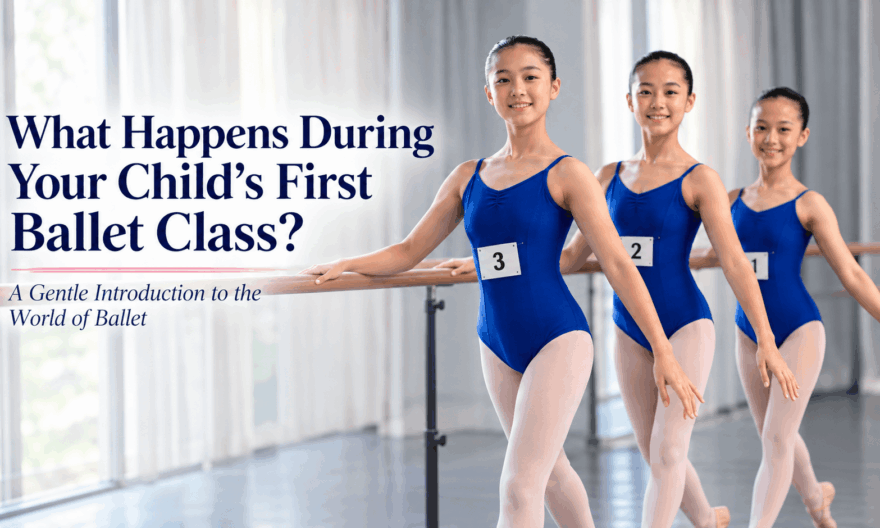
A ballet class for children typically begins with a gentle warm-up, followed by basic barre exercises, simple centre work, and a short cool-down. Children learn foundational positions, basic movements, and classroom etiquette in a structured yet playful environment. The first lesson is designed to build confidence, not perfection — most sessions last 45 to 60 minutes.
If you’re a first-time parent signing your child up for ballet, the unknown can feel a little daunting. What will they actually do there? Will they cope? Will they cry? These are completely normal questions. Understanding what to expect from that first session can make the entire experience more enjoyable — for both of you.
Before the Class Even Starts
The first impression is everything. Children are expected to arrive dressed in their ballet gear, which is usually a pink or black leotard, tights, and soft ballet slippers. They need to have their hair tied up in a bun. Reaching the studio ten minutes before class will allow your child to acclimate and use the restroom in peace.
Most children will be entering their first structured classroom setting. Seeing the same smiling face at the entrance that greets each child helps them feel more comfortable.
What Does a Beginner Ballet Class for Kids Actually Look Like?
Most beginner ballet for kids follows a consistent format. That predictability is intentional — children feel safer when they know what comes next. Here’s a typical class breakdown:
1. Welcome and Warm-Up (5–10 minutes)
The children are brought into a circle or at the bar by the teacher. Some simple stretches and moves get them ready for their class. It is here that the teacher also makes some ground rules for their class in a playful way.
2. Barre Work (10–15 minutes)
From childhood itself, they are introduced to the concept of the barre. They use the barre or any lower bar and perform various dance movements such as plié and relevé. The positions taught to them include first position and second position.
3. Centre Work (15–20 minutes)
When the dancers leave the barres, they come to the center of the room. This is where the real magic takes place. They practice traveling steps such as chassés and sautés; develop their sense of space; learn to become aware of musicality, or the relationship between movement and music. For young children, this process tends to be very playful.
4. Creative Movement or Storytelling (5–10 minutes)
Imaginative play is included in many good programs of children’s ballet classes in Singapore during this period. Kids can imagine themselves as butterflies, flowers, and other animals while doing ballet exercises. It will help to stay engaged and prevent the feeling of self-consciousness among shy kids.
5. Cool-Down and Goodbye Ritual (5 minutes)
Class ends with a period of relaxation followed by a show of reverence towards the teacher in the form of a little bow or curtsy. It is an age-old practice that instills respect in the minds of children towards their teacher as well as the art.
What Your Child Is Actually Learning (Beyond the Steps)
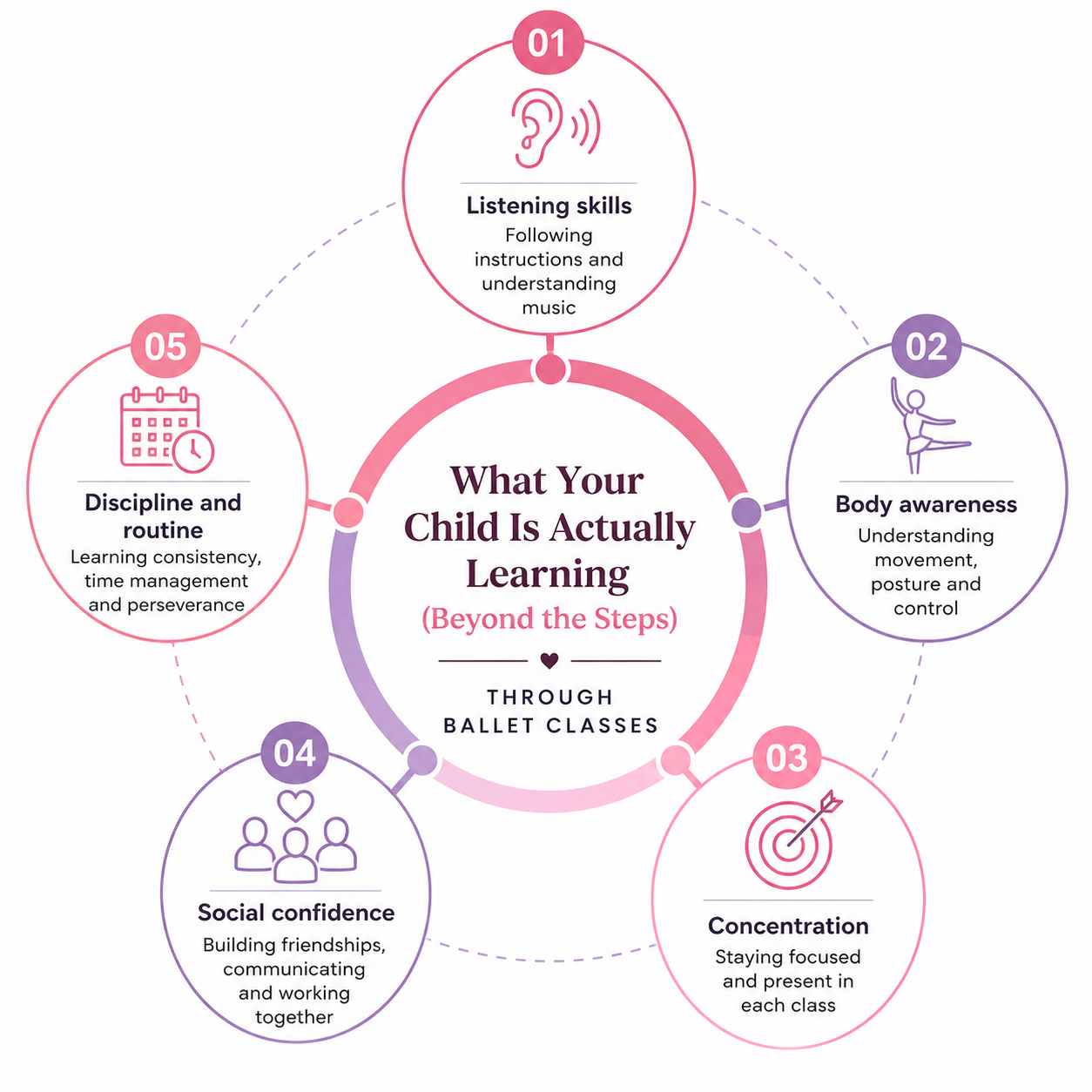
Ballet is often seen purely as a physical activity, but the developmental benefits run much deeper. Research consistently shows that structured movement-based programmes in early childhood support cognitive and social development alongside physical coordination.
In those first few classes, your child is building:
- Listening skills — following verbal instructions in a group setting
- Body awareness — understanding how their limbs move through space
- Concentration — holding attention through sequences and repetition
- Social confidence — taking turns, working alongside peers, responding to a teacher
- Discipline and routine — understanding that a class has structure and expectations
These are skills that transfer directly into the classroom and everyday life — and they begin forming in that very first session.
Common Concerns Parents Have (And the Reality)
“My child is shy — will they manage?”
Almost certainly yes. Experienced children’s ballet teachers are trained to work with a wide range of temperaments. Shy children are often given time to observe before being gently encouraged to join. Most warm up within the first two or three sessions once the environment feels familiar.
“What if my child has no prior dance experience?”
That’s precisely who beginner classes are designed for. No prior experience is needed or expected. In fact, children who start with no habits are often easier to teach because they haven’t picked up incorrect posture or movement patterns.
“Will my child be compared to other children?”
A well-structured kids ballet class in Singapore focuses on individual progress, not comparison. The goal in early-years ballet is exploration and enjoyment — not competition. Teachers reinforce effort over outcome.
Related Post: What Are the Basic Ballet Fundamentals Every Beginner Should Learn?
What to Prepare for the First Day
A little preparation removes a lot of stress. Here’s a simple checklist:
- Ballet leotard and tights (confirm colour with the studio)
- Soft leather or canvas ballet shoes (fitted properly — not too loose)
- Hair secured away from the face
- A small water bottle
- A positive mindset — your child will pick up on your energy
Avoid hovering outside the studio door if you can. Many studios ask parents to wait in a designated area, which actually helps children focus and bond with their teacher more quickly.
How to Support Your Child After the First Class
The conversation after class matters more than most parents realise. Rather than asking “Did you get the steps right?”, try asking “What was your favourite part?” or “What did your teacher show you today?” This shifts the focus from performance to experience — which is exactly where it should be at this stage.
If your child says they don’t want to go back after the first session, don’t panic. It’s common. Give it three to four classes before drawing conclusions. The structure becomes comfortable once it’s familiar.
For families exploring structured, age-appropriate dance education in Singapore, Elevate Dance Academie offers a nurturing environment where children are guided at the right pace — with a curriculum that balances technical foundations and genuine enjoyment from the very first class.
Frequently Asked Questions
What age should my child start ballet classes?
Most ballet studios in Singapore accept children from the ages of 3 to 4 years old into classes that prepare them for ballet or creative dance. Proper ballet classes normally begin from ages 5 or 6 because the children would already have enough focus and body control.
How long is a typical first ballet class for children?
The duration of a beginning class in ballet is usually 45 to 60 minutes long. Children aged 3 to 5 would be in a class that is 30 to 45 minutes long due to their limited attention span.
Do children need prior experience to join a beginner ballet class in Singapore?
Dance is not a prerequisite for beginners’ lessons. Ballet lessons for children in Singapore are aimed at providing children with an introduction to ballet from the very beginning and without any prerequisites.
What should my child wear to their first ballet class?
Most kids put on a tight-fitting leotard, ballet tights and ballet slippers. Their hair is usually tied up. You can ask your particular studio about their dress code, as there are some studios in Singapore which have specific colors of uniform depending on age or grade.