

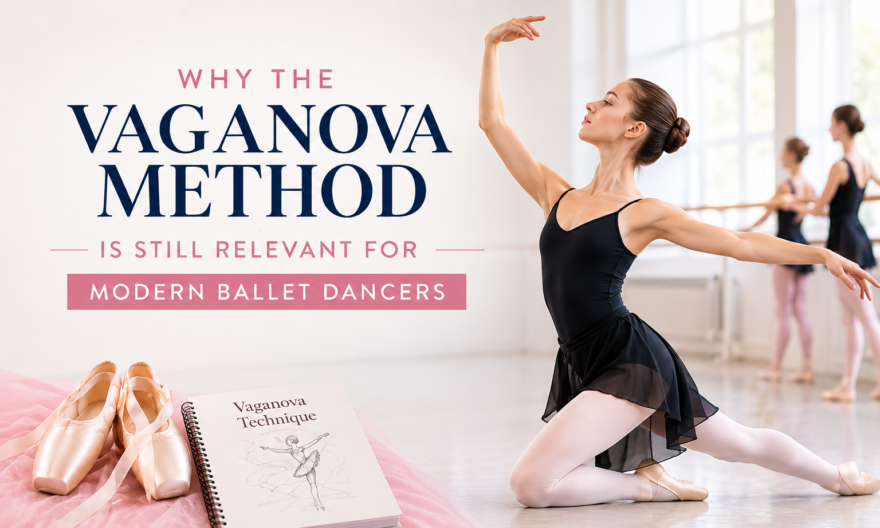
The Vaganova method remains one of the most complete and enduring systems in classical ballet training. Developed by Agrippina Vaganova in the early 20th century, it builds technical precision, artistic expression, and physical conditioning in a structured, progressive way. For today’s dancers, it offers a rigorous foundation that modern approaches often lack — making it as relevant now as ever.
What Is the Vaganova Method?
The Vaganova method is a system of ballet pedagogy developed by Russian ballerina and teacher Agrippina Vaganova in Leningrad during the 1920s and 1930s. It synthesises the French, Italian, and Russian schools of classical ballet into a single, unified curriculum. Her 1934 textbook, Basic Principles of Classical Ballet, remains a foundational reference in dance academies worldwide.
The method places equal emphasis on the body’s back and arms — what Vaganova called the “root” of movement. This distinctive focus produces dancers with fluid port de bras, expressive upper bodies, and technically clean footwork, all developed in logical progression across years of training.
Why Hasn’t the Vaganova Method Been Replaced?
Many training systems come and go. The Vaganova method has persisted for nearly a century because it is built on anatomical logic, not trend. Its progression is carefully designed — each year’s syllabus builds on the last, ensuring no technical gap is left unaddressed before a student advances.
Compare this to less structured approaches where young dancers may develop expressive quality but skip foundational alignment workRussian ballet technique. The result is often injury in the later years of training. Vaganova’s system is deliberately preventive in this way.
How the Vaganova Method Develops a Complete Dancer
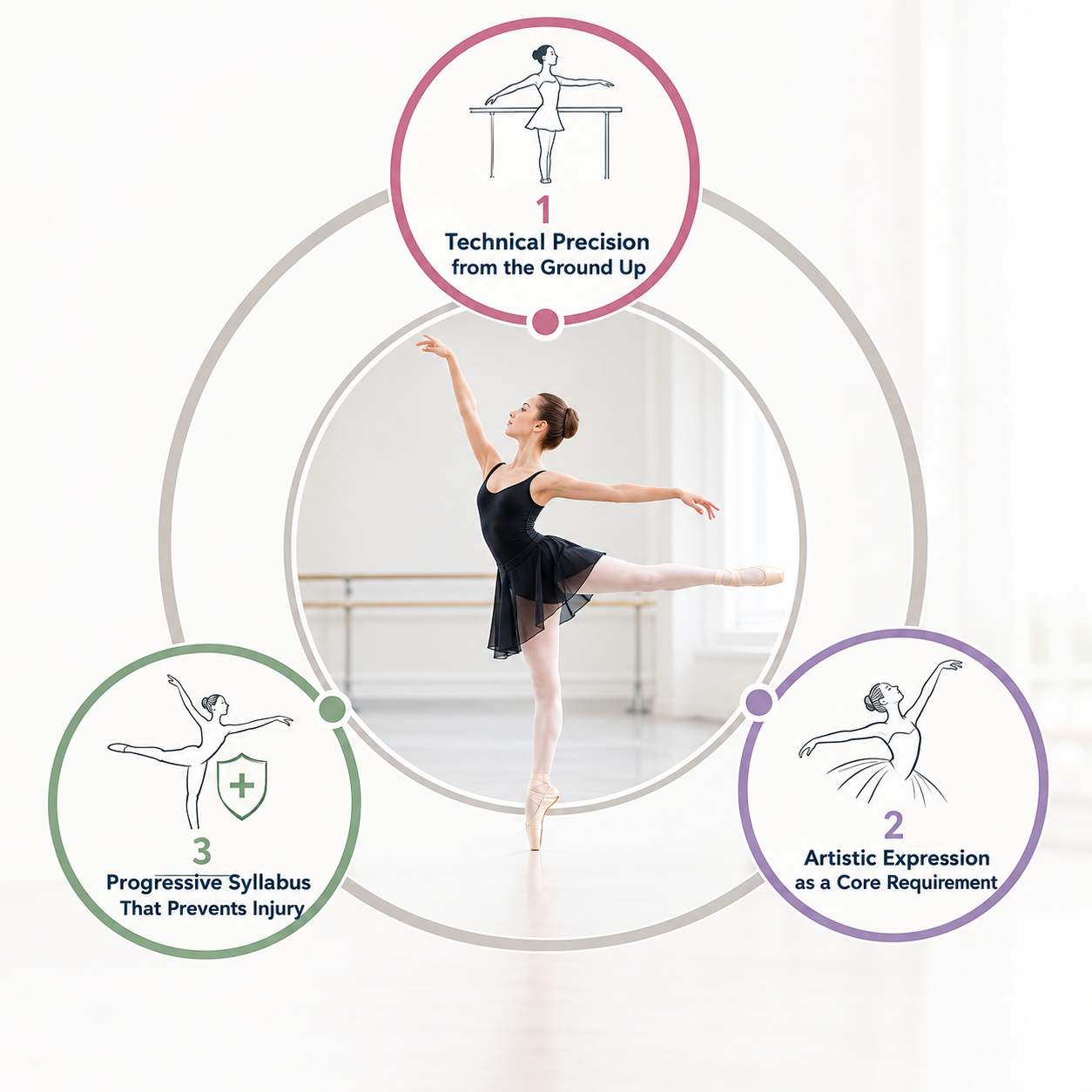
Technical Precision from the Ground Up
Vaganova training begins with strict attention to posture, turnout, and weight distribution. Students learn how every part of the body connects — how a lifted sternum changes the quality of an arabesque, or how engaged back muscles support a sustained balance. This is not decorative instruction. It is structural.
Artistic Expression as a Core Requirement
Unlike systems that treat artistry as an add-on to technique, the Vaganova method integrates expression from the earliest levels. Students are taught to use their eyes, head, and arms as communicative tools — not just mechanical parts of a step. This produces dancers who can hold an audience’s attention from the first movement to the last.
Progressive Syllabus That Prevents Injury
The method sequences exercises in a way that gradually builds strength and flexibility in proportion. Pointe work, for example, is introduced only when the foot and ankle muscles are sufficiently prepared. This approach reduces overuse injuries — a serious concern in Singapore and globally, where competitive training schedules are common from a young age.
Is the Vaganova Method Compatible With Contemporary Dance Demands?
This is a question many parents and students ask when considering Russian ballet technique. The short answer is yes — and for a clear reason. The most versatile professional dancers today are almost universally those with strong classical foundations. Contemporary choreographers regularly cast dancers with classical training because they have the body control, spatial awareness, and technical vocabulary to execute complex movement safely.
The Vaganova method does not limit a dancer to classical repertoire. It builds the physical and artistic intelligence needed to adapt across genres. Whether a student later pursues musical theatre, contemporary dance, or competitive ballet, the foundation holds.
What the Research and Professional World Say
Dance medicine researchers consistently emphasise that structured, progressive training reduces injury risk in young dancers. A study published in the Journal of Dance Medicine and Science found that dancers with formal classical training reported fewer chronic injuries than peers trained through less codified systems.
In Singapore, where interest in structured performing arts education has grown steadily, ballet enrolment remains among the highest of all dance disciplines. Families seeking ballet classes in Singapore are increasingly looking beyond recreational options toward schools that offer internationally recognised syllabi — of which the Vaganova system is among the most respected.
Vaganova vs. Other Major Ballet Methods
It helps to understand how the Vaganova method compares to other widely taught systems:
|
Method |
Origin | Key Emphasis |
Notable Strength |
|---|---|---|---|
| Vaganova | Russia | Back, arms, integration of technique and artistry | Complete dancer development, strong syllabus progression |
| Royal Academy of Dance (RAD) | UK | Port de bras, musicality | Wide global examination network |
| Cecchetti | Italy | Epaulement, precise footwork | Strong technical clarity |
| Bournonville | Denmark | Light, quick footwork and elevation | Unique stylistic identity |
Each method has value. The Vaganova system stands out for its comprehensive scope — it trains the entire dancer, not just technical outputs.
Also Read: Preparing for Your Child’s First Ballet Class: Everything Parents Need to Know
What Parents and Students Should Know Before Enrolling
Choosing the right training environment matters as much as the method itself. When evaluating Vaganova-based programmes, look for:
- Teachers trained and certified in the Vaganova syllabus
- A structured, year-on-year progression with clear assessment criteria
- Class sizes that allow individual correction — large classes limit technical feedback
- A school culture that values both discipline and the student’s wellbeing
- Opportunities for performance, which consolidates stage presence alongside technical growth
For younger students, the emphasis should be on correct foundational habits, not fast progression. A school that rushes students through levels may produce surface-level results that create problems later.
The Vaganova Method in Singapore: A Growing Relevance
Singapore’s arts education landscape has matured significantly over the past two decades. Parents here are more informed about methodology differences than ever before. There is growing demand for training that goes beyond hobby-level engagement — families want their children to develop real skills, build discipline, and have pathways into vocational training if they choose.
The Vaganova method aligns directly with these expectations. It is a system built for serious students — though it absolutely accommodates those who train for personal growth rather than professional ambition. The rigour benefits every student, regardless of their long-term goals.
Why Tradition and Modernity Are Not in Conflict
There is sometimes an assumption that older methods are out of step with what modern dancers need. That misunderstands what tradition actually offers. The Vaganova method was not preserved because it is old — it has endured because it works. Generations of professional dancers trained under this system have gone on to lead companies, win international competitions, and perform at the highest levels.
Ballet itself is an evolving art form. But the physical demands of classical training have not fundamentally changed. The Vaganova method was designed to meet those demands systematically — and that purpose remains just as valid today.
The School of Russian Ballet Singapore offers Vaganova-based training for students across age groups and experience levels. For families researching structured, reputable ballet classes in Singapore, it represents a programme grounded in one of the world’s most respected pedagogical traditions.
Frequently Asked Questions
What makes the Vaganova method different from other ballet training systems?
What sets apart the Vaganova technique is its distinctive blend of technique with artistry right from the initial levels of training. The method lays great stress on the back and arms being the point of origin of movement, and there is a well-defined syllabus to be followed each year.
Is the Vaganova method suitable for beginners and young children?
Yes, the Vaganova syllabus takes into account age appropriateness in its development. Beginners begin with basic postures and coordination exercises before moving on to complex techniques. This makes the Vaganova technique especially appropriate for teaching children, since they can learn the right techniques from the very beginning without the need to undo bad habits.
Can Vaganova-trained dancers pursue contemporary or other dance styles?
Without question. The training in classical ballet via the Vaganova technique provides dancers with the ability to control their bodies, sense of space and movement. Many professional contemporary choreographers actively look for classically trained dancers for this reason.
How long does Vaganova training typically take?
The complete Vaganova method takes around eight years of training. But no matter what level of training one is at, he or she can gain from the principles of the Vaganova method. This depends on how often one trains and how good the teacher is.