A vertical storage system is the right upgrade when your warehouse is running out of floor space, struggling with slow retrieval times, or dealing with frequent picking errors. These systems use height rather than footprint to store goods, dramatically improving density and workflow. If your operation shows any of the seven signs below, it is time to move beyond conventional shelving.
Warehouses across Singapore and the wider Asia-Pacific region are under growing pressure to do more with less. E-commerce growth, tighter urban industrial real estate, and rising labour costs are forcing operations managers to rethink how space is used. A vertical storage system can directly address these challenges — but knowing when the tipping point has been reached is half the battle.
Sign 1: You Are Running Out of Floor Space
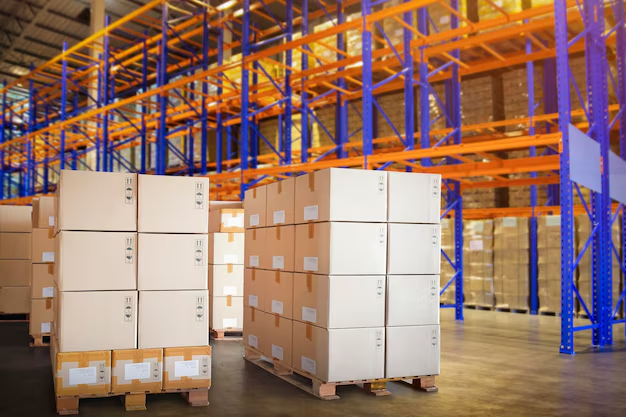
This is the most obvious signal. When you find yourself squeezing extra racking into aisles, renting overflow space off-site, or turning walkways into storage areas, your floor plan has hit its ceiling — literally. Conventional shelving expands horizontally, which means you eventually run out of room.
Vertical storage solutions reclaim the cubic metres above your existing footprint. Instead of spreading out, you build up. A single automated vertical unit can store what several rows of traditional shelving hold, using a fraction of the floor area.
Sign 2: Picking Times Are Slowing Down Your Operation
If your pickers are spending more time walking and searching than actually retrieving items, that is a productivity red flag. In a conventional warehouse layout, travel time can account for up to 60% of a picker’s total working time. That is time not spent fulfilling orders.
Automated vertical systems operate on a goods-to-person principle. The system brings the item directly to the operator at an ergonomic access point, eliminating unnecessary movement. The result is measurably faster pick rates and fewer bottlenecks during peak periods.
Sign 3: Your Picking Error Rate Is Climbing
Mistakes happen when workers navigate dense, poorly organised racking under time pressure. Mispicks, wrong SKUs, and quantity errors drive up returns, damage customer trust, and create rework costs. If your error rate is trending upward, your storage setup may be the root cause.
Vertical storage systems guide operators with integrated software, LED indicators, and barcode confirmation steps. These controls reduce human error at the point of pick — not after the fact. Higher accuracy means lower returns and stronger order fulfilment metrics.
Sign 4: You Struggle to Maintain Stock Visibility
Poor Inventory Control Is a Storage Problem
When stock is spread across multiple rows of open shelving, maintaining accurate inventory becomes a manual headache. Cycle counts take longer. Discrepancies creep in. Managers lose confidence in their own system data, leading to over-ordering or unexpected stockouts.
Modern vertical storage solutions integrate directly with warehouse management systems (WMS) and ERP platforms. Every movement in and out is tracked automatically, giving you real-time visibility into stock levels, locations, and movement history. This kind of transparency is difficult to achieve with static shelving.
Sign 5: You Have High Staff Turnover or Labour Shortages
Warehousing in Singapore is a labour-intensive industry, and finding skilled workers is increasingly difficult. According to the Ministry of Manpower Singapore, the manufacturing and logistics sectors consistently report some of the tightest labour market conditions in the country.
An automated warehouse reduces dependence on manual labour for repetitive tasks. Fewer people are needed to maintain the same — or higher — throughput. Existing staff can be redeployed to higher-value roles, which also improves job satisfaction and retention.
Sign 6: Your Products Require Better Protection
Not All Goods Survive Open Racking
Electronics, pharmaceuticals, precision components, and high-value parts are vulnerable in open shelving environments. Dust exposure, accidental damage from forklifts, and inconsistent handling all increase the risk of product loss or degradation.
Vertical storage systems house items in enclosed trays within a secure, protected structure. Goods are only accessed at a controlled opening point, dramatically reducing the chance of damage. For businesses managing high-value or sensitive inventory, this is a compelling operational and financial argument for upgrading.
Sign 7: Your Warehouse Cannot Scale Without Major Disruption
Growth should be a good problem to have. But if adding new SKUs or increasing stock volume means a full warehouse redesign, that is a sign your current setup lacks scalability. Conventional shelving systems require significant physical reconfiguration every time your storage needs change.
Storage optimization is built into vertical systems by design. Most can be reconfigured in software, with tray heights and compartment sizes adjusted to accommodate new product lines. This flexibility means your storage infrastructure can grow with your business — not hold it back.
How to Assess Your Current Setup Honestly
Before deciding to invest, run a quick internal audit. Walk your warehouse floor and answer these questions:
- What percentage of your floor space is dedicated to storage versus operations?
- How long does an average pick cycle take from request to retrieval?
- What is your current mispick rate per 1,000 orders?
- How many staff hours per week are spent on inventory counting?
- Have you outgrown your current layout in the last 12 months?
If you answered unfavourably to three or more of these, your operation is a strong candidate for a vertical storage upgrade.
What a Vertical Storage System Actually Delivers
| Challenge | Conventional Shelving | Vertical Storage System
|
|---|---|---|
| Space usage | Horizontal expansion only | Uses full building height |
| Pick speed | Operator travels to goods | Goods come to operator |
| Accuracy | Manual, error-prone | Software-guided with confirmation |
| Inventory visibility | Manual counting required | Real-time WMS integration |
| Scalability | Physical reconfiguration needed | Software-adjustable compartments |
| Product protection | Open exposure to environment | Enclosed, controlled access |
The Right Time to Act Is Before the Breaking Point
Most operations managers wait too long. They tolerate inefficiency until it becomes a crisis — a missed shipment, a lost client, or a full warehouse with nowhere to grow. The smarter approach is to recognise the early signs and act while there is still time to plan a measured transition.
Warehouse efficiency is not just about speed. It is about building a system that is accurate, resilient, and capable of handling tomorrow’s volume without a complete overhaul. Vertical storage addresses all of these dimensions in one integrated solution.
If you are seeing two or more of these signs in your current operation, it is worth speaking with a specialist. Asiateck provides vertical storage solutions tailored to the demands of Singapore’s warehousing and logistics environment, helping operations teams make the transition from static shelving to intelligent, automated storage with minimal disruption.