

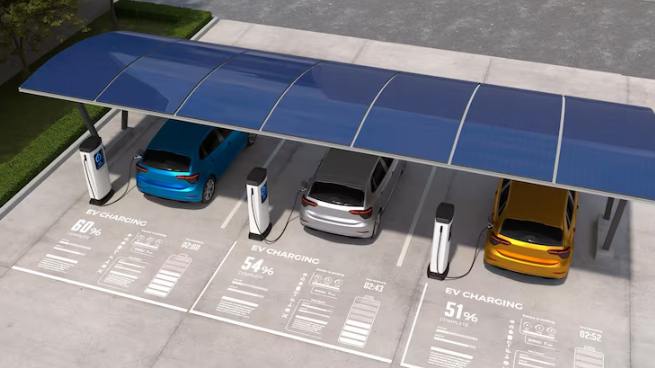
EV charging solutions for commercial buildings include installation of dedicated charging infrastructure including AC and DC chargers, load management systems, and smart connectivity to accommodate electric vehicles used by tenants, employees and visitors. Commercial adoption is taking off in Singapore, driven by government mandates, growing EV ownership, and increasing tenant expectations for green-certified buildings.
Why Commercial Buildings in Singapore Can’t Afford to Wait
The Singapore Land Transport Authority (LTA) has set a target of 60,000 EV charging points islandwide by 2030, with a significant share expected from private commercial premises. EVs on the road in Singapore have surpassed 30,000 registered vehicles in 2024 and is growing at double-digit rates annually.
For building owners and facility managers, that growth creates both pressure and opportunity. Tenants — especially multinational corporations and ESG-focused businesses — are increasingly treating workplace EV charging as a baseline amenity, not a luxury. Buildings without charging infrastructure risk lower occupancy, weaker lease renewals, and declining asset value.
Putting it plainly: EV infrastructure is becoming a property fundamental, like car park lighting or fibre connectivity.
What Types of EV Charging Solutions Are Available for Commercial Properties?
Not all chargers serve the same purpose. The right choice depends on your building type, parking dwell time, grid capacity, and tenant mix.
AC Charging (Level 2)
AC chargers typically deliver 7kW to 22kW and are the most common choice for commercial car parks. They’re well-suited to buildings where vehicles park for several hours — offices, mixed-use developments, and retail malls. Installation costs are relatively low, and they work reliably across most EV models on the market in Singapore.
DC Fast Charging
DC chargers deliver 50kW and above, capable of charging most EVs to 80% in under 30 minutes. These are more appropriate for high-turnover locations such as petrol station forecourts, logistics hubs, and retail destinations where short dwell times are the norm. Capital costs are significantly higher, and they place greater demand on the building’s electrical supply.
Smart Charging and Load Management
Smart EV charging systems communicate in real time with your building’s power grid, distributing load intelligently across active sessions. This prevents costly demand spikes, avoids the need to upgrade electrical infrastructure prematurely, and enables dynamic pricing. For large commercial buildings managing dozens of charge points, smart load management is not optional — it’s essential.
Key Regulations and Standards in Singapore
Commercial EV charging installations in Singapore must comply with requirements set by the Energy Market Authority (EMA) and the Building and Construction Authority (BCA). Since 2021, new commercial buildings with 100 or more car park lots must provision at least one in five lots with EV-ready conduit infrastructure under the BCA’s Green Mark scheme.
The key compliance checkpoints include:
- Electrical installation must be certified by a Licensed Electrical Worker (LEW)
- Chargers must meet the SS 638 standard for EV supply equipment
- OCPP (Open Charge Point Protocol) compliance is recommended for interoperability
- Buildings drawing significant additional load may require a grid connection upgrade with SP Group
Engaging an experienced EV charging solutions provider early in the planning process prevents costly redesigns at the installation stage.
How to Plan an EV Charging Rollout for a Commercial Building
Step 1 — Conduct a Site Assessment
Start with a full electrical audit. Identify available load capacity, distribution board locations, cable routing paths, and any structural constraints in your car park. A good site assessment will tell you how many chargers you can install today without a grid upgrade — and what headroom you have for future expansion.
Step 2 — Define Your Charging Use Case
Are you primarily serving staff who park all day, or visitors with shorter stays? Will EV charging be a free amenity, a paid service, or tenant-billed? The answers shape your charger type, quantity, and billing system. Mixed-use developments often need a tiered approach — AC chargers for office floors, faster units near retail entrances.
Step 3 — Choose a Scalable Infrastructure Model
Deploy chargers in phases. Start with a cluster of smart AC units on a shared load management network. Leave conduit and cable tray capacity for future additions. This approach controls upfront capital expenditure while keeping the building ready for rising demand over the next three to five years.
Step 4 — Select the Right Charging Partner
Beyond hardware, look for a provider offering ongoing network management, remote diagnostics, billing integration, and a local support team. Downtime on charge points reflects directly on your building’s reputation with tenants. A provider with a strong local track record in Singapore and proven OCPP-compliant software matters more than spec sheets alone.
Comparing Commercial EV Charging Options at a Glance
| Charger Type | Power Output | Best For | Approx. Charge Time | Relative Cost
|
|---|---|---|---|---|
| AC Level 2 | 7kW – 22kW | Offices, mixed-use, retail | 4–8 hours | Low–Medium |
| DC Fast Charger | 50kW – 150kW+ | High-turnover locations | 20–45 minutes | High |
| Smart AC + Load Mgmt | 7kW – 22kW (managed) | Large commercial car parks | 4–8 hours | Medium |
The Business Case: Beyond Compliance
Future-proofing a commercial property with EV charging infrastructure isn’t just about meeting regulatory thresholds. The business case is increasingly compelling on its own terms.
- Tenant retention: ESG reporting requirements mean corporate tenants actively seek out green-certified, EV-ready buildings when renewing leases
- Revenue generation: Paid charging sessions create a new income stream from your car park, often recovering infrastructure costs within three to five years
- Green Mark points: EV charging contributes to BCA Green Mark certification, which supports higher valuations and preferred financing terms
- Future load readiness: Installing conduit and panels now costs a fraction of what a retrofit will cost in five years when EV penetration is significantly higher
Commercial real estate is a long game. The buildings investing in EV infrastructure today are the ones that will command premium rents and attract quality tenants in the decade ahead.
Common Mistakes Facility Managers Should Avoid
Even well-intentioned EV rollouts run into problems. Watch out for these:
- Undersizing the electrical supply: Installing ten chargers without accounting for simultaneous peak demand can trip building breakers and create tenant complaints
- Ignoring cable management: Poor conduit routing in car parks leads to expensive remediation when you need to add more charge points later
- Choosing closed-loop systems: Proprietary platforms that don’t support OCPP lock you into a single vendor and make future upgrades harder
- Skipping user experience: Charging interfaces that require app downloads, complex authentication, or poor signage reduce adoption and generate helpdesk calls
Taking the Next Step
The window to install EV charging infrastructure ahead of mandatory requirements and competitive pressure is narrowing. Building owners and facility managers who act now benefit from lower installation costs, more flexibility in charger placement, and a stronger negotiating position with tenants and investors.
For commercial properties across Singapore looking for a proven, end-to-end approach, 3K delivers EV charging solutions with the technical expertise, local regulatory knowledge, and post-installation support that large-scale deployments demand.
Frequently Asked Questions
What EV charging solutions are best suited for commercial buildings in Singapore?
For most commercial buildings in Singapore, smart AC Level 2 chargers (7kW–22kW) with integrated load management are the most practical starting point. They balance installation cost, charging speed, and grid demand effectively. High-turnover locations such as retail or hospitality may benefit from DC fast chargers, but these require a larger electrical infrastructure investment upfront.
Is EV charging infrastructure mandatory for commercial buildings in Singapore?
Since 2021, new commercial developments with 100 or more car park lots in Singapore are required under BCA Green Mark guidelines to provision at least 20% of lots with EV-ready conduit infrastructure. Full charger installation is not yet universally mandated, but regulatory thresholds are expected to tighten progressively through 2030 in line with the LTA’s national EV roadmap.
How much does it cost to install EV charging stations in a commercial car park?
Costs vary widely depending on existing electrical capacity, number of chargers, and cable run distances. A basic AC charger installation in a prepared space can start from SGD 2,000–4,000 per unit, while full infrastructure builds for large car parks — including panel upgrades and load management systems — can run into six figures. A site assessment is essential before budgeting.
What is OCPP and why does it matter for workplace EV charging?
OCPP (Open Charge Point Protocol) is an open communication standard that allows EV charge points to connect to any compatible network management platform. For facility managers, OCPP compliance means you’re not locked into a single vendor’s ecosystem. It enables remote monitoring, fault alerts, energy reporting, and flexible billing — all critical for managing workplace EV charging at scale.
Can a commercial building generate revenue from EV charging stations?
Yes. Building owners can configure charge points to bill users per kilowatt-hour or per session, turning car park EV charging into a new revenue stream. With smart billing platforms, costs can also be assigned directly to tenants or companies. In well-utilised commercial buildings, paid EV charging typically recovers installation costs within three to five years.
How long does it take to install an EV charging station in a commercial building in Singapore?
A straightforward installation of a small cluster of AC chargers in a prepared electrical environment typically takes one to three weeks from permit approval to commissioning. Larger deployments involving panel upgrades, significant cable runs, or BCA submissions can take two to four months. Engaging a licensed electrical contractor and EV charging specialist early significantly reduces delays.