When setting up a new warehouse, forklift planning is not an afterthought — it is a foundational decision. The type, size, and number of forklifts you need directly affect your aisle width, floor load specifications, racking layout, and overall operational efficiency. Getting this wrong early costs far more to fix later than it does to plan correctly from the start.
If you are searching for the right forklift in Singapore for your new facility, this guide walks you through every planning consideration you need to address before your warehouse opens its doors.
Why Forklift Planning Must Happen Before You Finalise Your Layout
Most new warehouse owners make the mistake of designing the building first and sourcing equipment second. That sequence causes serious problems. Forklift specifications — turning radius, lift height, load capacity, and fuel type — all have direct implications for how your warehouse must be built or configured.
For example, a counterbalance forklift requires wider aisles (typically 3.5 to 4 metres) compared to a reach truck, which can operate in aisles as narrow as 2.7 metres. If your racking is already installed before you make that decision, you may be locked into inefficient space use for years.
Step 1: Define What You Are Actually Moving
Before you look at any equipment, document your load profile. This means recording:
- The weight range of your heaviest and most common loads
- Pallet dimensions (standard Singapore pallets are typically 1,100mm x 1,100mm)
- Maximum stack height required
- Frequency of movement — how many lifts per shift
- Whether you are handling drums, loose goods, long materials, or standard palletised loads
This information determines your required lift capacity, mast height, and attachment needs. A machine rated at 1.5 tonnes serving a cold-storage facility behaves very differently from the same unit working in a dry goods warehouse at ambient temperature.
Step 2: Match the Forklift Type to Your Warehouse Environment
Not all forklifts are suited to every warehouse environment. Here is a practical overview of the most common types used in Singapore warehouses:
| Forklift Type | Best For | Aisle Requirement | Typical Capacity
|
|---|---|---|---|
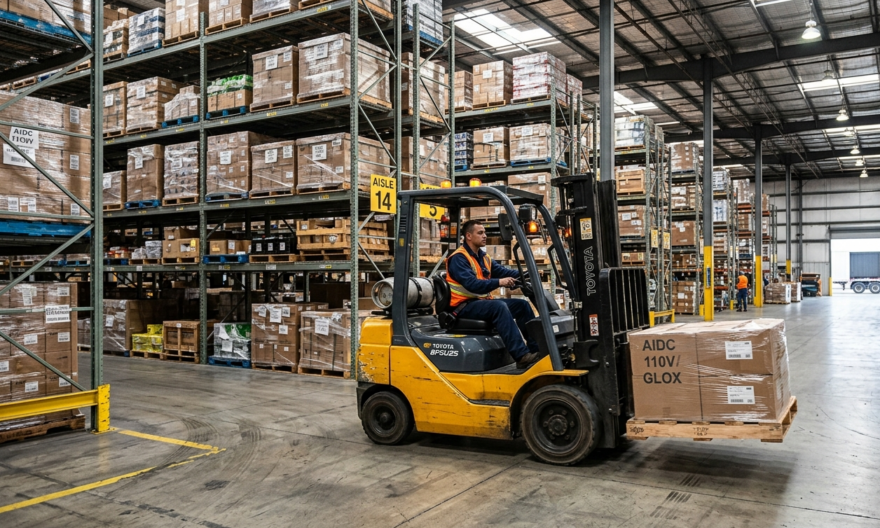
| Counterbalance | General warehouse, loading bays | 3.5m – 4m | 1.5T – 5T |
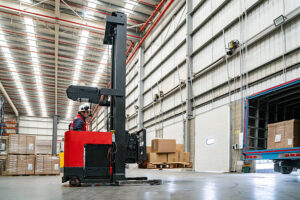
| Reach Truck | High-rack narrow aisle storage | 2.7m – 3m | 1T – 2.5T |
| Pallet Stacker | Light-duty indoor stacking | 2m – 2.5m | Up to 1.5T |
| Diesel Forklift | Outdoor yards, heavy loads | 4m+ | 2T – 10T+ |
| Electric Forklift | Indoor use, emissions-sensitive areas | 3m – 3.5m | 1T – 3.5T |
Singapore’s industrial zones — including Tuas, Jurong, and Changi — increasingly favour electric forklifts for indoor operations due to ventilation requirements and sustainability commitments from tenants and building managers alike.
Step 3: Calculate How Many Units You Need
A single forklift is rarely enough for a functioning warehouse. The right fleet size depends on your throughput volume, shift structure, and workflow bottlenecks. A useful starting formula:
Number of forklifts = (Total lifts per shift) ÷ (Lifts per hour per machine × Shift hours)
Factor in breaks, maintenance windows, and peak periods. It is common for new warehouse operators in Singapore to underestimate demand during month-end stock movements or Chinese New Year inventory surges. Build in at least one buffer unit for high-velocity operations.
Step 4: Decide Between Forklift Sale or Rental
This is one of the most consequential financial decisions in your warehouse setup. Both options have clear trade-offs:
Purchasing (Forklift Sale): Ownership gives you full control over maintenance scheduling and machine availability. It suits operations with consistent, high-frequency usage. Over a 5–7 year lifecycle, the total cost of ownership is often lower than long-term rental — especially for electric models with lower running costs.
Rental or Leasing: Better suited to new businesses still calibrating their throughput volumes, or those with seasonal demand spikes. Rental arrangements also transfer maintenance responsibility to the provider, which reduces internal resource requirements during your setup phase.
For a new warehouse in Singapore, a hybrid approach often works well: purchase your core fleet for day-to-day operations and keep a rental arrangement available for peak periods.
Step 5: Plan for Forklift Charging and Maintenance Infrastructure
This step is consistently overlooked during warehouse design. Electric forklifts — which are the dominant choice for indoor material handling planning in Singapore — require dedicated charging bays. These bays need:
- Adequate floor space (typically 3m x 5m per unit)
- Three-phase electrical supply
- Ventilation to dissipate hydrogen gas emitted during charging
- Clear signage and fire safety compliance under Singapore Civil Defence Force guidelines
Diesel forklifts need a separate refuelling and servicing area. Factor these spaces into your floor plan before construction or tenancy fit-out begins. Retrofitting them later is expensive and often results in compromised workflow.
Step 6: Address Safety and Regulatory Requirements in Singapore
Under the Workplace Safety and Health (WSH) Act administered by the Ministry of Manpower (MOM) in Singapore, all forklift operators must hold a valid Forklift Operator Certificate issued by an approved training provider. This is a legal requirement, not a recommendation.
Additionally, your industrial equipment must be inspected and maintained according to WSH (General Provisions) Regulations. During warehouse setup, ensure your procurement process includes documentation of each machine’s service history, certification status, and load test results.
New warehouse managers should also account for pedestrian safety segregation — a key requirement in MOM’s WSH guidelines for warehousing operations. Painted floor markings, physical barriers, and mirror placements at blind corners are standard expectations during MOM inspections.
Common Forklift Planning Mistakes New Warehouse Owners Make
- Choosing capacity based on average loads, not maximum loads — always size up, not to the middle of your range
- Ignoring floor flatness specifications — reach trucks and very narrow aisle (VNA) equipment require flatness tolerances that standard concrete pours do not automatically meet
- Not factoring in ramp gradients — if your warehouse has dock levellers or inter-level ramps, verify that your chosen forklift can handle the gradient safely under full load
- Underestimating operator training timelines — WSH-compliant training takes time; plan for it before your opening date
- Buying before verifying service support — always confirm that parts, technicians, and service response times are available locally in Singapore
What to Ask Your Forklift Supplier Before You Commit
A reputable supplier should be able to answer all of these questions before you sign any agreement:
- Can you conduct a site assessment and recommend the right model for our specific layout?
- What is the lead time for delivery and any necessary attachments?
- What does the after-sales service and maintenance package cover?
- Are spare parts stocked locally in Singapore?
- Do you provide operator training or referrals to WSH-approved training providers?
If a supplier cannot answer these questions clearly, that itself is useful information.
Bringing It All Together for Your Warehouse Setup
Effective warehouse setup is about sequencing decisions correctly. Forklift selection is not the final item on the list — it is the specification that shapes your racking density, aisle widths, floor loading requirements, and electrical infrastructure from day one.
For new warehouse operators in Singapore looking for expert guidance and reliable industrial equipment, A&G Equipment offers a comprehensive range of forklifts suited to diverse warehouse environments — from compact electric models for high-rack facilities to heavy-duty diesel units for outdoor yard operations. Getting the right advice early is the single most cost-effective investment you can make before your warehouse opens.
Frequently Asked Questions
What type of forklift is best for a new warehouse in Singapore?
For most indoor Singapore warehouses, an electric counterbalance or reach truck is the preferred choice due to zero emissions, lower noise, and compliance with building ventilation requirements. The right type ultimately depends on your aisle width, load weight, and maximum lift height requirements.
Do I need a licence to operate a forklift in Singapore?
Yes. Under Singapore’s Workplace Safety and Health Act, all forklift operators must hold a valid Forklift Operator Certificate from a Ministry of Manpower-approved training provider. Operating without this certification is a legal violation and can result in enforcement action against both the operator and the employer.
How many forklifts does a new warehouse typically need?
The number depends on your daily lift volume, shift hours, and workflow complexity. A small warehouse handling moderate throughput may start with two to three units — one operational, one for peak demand, and one for backup. Always account for planned maintenance downtime when sizing your fleet.
Is it better to buy or rent a forklift for a new warehouse?
Purchasing suits operations with consistent, high daily usage where long-term cost of ownership is more economical. Renting works better for new warehouses still stabilising their throughput or managing seasonal peaks. Many Singapore operators use a hybrid model — owning core units and renting additional machines during high-demand periods.
What infrastructure does an electric forklift require in a warehouse?
Electric forklifts need a dedicated charging bay with three-phase power supply, adequate ventilation, and compliance with Singapore Civil Defence Force fire safety requirements. These infrastructure needs must be incorporated into your warehouse floor plan during the design phase to avoid costly retrofitting later.
What should I check when buying a forklift in Singapore?
Verify the machine’s load capacity, mast height, and fuel type against your specific warehouse requirements. Confirm that the supplier offers local after-sales service, spare parts availability, and maintenance support. Also check that the unit comes with proper documentation for WSH compliance, including service records and load test certification.
Also Read: Forklift Rental Benefits for Flexible Warehouse and Construction Needs