

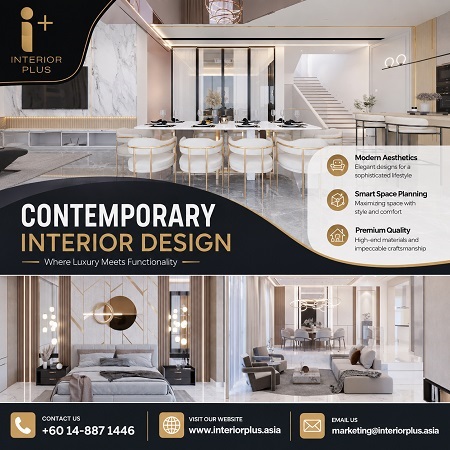
Contemporary interior design has become the defining standard for luxury living because it merges clean aesthetics with purposeful function. It moves beyond decorative excess and instead prioritises refined materials, spatial intelligence, and curated simplicity. For today’s discerning homeowner, contemporary design is not a trend — it is a philosophy that elevates everyday living into something deeply intentional.
The idea of luxury has shifted. It is no longer measured by how much you can fit into a space, but by how thoughtfully each element is chosen. Contemporary interior design sits at the centre of this shift — offering a visual language that feels current, considered, and unmistakably premium.
What Makes Contemporary Design Different From Other Styles?
Contemporary design is often confused with modern design, but they are distinct. Modern design refers to a fixed period — roughly the early to mid-20th century — while contemporary design is fluid. It reflects what is happening right now, drawing from multiple influences without being bound by any single one.
This flexibility is actually its greatest strength. A contemporary home can feature warm timber alongside polished concrete, soft curves beside structured geometry, or muted tones contrasted with a single bold accent. The result feels fresh rather than formulaic.
Key characteristics that define contemporary interiors include:
- Neutral and earthy colour palettes with deliberate pops of contrast
- Clean lines with minimal ornamentation
- An emphasis on natural light and open floor plans
- High-quality materials used sparingly — stone, steel, glass, and natural wood
- Furniture that is functional but sculptural in form
How Contemporary Design Has Become the New Benchmark for Luxury
Luxury living in modern homes has undergone a quiet revolution. The ornate, heavily layered interiors of previous decades have given way to spaces that breathe. Homeowners investing in premium interiors today are not just buying aesthetics — they are buying a lifestyle experience rooted in calm, clarity, and quality.
Data from the Asia-Pacific interior design market reflects this directly. The region has seen sustained demand for high-end residential design, with Singapore and Southeast Asia emerging as significant hubs for sophisticated home design investment. Clients are increasingly requesting spaces that are visually restrained but materially exceptional.
What defines luxury in this context is not price alone. It is the precision of proportion, the integrity of the material palette, and the way a room feels when you walk into it. That feeling — of effortless order — is what contemporary design consistently delivers.
The Role of Negative Space in Premium Interiors
One of the most misunderstood elements of luxury interior design is the deliberate use of empty space. In contemporary homes, what is left out is as important as what is included. A bare wall beside a statement piece of furniture is not a gap — it is a design decision.
This principle of negative space creates visual breathing room. It allows individual elements — a custom light fitting, an artisan coffee table, a textured wall finish — to register fully rather than compete for attention.
Material Selection: Where Luxury Is Actually Felt
Contemporary design elevates the tactile experience of a home. The materials used in a premium contemporary interior are selected not just for appearance but for how they age, how they feel underfoot or underhand, and how they respond to natural light throughout the day.
Common material choices in luxury contemporary homes include:
- Honed marble or engineered stone for surfaces
- Brushed brass or matte black for fixtures and hardware
- Wide-plank timber flooring or polished concrete
- Acoustic panels and textured plaster for walls
- Bespoke cabinetry with integrated handles for a seamless profile
Each choice signals intention. And in contemporary design, every detail carries weight.
Contemporary vs. Traditional Luxury: A Clear Comparison
| Feature | Traditional Luxury | Contemporary Luxury
|
|---|---|---|
| Aesthetic Approach | Ornate, layered, heavily decorated | Clean, restrained, curated |
| Colour Palette | Rich jewel tones, gold accents | Neutral base with deliberate contrast |
| Furniture Style | Carved, antique-inspired, formal | Sculptural, functional, modern form |
| Use of Space | Filled, maximalist | Open, breathable, purposeful |
| Material Focus | Gilded finishes, heavy fabrics | Natural stone, timber, glass, steel |
| Lighting | Chandeliers as centrepieces | Layered lighting, architectural integration |
The contrast is clear. Contemporary luxury is about a refined intelligence in design, not the accumulation of opulent elements.
Designing for Modern Home Design: Principles That Actually Work
When approaching a home with contemporary principles in mind, the process matters as much as the outcome. Great contemporary interiors are not assembled — they are designed from the inside out, starting with how the occupant lives and working outward to form.
Here are the principles that define successful modern home design at the luxury end of the market:
- Start with a clear spatial brief. Every room should have a defined purpose and a clear flow. Open-plan living works in contemporary homes because the zones are clearly articulated through furniture placement, lighting levels, and material transitions — not walls.
- Edit ruthlessly. Contemporary design is disciplined. If a piece does not serve a function or add genuine visual value, it does not belong. This is a hard discipline for many homeowners but it is exactly what separates a truly premium interior from a well-furnished one.
- Invest in the fixed elements. Walls, floors, ceilings, and joinery are the canvas. In contemporary luxury homes, these fixed elements are where the real investment sits — and where the result is felt most durably.
- Layer lighting intentionally. Contemporary spaces use ambient, task, and accent lighting in combination. The ability to shift a room’s mood through lighting alone is one of the hallmarks of a thoughtfully designed contemporary home.
- Let materials tell the story. Rather than artwork or accessories doing the heavy lifting, material contrast — stone against timber, matte against gloss, rough against smooth — creates visual interest that is sophisticated and enduring.
Why Luxury Homeowners Are Choosing Contemporary Interiors
The shift toward contemporary design among affluent homeowners is not purely aesthetic. It is practical. Contemporary spaces are easier to maintain, age more gracefully, and photograph beautifully — an increasingly important consideration in a world where homes are also personal statements.
There is also a wellness dimension. Research consistently links decluttered, well-lit, naturally material-rich environments with reduced stress and improved mental clarity. Contemporary design, at its best, creates spaces that actively contribute to the wellbeing of the people who live in them.
For homeowners in Singapore and across Southeast Asia, the appeal of contemporary design also aligns with the regional preference for spaces that feel cool, airy, and connected to natural light — all hallmarks of the style done well.
What to Look for in a Contemporary Interior Design Partner
Not every design firm that uses the word “contemporary” delivers on its promise. When selecting a design partner for a luxury home project, look for evidence of the following:
- A portfolio that demonstrates restraint, not just trend awareness
- Clear ability to work across different material categories
- Experience with spatial planning, not just surface decoration
- A design process that begins with listening, not presenting
- Transparency in project management and sourcing
The right partner will challenge your assumptions — and the result will be a home that feels more like you than any mood board you started with.
If you are ready to explore what contemporary design can do for your home, the team at Interior Plus Design brings deep expertise in premium interiors across residential and high-end projects. Their approach is grounded in precision, quality, and a genuine understanding of how luxury homeowners want to live.
FAQ: Contemporary Interior Design for Luxury Homes
Q1: What is contemporary interior design in simple terms?
Contemporary interior design refers to interiors that reflect current design sensibilities — clean lines, quality materials, open spaces, and a restrained but intentional use of colour and texture. It is fluid, evolving, and rooted in function as much as form. Unlike a fixed historical style, it adapts to the present moment.
Q2: Is contemporary design the same as minimalism?
Not exactly. Minimalism is a strict philosophy of reduction, while contemporary design allows for more warmth, layering, and personality. Contemporary spaces can include rich textures, curated objects, and varied materials — they simply avoid visual clutter and prioritise purposeful choices over decorative excess.
Q3: Why is contemporary design considered a luxury choice?
Because luxury in contemporary design is expressed through material quality, spatial intelligence, and craftsmanship — not volume. Premium finishes, bespoke joinery, architectural lighting, and the discipline of editing a space down to its essentials all require significant investment and expertise.
Q4: How do I know if contemporary design suits my home?
Contemporary design suits most residential settings, particularly homes with good natural light, generous ceiling heights, or open-plan layouts. It works equally well in compact city apartments and large landed properties. The key is in the quality of execution, not the size of the space.
Q5: What is the difference between luxury interior design and standard interior design?
Luxury interior design prioritises bespoke solutions, premium material sourcing, and a higher level of detail at every stage of the process. Standard design often works within tighter budgets and relies on off-the-shelf solutions. The difference is most visible in the fixed elements — flooring, joinery, surfaces, and lighting systems.
Q6: How long does a contemporary luxury home interior project typically take?
A full contemporary luxury interior project for a residential home typically takes between four to twelve months depending on the scale of work, customisation level, and material lead times. Bespoke joinery, imported stone, and custom furniture pieces are the most common factors that affect the overall project timeline.