

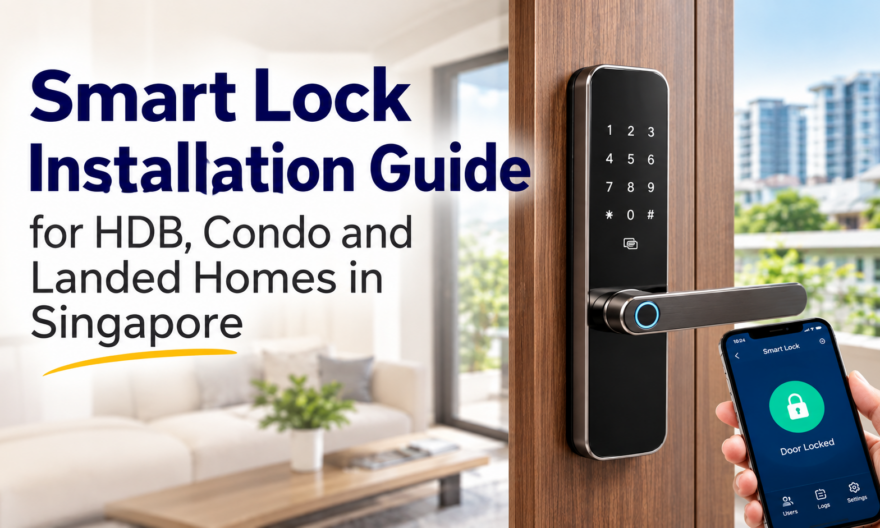
Installing a smart lock in Singapore depends on your property type. HDB flats require HDB-approved gate locks or door locks that comply with BCA guidelines. Condos may need management approval before installation. Landed homes offer the most flexibility. Regardless of property type, the lock must fit your existing door frame, latch configuration, and power source requirements.
Upgrading to a smart lock in Singapore homeowners can rely on starting with understanding your property’s specific requirements. A wrong fit means a failed installation — or worse, a security gap. This guide walks you through the exact steps for HDB flats, condominiums, and landed properties so you can make a confident, informed decision before buying or installing.
Why Property Type Matters Before You Buy a Smart Lock
Singapore’s housing landscape is diverse, and each property type comes with its own door specifications, regulations, and installation constraints. A smart lock that works perfectly in a landed bungalow may not even fit on an HDB main door. Before choosing a model, you need to assess three things: your door type, your door frame measurements, and any approval requirements from your building management or HDB.
Getting this wrong is a costly mistake. Most smart locks are not universally compatible. Checking compatibility upfront saves you time, money, and a return trip from the installer.
Smart Lock Installation Guide for HDB Flats
What HDB Homeowners Need to Know First
HDB flats typically have two entry points: the main door (a solid timber or metal fire door) and a metal gate in front of it. Smart locks can be installed on both, but they serve different purposes and have different requirements.
For the HDB main door, you need a lock that fits a standard mortise lock configuration. Most HDB doors use a 72mm pitch (distance between the door handle and deadbolt), so check this measurement before purchasing. For the gate, you will need a digital gate lock compatible with the existing gate frame — typically a narrow-stile or standard-stile design.
Step-by-Step Installation for HDB Main Door
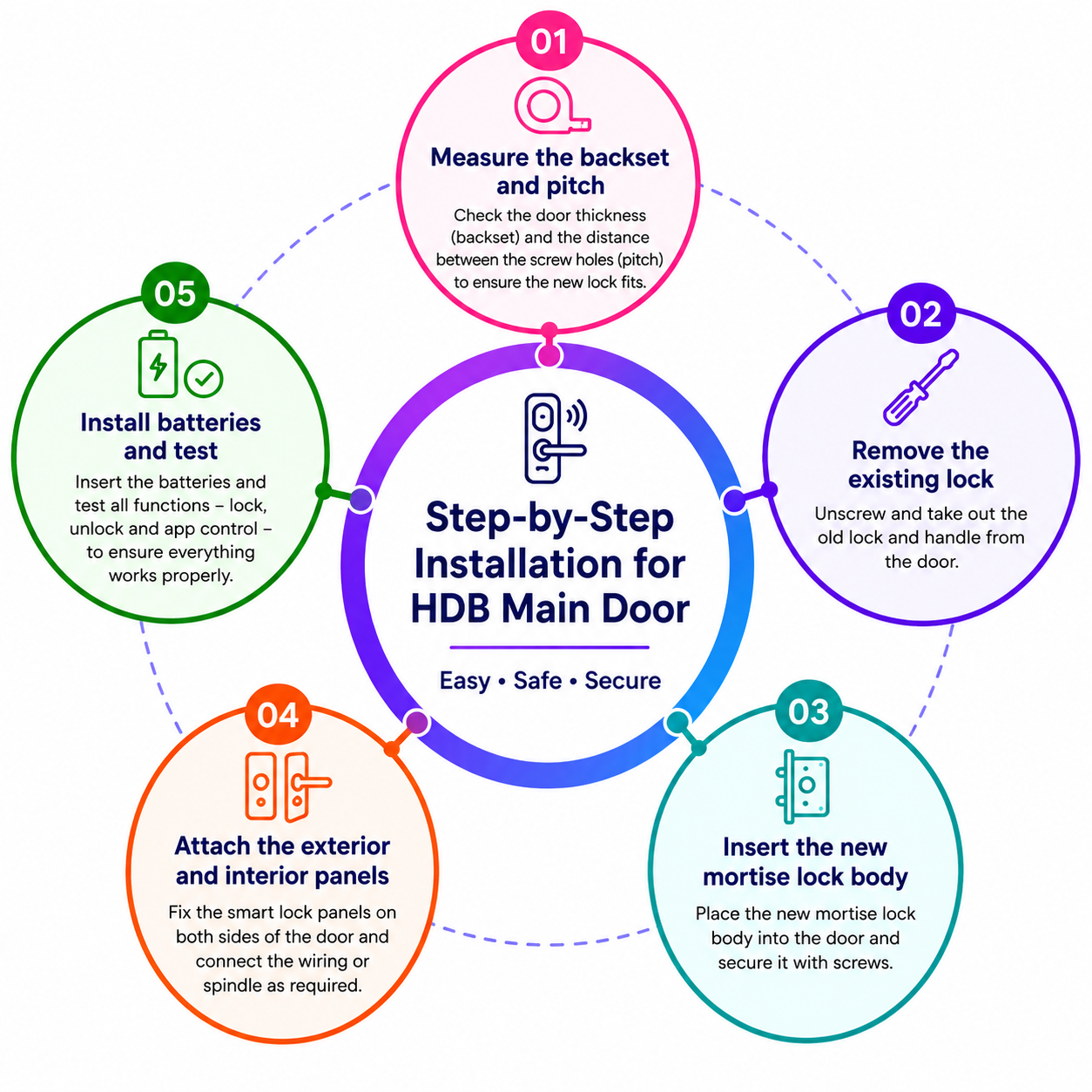
- Measure the backset and pitch: The backset is the distance from the door edge to the centre of the lock cylinder. Standard HDB backsets are 60mm or 70mm. Confirm this before selecting your lock model.
- Remove the existing lock: Unscrew the existing mortise lock body and remove the handle set. Keep the strike plate in place until you confirm the new lock aligns.
- Insert the new mortise lock body: Slide the smart lock’s mortise body into the door cavity. Ensure the latch and deadbolt align with the existing strike plate on the door frame.
- Attach the exterior and interior panels: Connect the exterior panel (keypad, fingerprint sensor, or card reader) through the door hole, then secure the interior panel. Run the connecting cable carefully through the door bore.
- Install batteries and test: Most smart locks run on AA batteries. Insert them into the interior panel, power on the lock, and test all access methods before final tightening.
HDB does not require prior approval for main door lock replacements as long as the fire door itself is not structurally modified. However, always verify this with your HDB branch office if you are unsure, as guidelines may be updated periodically.
Smart Lock Installation for Condominiums
Check with Management Before You Start
Condo installations involve an additional layer: the Management Corporation Strata Title (MCST). Some MCSTsin Singapore require written approval before you alter any part of your unit door, especially if it faces a common corridor. This is particularly relevant if the installation involves drilling, rewiring, or changes to the door frame.
Submit a minor work request to your MCST before proceeding. In most cases, approval is straightforward, but doing this after the fact can result in fines or mandatory removal.
Related Post: The Complete Guide to Home Automation Singapore for First-Time Homeowners
Installation Considerations for Condo Doors
Condo main doors are often solid core timber or HDB-style fire-rated doors, depending on the development. The installation process mirrors that of an HDB main door, with a few key differences:
- Some condo doors use a 85mm pitch instead of the standard 72mm — measure carefully.
- Older condos may have non-standard lock dimensions requiring an adapter plate or a custom-fit lock body.
- If your unit uses a video intercom or access card system integrated with the building, confirm whether your smart lock can work alongside it without conflict.
Smart Lock Installation for Landed Properties
More Flexibility, More Options
Landed homeowners have the widest range of installation options. There are no MCST requirements, no HDB gate regulations, and typically more flexibility in door configurations. You can install smart locks on your front door, back door, garage door, and even sliding gate.
However, landed homes often have custom-built doors with non-standard dimensions. This means off-the-shelf smart locks may not fit without minor modifications. Always measure the door thickness (typically 45mm–55mm for most Singapore landed doors), backset, and bore hole diameter before purchasing.
Integrating with a Home Smart System
Landed homeowners frequently integrate smart locks as part of a broader home smart system. This can include linking the lock to a smart home hub, connecting it to security cameras, or triggering automation routines — such as turning on lights when the door unlocks at night. If this is your goal, confirm that the lock supports your chosen protocol: Z-Wave, Zigbee, Wi-Fi, or Bluetooth.
Tools and Pre-Installation Checklist
Regardless of property type, gather these before starting:
- Measuring tape (for backset, pitch, door thickness)
- Screwdrivers (Phillips and flathead)
- Drill with appropriate bits (if bore hole adjustment is needed)
- AA batteries (check how many your model requires)
- Smart lock model’s installation manual
If you are not confident with basic carpentry or electrical work, professional installation is the safer choice. A poorly installed smart lock can compromise the entire security of your home.
Common Installation Mistakes to Avoid
| Mistake | Why It Matters |
How to Avoid It |
|---|---|---|
| Wrong backset size | Lock won’t latch properly | Measure before purchasing |
| Skipping MCST approval | Risk of fines or forced removal | Submit request early |
| Incompatible door thickness | Panels won’t connect | Check lock specs vs door specs |
| Not testing before final tightening | Misaligned latch discovered too late | Always test first, then secure |
| Ignoring battery type/capacity | Short battery life or incompatibility | Use brand-recommended batteries |
When to Call a Professional Installer
Some installations are best left to professionals. These include situations where the existing bore hole needs enlarging, the door frame requires adjustment, or the lock is being integrated into a larger smart home network. In Singapore, professional installation typically costs between SGD $80 to $200 depending on the complexity and lock brand.
A qualified installer will also check door alignment, ensure the deadbolt engages the strike plate cleanly, and calibrate the lock’s sensor sensitivity — details that make a real difference to long-term performance.
For homeowners looking for expert guidance and a curated range of compatible smart locks for every property type, L3 Homeation offers both product selection support and professional installation services tailored to HDB, condo, and landed homes in Singapore.
Frequently Asked Questions
Do I need HDB approval to install a smart lock on my flat’s main door?
There is no need to seek any authorization from HDB when changing the lock of your front door, provided that you do not make any alteration to the fire door itself. Nevertheless, please refer to the current policies of HDB as these may change.
Can I install a smart lock on both my HDB gate and main door?
Yes, you can put smart locks on the metal gate and the main door individually. There are some differences between the locks that you need for a gate and the locks that you need for a door.
What is the standard backset measurement for HDB doors in Singapore?
In most HDBs, the standard for the front door is 72mm spacing and either 60mm or 70mm backset. It is important to note that you should always measure your door before purchasing the smart lock.
Do condo residents need MCST approval before installing a smart lock?
It all depends on the by-laws of your condominium. Most MCSTS in Singapore have regulations that demand permission in writing before making any changes to your door. You should file a minor works application before installing your screen door.