After an office renovation, carpets absorb a significant amount of construction dust, chemical residue, adhesive particles, and airborne debris. Standard vacuuming cannot remove these deeply embedded contaminants. Professional office carpet cleaning services use specialised equipment and solutions to fully restore carpet hygiene, protect indoor air quality, and extend the lifespan of your flooring investment.
What Happens to Carpets During an Office Renovation?
Renovation work is disruptive by nature. Drilling, sanding, painting, and installing new fixtures all generate particulate matter that travels far beyond the immediate work zone. Even if your carpets were covered with protective sheets, fine dust and volatile organic compounds (VOCs) still penetrate deep into carpet fibres.
Here is what typically gets trapped in carpets after renovation work:
- Construction dust and silica particles from drilling and grinding
- Paint fumes and residue from wall or ceiling repainting
- Adhesive and sealant compounds from flooring or tiling work
- Plaster and gypsum dust from partition installations
- Metal shavings and debris from electrical and fixture work
These particles do not sit on the surface. They settle deep into the carpet pile, where regular cleaning tools cannot reach. Left unaddressed, they continue to circulate in the office air every time someone walks across the floor.
Why Standard Vacuuming Is Not Enough After Renovation
Most facilities managers make the mistake of running a vacuum over post-renovation carpets and calling it done. A standard vacuum removes surface-level debris, but it has almost no effect on fine silica dust, chemical residues, or particulates embedded below the top layer of the carpet pile.
According to the National Environment Agency (NEA) of Singapore, poor indoor air quality in workplaces is a significant contributor to respiratory issues and reduced employee productivity. Post-renovation carpets are one of the primary sources of indoor air pollution if not properly cleaned after construction work is completed.
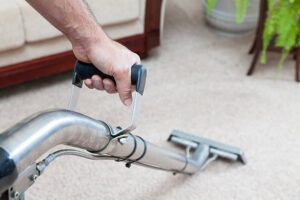
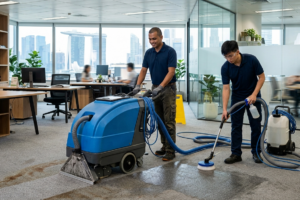
Professional carpet cleaning uses hot water extraction, also known as steam cleaning, which penetrates deep into carpet fibres to dislodge and extract contaminants that standard equipment simply cannot reach. The difference in air quality before and after a professional clean is measurable — and noticeable to everyone in the office.
The Health Risks of Skipping Professional Office Carpet Cleaning After Renovation
Respiratory Problems Among Staff
Fine construction dust contains respirable silica, a known irritant that can trigger or worsen asthma, allergic rhinitis, and other respiratory conditions. When employees return to a newly renovated office with untreated carpets, they are essentially breathing in renovation byproducts with every step taken across the floor.
Increased Sick Days and Reduced Productivity
Poor indoor air quality directly affects cognitive function and employee wellbeing. A contaminated post-renovation environment can lead to higher absenteeism, particularly among staff with existing sensitivities. For businesses in Singapore, where office space is expensive and productivity is tied closely to the physical workspace, this is a real operational risk.
Mould and Bacteria Growth
Renovation work often involves water-based products — paint, sealants, adhesives — that can introduce moisture into carpet fibres. Combined with the warm and humid climate in Singapore, damp carpets become an ideal breeding ground for mould and bacteria within days if left untreated.
What Professional Office Carpet Cleaning in Singapore Actually Involves
Office carpet cleaning in Singapore at a professional level is not a one-size-fits-all process. A reputable provider will assess the type of carpet, the extent of renovation work, and the specific contaminants present before recommending a cleaning method.
Common professional methods used in post-renovation carpet cleaning include:
- Hot water extraction (steam cleaning): The most effective method for deep-seated dust and chemical residues. High-temperature water is injected into the carpet and extracted along with loosened debris.
- Dry compound cleaning: Suitable for carpets that cannot tolerate heavy moisture. A cleaning compound is worked into the fibres and vacuumed out along with trapped particles.
- Encapsulation cleaning: A polymer solution crystallises dirt and debris, which is then vacuumed away. Faster drying time makes this useful for minimising office downtime.
- Spot treatment: Targeted application for paint drips, adhesive stains, or localised contamination from renovation activities.
The right combination of these methods depends entirely on what the renovation involved and what remains in the carpet after basic clean-up is done.
How Soon Should You Book Office Carpet Cleaning After Renovation?
Timing matters. The longer you wait after renovation is complete, the more embedded the contaminants become. Dust particles that are allowed to settle and compact into carpet fibres become increasingly difficult to extract over time.
The recommended window is within 48 to 72 hours after renovation work ends, before staff return to the office. This ensures:
- Employees re-enter a genuinely clean workspace
- Contaminants have not been further compressed by foot traffic
- Any moisture from water-based renovation products is addressed before mould develops
- The visual result of the renovation is not diminished by dirty or stained carpets
Scheduling the clean as the final step of your renovation project — before the official handover or staff return date — is best practice for any office in Singapore.
Post-Renovation Carpet Cleaning vs. Routine Office Carpet Maintenance
| Factor | Post-Renovation Clean | Routine Maintenance Clean
|
|---|---|---|
| Purpose | Remove construction debris and chemical residues | Remove everyday soil and stains |
| Cleaning Intensity | Deep extraction required | Surface and moderate deep clean |
| Health Priority | Critical — air quality risk present | Standard hygiene maintenance |
| Timing | Immediately post-renovation | Quarterly or bi-annually |
| Products Used | Specialised decontamination solutions | Standard carpet cleaning agents |
Protecting Your Carpet Investment After Renovation
Office carpets in Singapore represent a significant capital expenditure. High-quality commercial carpets can cost thousands of dollars to install. Post-renovation contamination — particularly from adhesives, paint, and abrasive dust — accelerates fibre wear and causes permanent discolouration if not treated promptly.
Professional cleaning immediately after renovation does more than restore cleanliness. It protects the structural integrity of the carpet, preserving the texture, colour uniformity, and overall appearance that your renovation was designed to achieve. Skipping this step can mean facing early carpet replacement costs that far exceed the price of a single professional clean.
What to Look for in an Office Carpet Cleaning Provider in Singapore
Not all cleaning companies have the equipment or experience required for post-renovation work. When evaluating a provider, look for:
- Commercial-grade hot water extraction equipment
- Experience with post-renovation and construction site cleaning
- Flexible scheduling to work around your office handover timeline
- Use of low-toxicity, NEA-approved cleaning solutions
- Transparent pricing based on carpet area and cleaning method required
A qualified provider will conduct an on-site assessment before quoting, not offer a flat rate without understanding the scope of work. This matters particularly after renovation, where the contamination profile varies significantly from a standard office environment.
Frequently Asked Questions
How long does office carpet cleaning take after a renovation?
The duration depends on the size of the office and the level of contamination. Most commercial post-renovation carpet cleans in Singapore are completed within a few hours, with drying times ranging from 2 to 6 hours depending on the method used.
Can renovation dust permanently damage office carpets?
Yes. Fine abrasive particles like silica and plaster dust cut into carpet fibres over time, causing premature wear and dulling. Adhesive residues can permanently bond to fibres if not treated promptly. Professional extraction removes these before lasting damage occurs.
Is it safe for employees to return to the office right after carpet cleaning?
Professional carpet cleaning uses low-toxicity solutions that are safe once the carpet has dried. Most offices can be re-occupied within 2 to 4 hours after cleaning is complete, making it practical to schedule the clean overnight or over a weekend.
How often should office carpets be cleaned after renovation?
A thorough post-renovation deep clean should be followed by a routine maintenance schedule — typically every three to six months for commercial offices in Singapore, depending on foot traffic levels and the nature of the workspace.
Will professional cleaning remove paint stains left by renovation work?
Water-based paint stains responded to well when treated early with professional spot treatment. Oil-based or dried paint is harder to remove completely. A professional assessment will determine the appropriate treatment based on the type and age of the stain.
Do office carpet cleaning services in Singapore work around business hours?
Most reputable commercial carpet cleaning providers in Singapore offer flexible scheduling, including after-hours and weekend appointments. This is particularly relevant for post-renovation cleans where the goal is to have the space ready before the official office reopening.