A certified fire resistant door is a door that is designed to withstand fire and smoke for a certain amount of time typically 30 to 60 minutes to give residents time to evacuate safely. In Singapore, HDB regulations stipulate that main entrance doors in residential units must meet certain fire-resistance standards. Having a certified fire door installed is a legal requirement and an important part of protecting your family.
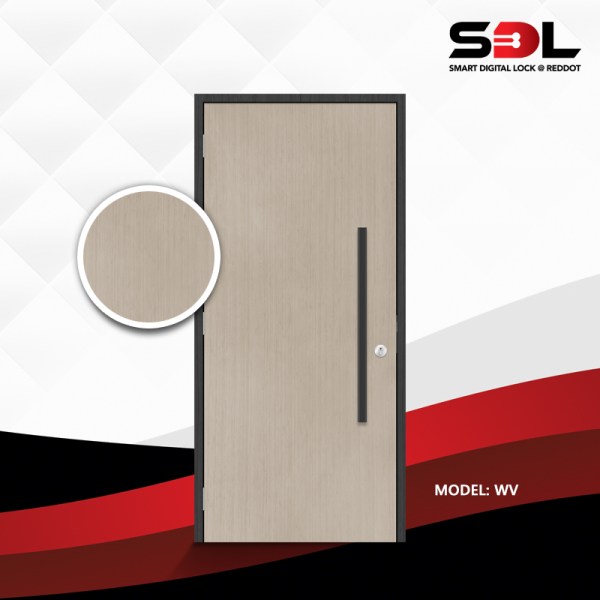
What Singapore’s Fire Safety Rules Say About HDB Main Doors
All HDB residential units are required to be equipped with a fire-rated main entrance door in accordance with Singapore Civil Defense Force (SCDF) requirements. This is a requirement under the Fire Safety Act, and the Singapore Civil Defense Force (Fire Safety) Regulations, which specify minimum performance standards for doors in public housing.
In particular, HDB’s rules state that main doors must have a minimum of 30-minute fire resistance rating (FRR). This means the door must resist the passage of fire and hot gasses for at least 30 minutes under standardized test conditions. For newer BTO flats, these standards are built directly into the construction requirements before keys are handed over.
Non-compliance is not a technical violation. If a fire occurs and your door has been replaced with a non-certified model, your home insurer could reduce or deny your claim. Even more critically, an unapproved door might collapse in a matter of minutes, allowing fire to spread quickly through the corridor.
How a Fire Resistant Door Actually Protects Your Family
Many homeowners treat the main door as a design feature. In reality, it is the single most important passive fire protection element in your flat. Here is what a certified door does during an actual fire event.
It Buys Evacuation Time
More Than a Fire-Rated Door: It’s a 30 Minute Fire-Rated Door It acts as a heat barrier and keeps the toxic smoke from spreading to the adjoining units. More people in Singapore die from smoke inhalation than burns, according to the SCDF. That critical time is needed for your family and neighbors to escape – a properly fitted, certified fire door will delay the migration of smoke for up to 4 hours.
It Contains Fire to the Unit of Origin
HDB blocks are high-density living environments If the passive fire barriers fail, the fire of a unit can become an emergency for an entire floor within minutes. “Fire rated door” is a certified HDB door that acts as a compartmentation barrier, an idea that is required under Singapore’s Fire Code, to prevent fire from spreading from one unit to the common corridor or neighboring flats.
It Protects Corridor Escape Routes
The common corridor in HDB blocks is a designated means of escape. If your main door fails early, it exposes this corridor to heat and smoke, blocking the evacuation path for every resident on that floor. A certified fire door keeps the corridor usable far longer.
Understanding Fire Resistance Ratings: What the Numbers Mean
Fire door ratings can be confusing. Here is a straightforward breakdown of what you will encounter when shopping for a certified fire door in Singapore.
| Rating | Duration | Common Application |
|---|---|---|
| FD30 / 30-minute | 30 minutes | HDB residential main entrance (minimum requirement) |
| FD60 / 60-minute | 60 minutes | Commercial premises, higher-risk residential areas |
| FD90 / 90-minute | 90 minutes | Industrial buildings, high-rise commercial |
For most HDB homeowners, a 30-minute rating is the baseline. However, if your unit is located on a floor with a longer evacuation distance or near a high-risk area, upgrading to a 60-minute door is a worthwhile investment.
What Makes a Fire Door “Certified” in Singapore
Not every door labelled fire-resistant is genuinely certified. In Singapore, certification for fire doors involves third-party testing under recognised standards such as BS 476 Part 22 or SS 332. The door must pass integrity, insulation, and smoke leakage tests conducted by an accredited laboratory.
Key things to look for when purchasing a certified fire door:
- A fire certification label or stamp from a recognised testing body
- Clear documentation of the fire resistance rating achieved
- Compliance with HDB’s approved materials and installation requirements
- Installation by a qualified contractor familiar with Singapore fire safety requirements
- Proper door hardware — hinges, door closers, and intumescent seals — all rated to match the door’s certification
One important point many homeowners miss: the door alone is not enough. The frame, hardware, and installation method must collectively meet the certified standard. A certified door fitted with an incompatible frame or missing intumescent strips will not perform as rated.
BTO Main Door Requirements: What New Homeowners Should Know
If you have just collected the keys to a new BTO flat, the main door to your unit should already meet HDB’s fire resistance requirement, as part of the standard handover. But many homeowners opt to replace this door during renovation to match their interior design.
That’s where the risk is. If you change your BTO main door to a non-certified door, your home might no longer comply with Singapore fire safety regulations even if it looks like a solid-core timber door. Before replacing any door, make sure the replacement door has a valid Singapore fire certification and that your renovation contractor is installing the door in accordance with the certified specifications.
The HDB’s renovation guidelines also require that any replacement of the main entrance door must be with a fire-rated door that meets standards. Non-compliance can lead to rectification orders and, critically, can put your household at risk.
Common Mistakes HDB Homeowners Make With Fire Doors
Even homeowners who purchase a certified fire door sometimes unknowingly compromise its performance. Here are the most frequent issues to avoid.
- Propping the door open: A fire door only works when closed. Leaving it permanently propped open eliminates its protective function entirely.
- Removing the door closer: The self-closing mechanism ensures the door shuts automatically during a fire. Removing it for convenience is a serious safety risk.
- Replacing hardware independently: Swapping hinges, handles, or locks with uncertified components can void the door’s fire rating.
- Skipping regular maintenance: Check door seals, hinges, and closers annually. A warped door or damaged intumescent seal will not perform under fire conditions.
- Prioritising aesthetics over certification: A beautiful door that lacks certification provides no fire protection, regardless of how solid it looks.
How to Choose the Right Certified Fire Door for Your HDB Flat
Choosing the right fire door comes down to three factors: certification, design compatibility, and installation quality.
Verify Certification First
Always ask for the fire door’s test certification document before purchasing. A reputable supplier will provide this without hesitation. Cross-check that the certification covers the complete door set — door leaf, frame, and hardware — not just the core panel.
Match the Design to Your Home
Modern certified fire doors are available in a wide range of finishes, including timber veneer, metal, and powder-coated options. You do not have to compromise on aesthetics. Many homeowners are surprised to find that certified fire doors can look identical to standard designer doors.
Insist on Professional Installation
Even the best of certified fire doors will fail if they are not installed correctly. Engage contractors familiar with Singapore fire safety regulations and ensure the completed installation has the correct door gap clearance, operational closer and intact intumescent seals.
If you are a HDB homeowner seeking to meet compliance requirements without compromising on design, SmartDigital Lock Reddot has a selection of certified fire resistant doors that are built to meet Singapore’s fire safety standards. They combine solid protection with contemporary esthetics that complement modern HDB and BTO interiors.
Frequently Asked Questions
Is a fire resistant door compulsory for HDB flats in Singapore?
Yeah. According to HDB regulations, all residential units must be equipped with a fire-rated main entrance door with a minimum 30-minute fire resistance rating. This is a requirement under Singapore’s Fire Safety Act for existing HDB flats and new BTO units.
Can I replace my HDB main door with a non-fire-rated door during renovation?
No. As per HDB’s renovation guidelines, any replacement main entrance door has to be fire-rated and meet the required certification standard. Your household will be at risk if you use a non-certified door and may receive a rectification order from HDB.
How do I know if a fire door is genuinely certified in Singapore?
Ask the supplier for the fire test certification document of the door, referring to testing under BS 476 Part 22 or SS 332. The certification should specify the achieved fire resistance rating, and include the entire door set, including the leaf, frame and hardware.
Does a fire door need any special maintenance?
Yes. Check your fire door for warping, broken intumescent seals and worn hinges once a year. Verify proper operation of the door closer and proper closing of the door with no gaps. To maintain the fire rating of the door, damaged components must be replaced with certified equivalents.
What is the difference between a 30-minute and 60-minute fire rated door for HDB use?
A 30 minute fire rated door is the minimum requirement for HDB and gives good protection for most residential units. The 60-minute door adds more resistance and should be considered for units with longer evacuation distances or greater exposure to fire risk.
Will my home insurance be affected if I install a non-certified fire door?
Possibly, yes. If a fire occurs and your main door is found to be non-certified, your insurer may reduce or deny your claim on the basis of non-compliance with Singapore fire safety regulations. Always install a properly certified fire door to protect your family and your policy coverage.