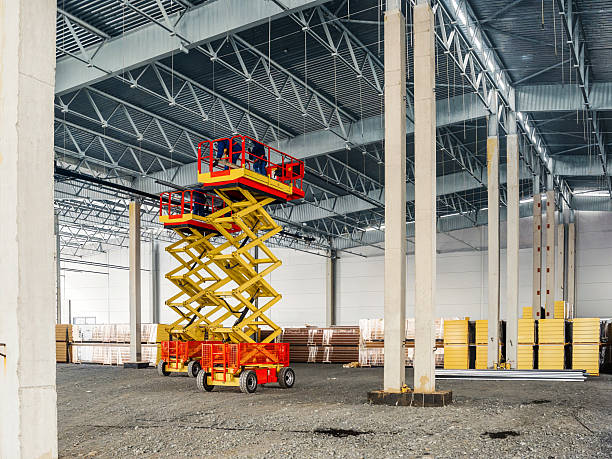
When you need to work at height on a construction site, choosing the right scissor lift rent option can directly affect your crew’s productivity and safety. The best scissor lifts for construction combine a high weight capacity, stable platform, sufficient working height, and terrain-ready wheels — all matched to the specific demands of your site environment and task type.
Not every scissor lift performs the same on a construction site. What works in a warehouse or indoor setting often falls short when exposed to uneven ground, outdoor conditions, or heavier load requirements. Understanding which features matter most saves you time, reduces risk, and helps you get more value from your scissor lift rental.
Why Construction Sites Demand More from a Scissor Lift Rental
Construction environments are unpredictable. You may be dealing with soft ground one day and concrete the next. Workers need to carry tools, materials, and equipment to height — not just their own body weight. A standard indoor scissor lift simply isn’t built for that kind of stress.
In Singapore, the Workplace Safety and Health (WSH) Act governs the safe use of mobile elevated work platforms (MEWPs), including scissor lifts. The Ministry of Manpower (MOM) requires that all lifting equipment used on worksites meets specific safety standards and that operators hold proper certification before operating such machinery. This makes choosing a well-maintained, compliant aerial platform in Singapore not just a performance decision — it’s a legal one.
Key Features to Evaluate Before You Rent a Construction Scissor Lift
1. Platform Height and Working Reach
For most construction scissor lift applications, you need a working height of at least 10 metres, with many structural and façade tasks requiring 12 to 16 metres or more. Always identify the maximum working height of your task before selecting a model — and factor in the additional reach of a standing worker.
A common mistake is renting a lift that reaches the platform height but doesn’t account for the 1.8m average standing height of an operator. Your actual working reach matters more than the lift’s maximum elevation alone.
2. Load Capacity and Platform Size
Construction work often involves carrying heavy tools, steel components, or multiple workers at once. Look for scissor lifts with platform load capacities of 450 kg or higher for general site use. Larger platform dimensions — typically 2.4m x 1.2m or wider — allow workers to move freely and position equipment without compromising stability.
Overloading a scissor lift is one of the most cited causes of aerial platform incidents on construction sites. Always match the rated capacity to your actual load — including personnel, tools, and materials combined.
3. Rough Terrain vs. Slab/Indoor Use
This is where many construction site equipment rental decisions go wrong. Rough terrain scissor lifts are fitted with four-wheel drive, larger pneumatic tyres, and higher ground clearance. They’re designed for uneven surfaces, gravel, and outdoor ground conditions common on active construction sites.
Slab or electric scissor lifts are better suited for smooth concrete surfaces inside partially completed structures. If your site has both, consider renting one of each or choosing a versatile model that handles mixed surfaces.
| Feature | Rough Terrain Scissor Lift | Electric/Slab Scissor Lift
|
|---|---|---|
| Best Surface | Uneven ground, gravel, outdoor | Smooth concrete, indoor |
| Drive Type | 4WD, diesel or hybrid | Electric, 2WD |
| Emission Level | Higher | Zero/low emission |
| Tyre Type | Pneumatic | Non-marking solid tyres |
| Typical Use | Civil works, exterior façade | Interior fit-out, M&E works |
4. Outrigger and Stabiliser Systems
On construction sites where the ground may be uneven or soft, outrigger stabilisers are critical. They extend the base footprint of the lift and prevent tipping during elevated operation. Not all scissor lifts include outriggers, so confirm this feature if your site terrain is irregular.
5. Drive and Power Source
Diesel-powered models offer extended run times and are appropriate for outdoor worksites without reliable power access. Electric scissor lifts are ideal for indoor construction environments — they produce no exhaust emissions and operate quietly. With Singapore’s push toward greener construction practices, electric models are increasingly requested for enclosed or semi-enclosed workspaces.
6. Safety Systems and Compliance Features
A rental unit should include all standard safety features as a baseline, not as optional extras. Before accepting a unit, verify these are present and functional:
- Tilt sensor and automatic alarm
- Platform guardrails and safety gates
- Emergency descent system
- Anti-crush protection at the platform
- Load sensing with overload alert
- Non-slip platform flooring
In Singapore, MOM guidelines require that MEWPs used on construction sites undergo regular inspection and that only trained and certified operators use them. When evaluating a site equipment rental provider, ask for proof of equipment inspection records and service history.
How to Match the Right Scissor Lift to Your Construction Task
The right match depends on three site-specific factors: the working height required, the surface type, and the total load per lift cycle. Here’s a quick decision framework:
- Structural steelwork above 12m outdoors: Rough terrain scissor lift, 4WD, diesel, high capacity platform
- Interior ceiling or MEP work at 8–10m: Electric scissor lift, slab-rated, narrow profile for corridor access
- Façade inspection or cladding installation: Rough terrain model with extended platform and outriggers
- Multi-level building interior fit-out: Electric model, compact design, suitable for freight lift transport between floors
What to Ask Your Scissor Lift Rental Provider
Before signing a rental agreement, ask these questions to avoid surprises on site:
- Is the equipment serviced and certified for use under MOM/WSH standards?
- What is the maximum rated load, and does it match my task requirements?
- Is the model appropriate for outdoor/rough terrain use, or is it slab-rated only?
- What is the breakdown response time if equipment fails on site?
- Are operator training support or manuals available with the rental?
Getting clear answers upfront protects your schedule and keeps your site compliant. An equipment supplier that can’t answer these questions confidently is worth reconsidering.
Getting the Most from Your Rental Period
Scissor lift rental pricing in Singapore is typically structured by day, week, or month. For construction projects with extended timelines, monthly rates offer significantly better value. Plan your lift usage schedule early — align the rental period with your elevated work schedule to avoid paying for idle days.
It’s also worth coordinating delivery access in advance. Scissor lifts require a flatbed lorry for transport, and site access restrictions during peak construction hours can delay delivery. Communicate site entry requirements to your rental provider ahead of time.
For construction companies in Singapore looking for reliable scissor lift rent solutions backed by well-maintained equipment and professional service, A&G Equipment provides a range of scissor lift options suited for both indoor and outdoor construction applications.
Frequently Asked Questions
What is the typical working height for a construction scissor lift?
Most construction scissor lifts offer working heights between 10 and 16 metres, with some heavy-duty models reaching up to 18 metres. The right height depends on your task — always account for operator standing height when calculating required platform elevation.
Can a scissor lift be used outdoors on a construction site in Singapore?
Yes, but only rough terrain models are suitable for outdoor construction environments. These lifts are equipped with 4WD, pneumatic tyres, and higher ground clearance. Standard electric slab lifts are designed for smooth indoor surfaces and should not be used on uneven or soft ground.
What safety certifications should a rental scissor lift have in Singapore?
Scissor lifts used on construction sites in Singapore must comply with the Workplace Safety and Health (WSH) Act and MOM regulations. Equipment should have current inspection records, and operators must hold valid MEWP certification. Always request maintenance and inspection documentation from your rental provider before use.
How is scissor lift rental pricing structured in Singapore?
Rental rates are typically calculated on a daily, weekly, or monthly basis. Monthly rates offer the best value for longer construction projects. Pricing varies by lift type, platform height, and load capacity — rough terrain diesel models generally cost more than standard electric lifts.
What is the maximum load capacity I should look for in a construction scissor lift?
For general construction use, look for a rated platform load capacity of at least 450 kg. This allows two to three workers plus tools and materials. Always verify the combined weight of personnel and equipment stays within the manufacturer’s rated capacity to remain compliant and safe.
What is the difference between a scissor lift and a boom lift for construction use?
A scissor lift provides a stable, large platform ideal for tasks directly below the lift position — like ceiling installation or structural work. A boom lift offers horizontal outreach, making it better for tasks that require reaching over obstacles. For vertical construction tasks, scissor lifts are generally more efficient and cost-effective to rent.