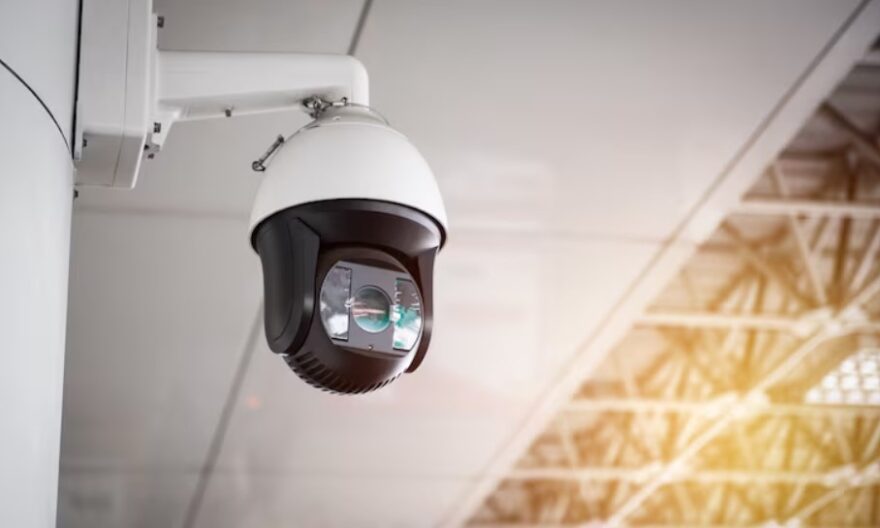
A CCTV system uses closed-circuit cameras that transmit footage to a dedicated local recorder, viewable only on connected monitors. A security camera system is broader — it includes smart IP cameras, cloud storage, remote access, and app-based monitoring. For most Singapore homeowners today, a complete security camera system offers more flexibility, easier installation, and better long-term value than traditional CCTV alone.
If you’ve been shopping for a security camera system in Singapore, you’ve likely seen both terms used interchangeably. They’re not the same — and choosing the wrong one could mean paying for features you don’t need, or missing ones you do. Here’s how to tell them apart and pick the right setup for your home.
What Is a CCTV System for Home Use?
CCTV stands for Closed-Circuit Television. The word “closed” is key — footage travels through a private, self-contained loop from camera to recorder to monitor. Nothing connects to the internet by default.
A typical CCTV system for home use includes:
- Analogue or HD cameras (AHD, TVI, or CVI format)
- A DVR (Digital Video Recorder) to store footage locally
- Coaxial cables running from each camera to the recorder
- A dedicated monitor or TV for live and playback viewing
This setup has been a staple in Singapore HDB flats, landed properties, and condominiums for over two decades. It’s reliable, works without internet, and doesn’t depend on third-party cloud services. But it does require physical access to review footage — and installation is more invasive due to the cabling.
What Is a Security Camera System?
A modern home surveillance system is a broader, more integrated solution. It typically refers to IP-based (Internet Protocol) cameras paired with an NVR (Network Video Recorder) or cloud storage. These cameras connect over your home Wi-Fi or a local network, making them accessible remotely via smartphone apps.
Key features of a smart security camera system:
- HD or 4K video resolution (often 2MP to 8MP)
- Remote live viewing from anywhere via mobile app
- Motion detection with push notifications
- Two-way audio in many models
- Night vision and AI-powered person/vehicle detection
- Cloud or local NVR storage options
For Singapore homeowners with busy schedules or multiple properties, this flexibility is a significant practical advantage. You can check your front door, helper’s area, or carpark from your office — without needing to rewind a DVR at home.
CCTV vs Security Camera System: Side-by-Side Comparison
| Feature | Traditional CCTV | Smart Security Camera System
|
|---|---|---|
| Connection type | Coaxial cable (analogue) | Wi-Fi or Ethernet (IP-based) |
| Remote access | Limited or requires extra setup | Yes — app-based from anywhere |
| Video quality | HD (up to 1080p in newer models) | Full HD to 4K |
| Storage | Local DVR only | NVR, SD card, or cloud |
| Installation complexity | High — cables through walls | Low to moderate — mostly wireless options |
| Internet dependency | None | Partial (local recording still works offline) |
| Smart features | Minimal | Motion alerts, AI detection, two-way audio |
| Typical cost (Singapore) | SGD 400–900 for a 4-camera set | SGD 300–1,200 depending on features |
Which Setup Works Better for Singapore Homes?
HDB Flats and Condominiums
In high-density housing, running cables through walls is often impractical — and may require approval. Wireless IP cameras are far better suited here. They’re less disruptive to install, can be repositioned easily, and many compact models blend into interior aesthetics without looking industrial.
For HDB owners, a 2–4 camera IP system covering the main door, corridor, and common areas provides solid coverage without major renovation work.
Landed Properties and Bungalows
For larger landed homes — especially those with perimeter walls, driveways, and multiple entry points — a wired CCTV or hybrid NVR system is often the better long-term investment. Wired cameras are harder to tamper with, aren’t affected by Wi-Fi dead zones, and offer more consistent performance across larger outdoor areas.
A 6–8 camera system with PoE (Power over Ethernet) cameras and a dedicated NVR is a popular configuration among landed homeowners in Singapore.
When Traditional CCTV Still Makes Sense
Don’t write off CCTV entirely. If you already have an existing analogue infrastructure, upgrading to HD-TVI cameras is a cost-effective improvement without replacing all cabling. CCTV also appeals to homeowners who are cautious about data privacy and prefer footage stored entirely on-premises with no cloud involvement.
Privacy and Legal Considerations in Singapore
Singapore’s Personal Data Protection Act (PDPA) governs how surveillance footage is collected, stored, and used. According to the Personal Data Protection Commission (PDPC), homeowners using cameras that capture footage beyond their own property — such as shared corridors or neighbours’ units — must comply with relevant provisions under the PDPA.
Practically speaking:
- Cameras should be aimed at your own property boundaries
- Footage should not be shared publicly without cause
- Cloud storage providers should have clear data retention and security policies
This is worth factoring into your choice of system — especially if you opt for cloud-based storage through an overseas provider.
Key Factors to Decide Between the Two
Here’s a quick decision guide based on common homeowner priorities:
- Ease of installation: Choose a wireless IP camera system
- Maximum reliability and tamper resistance: Choose wired CCTV or PoE NVR
- Remote monitoring on your phone: Choose a smart security camera system
- Full local storage with no cloud: Either works — opt for NVR or DVR with large-capacity hard drives
- Tight budget: Entry-level IP camera kits start from around SGD 300 in Singapore
- Large property with multiple zones: Hybrid or wired system with centralized NVR
The Smarter Choice for Most Singapore Homeowners
For the majority of Singapore homes — particularly HDB flats and condominiums — a modern IP-based security camera system is the more practical and future-proof option. It’s easier to install, gives you real-time visibility from your phone, and supports smart integrations that traditional CCTV simply can’t match.
That said, the “best” system depends entirely on your property type, budget, and how much control you want over your footage. A professional assessment of your home layout before purchasing can prevent costly mistakes.
Deep Security offers a range of home CCTV and IP camera systems suited to Singapore’s diverse housing types — from compact HDB setups to full perimeter coverage for landed properties. Explore their home security solutions to find a configuration that fits your needs and property.
Frequently Asked Questions
Is CCTV and a security camera system the same thing?
No. CCTV refers specifically to closed-circuit analogue systems that record locally. A security camera system is a broader term that includes modern IP cameras with remote access, cloud storage, and smart features like motion alerts and two-way audio.
Do I need Wi-Fi for a home security camera system in Singapore?
Wi-Fi is needed for remote viewing and cloud features, but not for basic recording. PoE NVR systems record locally over a wired network without requiring internet. Most IP cameras support both local and cloud storage options simultaneously.
How many cameras does a Singapore HDB flat typically need?
Most HDB flats are well-covered with 2–4 cameras — typically covering the main entrance, service yard, and any common internal areas. The exact number depends on your floor plan and how many blind spots you want to eliminate.
Are home security cameras covered under Singapore’s PDPA?
Yes, partially. If your cameras capture footage beyond your own property boundary — such as public corridors or a neighbour’s unit — the PDPA may apply. The PDPC advises homeowners to angle cameras within their own premises and handle footage responsibly.
What is the typical cost of a home security camera system in Singapore?
Entry-level wireless IP camera kits start from around SGD 300 for a basic 2-camera setup. A professional wired NVR system with 4–8 cameras typically costs between SGD 600 and SGD 1,500, depending on camera resolution and installation complexity.
Which is better for a landed property in Singapore — CCTV or IP cameras?
For landed homes, a wired PoE NVR system is generally preferred. It handles larger outdoor areas reliably, isn’t affected by Wi-Fi signal issues, and offers greater tamper resistance — making it more suitable for perimeter and multi-zone coverage.