


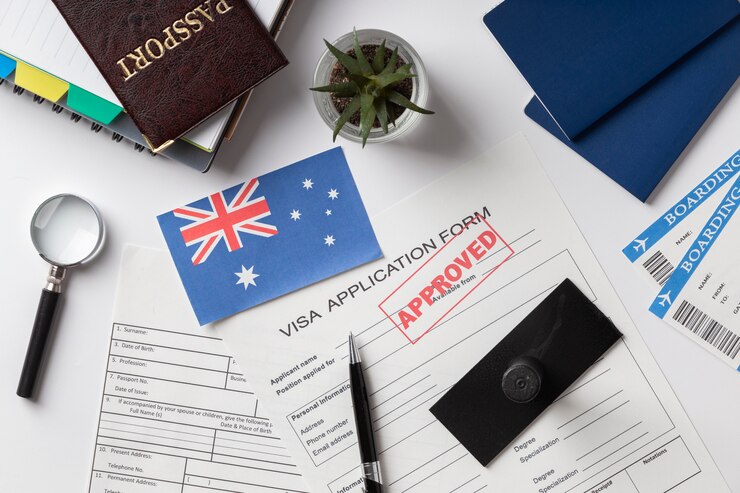
Singapore students applying for university in Australia will need to select a course and meet the English and academic entry requirements, apply through the institution’s application portal or through an agent, secure a student visa (subclass 500) and organise accommodation and finances. This process typically begins 12-18 months before your desired intake. The two key entry points are February and July.
Australia remains one of the top study-abroad destinations for Singaporeans. Its universities consistently rank among the world’s best, its proximity to Singapore makes travel manageable, and its post-study work rights give graduates a genuine career runway. If you’re serious about applying for university in Australia, this guide walks you through every stage — from shortlisting schools to landing your visa.
Why Singapore Students Choose Australia for University
Every year, over 600,000 international students study in Australia and Singaporeans are always one of the top nationalities to join universities in Australia. It is a practical and prestigious choice, with its cultural familiarity, English-medium teaching and strong alumni networks across Southeast Asia.
The QS World University Rankings 2025 lists eight Australian universities among the top 100, including the University of Melbourne, Australian National University and University of Sydney. That pedigree matters for students looking at competitive fields — engineering, law, business or medicine.
Step 1: Identify Your Course and University
Before anything else, get specific. Don’t just decide you want to “study in Australia” — decide what you want to study and why that program fits your goals.
Key factors to evaluate:
-
Course structure: Is it a three-year or four-year degree? Does it include industry placements?
-
University ranking in your discipline: A university ranked #50 overall may rank #10 for your specific field.
-
Location: Melbourne, Sydney, Brisbane, Adelaide, and Perth each offer different living costs and career ecosystems.
-
Tuition fees: Undergraduate fees for international students typically range from AUD 20,000 to AUD 45,000 per year.
Use the Australian Government’s Study Australia portal to compare programs and institutions. It is the official government resource and carries current, verified information.
Step 2: Check Admission Requirements
Singapore applicants are mainly evaluated by Australian universities through A-Level results (GCE A-Levels or Singapore-Cambridge A-Levels) or polytechnic diplomas. Some universities also take IB results.
Academic Entry Requirements
Each institution and program has its own minimum entry score. For competitive courses like law or medicine, much better results are required. Most Universities publish indicative cut-off scores on their admissions pages – check these early on, not after you’ve applied.
English Language Requirements
Singapore citizens are exempted from the English language test because the national curriculum is taught in English. Not everywhere. Check with each institution if you need an IELTS, TOEFL or PTE score. For most undergraduate programs, if required, the standard threshold is IELTS Academic scores of 6.5 to 7.0 (with no band lower than 6.0).
Step 3: Shortlist and Apply
Australia does not have a centralised application system for international students, unlike the UK (which uses UCAS). You apply directly to the admissions office of each university, or via a registered education agent.
Most students apply to two to four universities simultaneously. Each application typically requires:
-
Certified academic transcripts
-
Passport copy
-
Personal statement or statement of purpose
-
English proficiency results (if required)
-
Two academic or character references
-
Completed online application form
The deadlines for the February intake are from September to November. Apply between March and May for July intake. Apply early – popular programs often reach their international student cap before the official closing date.
Step 4: Receive and Accept Your Offer
Upon acceptance, you will be issued with a Confirmation of Enrolment (CoE) – an important document required to apply for your student visa. Read the offer letter thoroughly before you accept it. Look at the start date, whether there are conditions such as having to do a bridging course, and when the fee needs to be paid.
Make your first tuition fee deposit before the deadline specified to secure your place. Offers expire if not promptly accepted.
Step 5: Apply for Your Australian Student Visa
Singapore citizens need a Student Visa (subclass 500) to study in Australia. Lodge your application online with the Department of Home Affairs. Processing times vary and are typically between four to eight weeks.
Documents Required for the Subclass 500 Visa
-
Valid passport
-
Confirmation of Enrolment (CoE)
-
Genuine Temporary Entrant (GTE) statement
-
Evidence of financial capacity (sufficient funds to cover tuition and living costs)
-
Overseas Student Health Cover (OSHC) — mandatory for the duration of your visa
-
Academic transcripts and English test results
Immigration officers will check your reason for coming to Australia to see if you are coming with the purpose of study and if you plan to go back home after you have finished your studies. Make your statement honest and specific.
Step 6: Arrange Accommodation and Finances
Start looking for accommodation the moment you accept your offer, not after your visa is approved. Popular options include:
-
On-campus student housing: Convenient, community-oriented, and usually available for first-year students. Apply directly through your university as spaces are limited.
-
Private rentals: More independence but requires guarantors or rental history. Platforms like Domain and realestate.com.au are widely used.
-
Homestay: A good option for students who prefer a structured living environment on arrival.
Average cost of living in Sydney and Melbourne is about AUD 1,500 to AUD 2,500 a month (including accommodation, groceries, transport and utilities). Perth and Adelaide are generally cheaper.
What About Medical Universities in Australia?
International students can study medicine at Australian universities, such as the University of Melbourne, Monash University and the University of Queensland, but entry is highly competitive and is different to undergraduate degrees.
The majority of medical degrees in Australia are graduate-entry programs (Doctor of Medicine), meaning that you must have completed a bachelor’s degree and scored highly on the GAMSAT (Graduate Medical School Admissions Test) or MCAT beforehand. There are also undergraduate-entry medicine courses but these are rare and very difficult for international students to get on to. You’ll have to check the entry pathway for each medical school before you plan your application timeline.
Timeline: When to Start Your Application
| Milestone | Recommended Timing |
|---|---|
| Research courses and universities | 12–18 months before intake |
| Sit English language tests (if required) | 10–12 months before intake |
| Submit applications | 6–9 months before intake |
| Accept offer and pay deposit | 4–6 months before intake |
| Apply for Student Visa (subclass 500) | 3–4 months before intake |
| Arrange accommodation and OSHC | 3–4 months before intake |
| Depart Singapore | 1–2 weeks before course starts |
Common Mistakes Singapore Students Make
Avoiding these pitfalls can save you months of delay:
-
Applying too late: International student quotas close before official deadlines. Apply as early as possible.
-
Underestimating the GTE requirement: A weak or vague GTE statement is one of the most common reasons for visa delays or refusals.
-
Ignoring credit transfer possibilities: If you hold a polytechnic diploma, some Australian universities offer advanced standing — meaning you could complete a degree in two years instead of three.
-
Not comparing total costs: Tuition fees are only part of the picture. Factor in OSHC, flights, accommodation deposits, and setup costs.
Getting Professional Guidance
Applying to multiple universities at the same time for university applications, visa requirements and institution selection is really complex. Using a registered and experienced education consultancy helps to avoid mistakes, improve the quality of your application and ensure that you meet all deadlines.
Hui & Kuah Pte. Ltd Education has helped Singapore students to get placed in Australian universities for a wide array of disciplines. Whether you want to look at undergraduate business programs, engineering degrees or to explore the routes to medical universities in Australia, having a savvy partner in your corner is a practical investment – not simply a convenience.
Frequently Asked Questions
Q1: Can Singapore students apply directly to Australian universities without an agent?
Students in Singapore may apply directly via the online admissions portals of each university. However, working with a registered education agent can help you with the documentation, the quality of your application and meeting institution-specific deadlines – which vary from university to university.
Q2: Do Singapore students need IELTS to apply for university in Australia?
Many Australian universities do not require English language tests for Singapore citizens, due to the English-medium education system. However, this exemption is not universal so always check with each institution before assuming you are exempt.
Q3: What is the Genuine Temporary Entrant (GTE) requirement?
The GTE is a written statement that you lodge with your application for an Australian student visa. This shows that you are sincerely interested in studying and returning to Singapore after completing your degree. Immigration officers use it to judge your intentions, so you need to be specific and honest in your statement.
Q4: How competitive is entry into medical universities in Australia for international students?
Getting into a medical university in Australia is a very competitive process for overseas students. Most programs are graduate-entry and will require a completed bachelor’s degree, GAMSAT or MCAT scores and strong academic results. International places are limited so early and well prepared applications are essential.