


A fire resistant door is only effective when it is properly maintained. Regular inspections, lubrication of hinges, checking seals, and ensuring the door closes fully without gaps are essential maintenance tasks. Neglecting these steps can compromise the door’s ability to contain smoke and flames during an emergency, putting lives and property at serious risk.
Fire doors are not passive fixtures. They are life-safety components that need active care — just like a smoke detector or a sprinkler system. Whether you manage a HDB block, a commercial property, or a private landed home in Singapore, understanding fire door maintenance is one of the most important things you can do to protect the people inside.
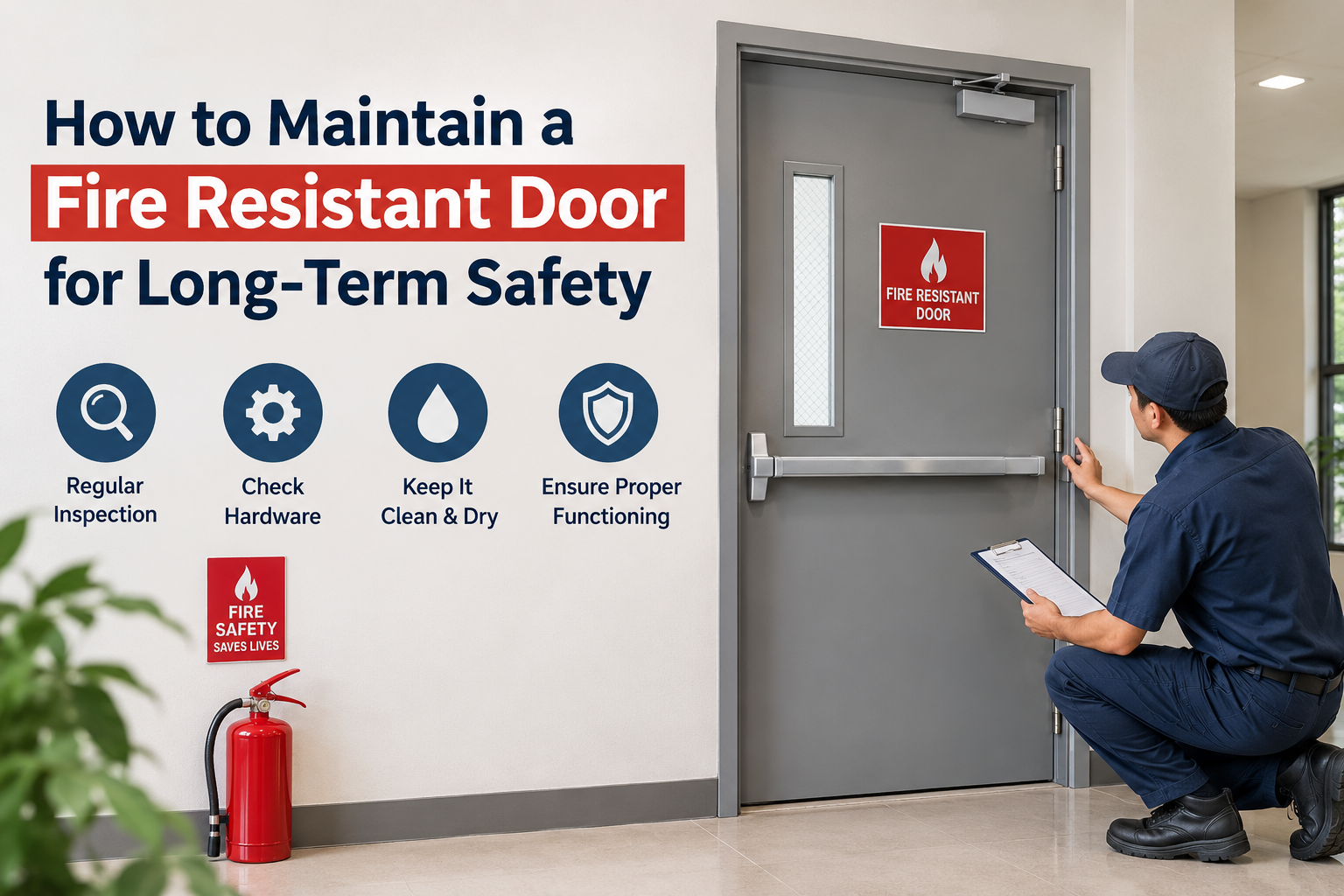
Why Fire Door Maintenance Actually Matters
In Singapore, fire safety is governed by the Fire Safety Act and enforced by the Singapore Civil Defence Force (SCDF). Under the Fire Safety (Buildings) Regulations, building owners and occupants are legally responsible for ensuring that fire safety features — including fire-rated doors — remain in working condition at all times.
A door that fails to close properly, has a damaged intumescent seal, or has been propped open defeats its entire purpose. Research from fire safety bodies consistently shows that most fire-related fatalities occur due to smoke inhalation, not the flames themselves. A well-maintained fire door can contain smoke and toxic gases for 30 to 120 minutes, depending on its fire rating — and that time is everything.
Fire Door Maintenance Checklist: What to Inspect and When
Use this checklist to keep your fire resistant door performing at the standard it was installed for. Some tasks should be done monthly; others quarterly or annually. Adapt the frequency based on how often the door is used.
Monthly Checks
- Self-closing mechanism: Open the door to 90 degrees and release it. It should close fully and latch without any manual assistance. If it stalls or stays ajar, the closer needs adjusting or replacing.
- Door gaps: Inspect the gap around the perimeter of the door. The maximum allowable gap is typically 3mm on the sides and top, and no more than 8mm at the bottom. Larger gaps allow smoke to pass through.
- Propping or wedging: Ensure the door is never propped open with a wedge or tied back. This is one of the most common — and dangerous — fire door violations in buildings.
- Intumescent seals: Look for any signs of damage, compression, or missing sections. These strips expand under heat to seal the gap between the door and frame, blocking smoke and flames.
Quarterly Checks
- Hinges: Check all hinges — typically three are required on a fire door. Look for loose screws, corrosion, or misalignment. Lubricate with a suitable oil or grease to prevent stiffness.
- Latch and lock hardware: Confirm the latch engages properly into the keep. If your door uses an electric door lock, check that it releases correctly on power failure and does not prevent the door from closing under normal operation.
- Frame condition: Inspect the door frame for cracks, warping, or damage. A compromised frame is just as dangerous as a damaged door leaf.
- Vision panels: If your door includes a glazed panel, check that the glass is intact and that the intumescent glazing seal around it is undamaged.
Annual Checks
- Full professional inspection: Have a qualified fire door inspector or certified technician carry out a comprehensive assessment once a year. They will check compliance with the relevant Singapore standards and identify any issues that routine checks may have missed.
- Door certification labels: Verify that the fire rating label or certification plate is still present and legible on the door leaf or frame. If it has been painted over or removed, the door’s compliance status becomes questionable.
- Hardware integrity: Replace any components — hinges, closers, seals — that show signs of wear, even if they appear to be functioning. Wear accumulates silently and failures often happen under pressure.
Why the Door Must Close Properly — Every Single Time
This is the single most important function of a fire door: it must close and latch completely, without being forced. If it does not, it is not doing its job.
A partially open or improperly latched door can allow a fire to spread from one compartment to another in minutes. Fire doors are designed as part of a building’s passive fire protection system — compartmentalisation. The principle is straightforward: contain the fire in one area long enough for occupants to evacuate and for the SCDF to respond.
Common reasons a fire door fails to close properly include:
- A worn or under-powered door closer
- Warping of the door leaf due to moisture or heat exposure
- Misaligned hinges shifting the door out of its frame
- Swollen frames during humid conditions (common in Singapore’s climate)
- Damaged or missing intumescent strips that increase resistance
If any of these issues are present, address them immediately. Do not wait for a scheduled inspection.
Fire Door Maintenance in Singapore: What the Regulations Say
The SCDF requires that fire safety installations be maintained in good working order under the Fire Safety Act (Cap 109A). Building owners who allow fire safety features — including fire-rated doors — to fall into disrepair can face penalties and enforcement action.
For condominiums and commercial buildings, the management committee or facilities manager is typically responsible for scheduling and recording inspections. Keeping a maintenance logbook is not just good practice — it is evidence of compliance if an inspection or investigation occurs.
How Electric Door Locks Interact with Fire Door Safety
Modern buildings increasingly use an electric door lock integrated with access control systems on fire doors. When properly configured, these locks are compliant with fire safety requirements — but only when they are fail-safe, meaning the door unlocks and closes freely when power is cut during a fire alarm activation.
During your maintenance checks, verify that the electric lock does not hold the door open or prevent it from latching. Test the fail-safe operation by simulating a power interruption. If the lock does not release or the door does not close fully, this is a critical fault that must be resolved before the door is considered compliant.
Fire Rated Door Maintenance: Common Mistakes to Avoid
Even well-intentioned property managers make maintenance errors that silently compromise fire door effectiveness. Here are the most common ones:
| Mistake | Why It’s a Problem |
|---|---|
| Painting over intumescent seals | Paint clogs the seal, preventing it from expanding under heat |
| Replacing hinges with non-fire-rated versions | Standard hinges may warp or fail during a fire event |
| Using the door as a storage backing | Objects leaning against the door affect closure and hinge alignment |
| Ignoring minor gaps | Small gaps compound over time and allow smoke penetration |
| Skipping annual professional inspection | Visual checks alone miss structural or mechanical degradation |
When to Replace Rather Than Repair
Not every issue can be fixed with a new seal or adjusted closer. There are situations where the fire resistant door must be replaced entirely:
- The door has been involved in a fire, even a minor one
- Structural damage — warping, delamination, or cracking — is present on the door leaf
- The certification label is missing and cannot be verified with the original installer
- Modifications have been made to the door (e.g., a new lock hole cut) without re-certification
In these cases, continuing to use the door is a compliance risk and a safety hazard. Budget for replacement as part of your building’s long-term fire safety strategy.
Build a Fire Door Maintenance Routine That Sticks
The most reliable maintenance programmes are the ones built into existing property management workflows. Add fire door checks to your monthly walkaround schedule. Record findings digitally so they are searchable and auditable. Flag issues immediately rather than waiting for the next scheduled review.
For homeowners, the habit is simpler: once a month, close every fire door in your home, watch it latch, and check the seals visually. That 60-second routine can be the difference between containment and catastrophe.
If you are looking for quality fire-rated doors that meet Singapore’s fire safety standards, Smart Digital Lock Reddot offers a range of certified solutions designed for both residential and commercial properties — built for performance and long-term reliability.
Frequently Asked Questions
How often should a fire resistant door be inspected?
Fire resistant doors should be checked monthly for basic function — gaps, self-closing, and seal condition — and inspected professionally at least once a year. High-traffic doors in commercial or multi-unit buildings may require more frequent professional assessments to remain compliant with Singapore fire safety regulations.
What is the maximum gap allowed around a fire door?
The standard allowable gap around a fire door is 3mm on the sides and top, and up to 8mm at the bottom. Gaps larger than these allow smoke and toxic gases to pass through, significantly reducing the door’s effectiveness during a fire emergency.
Can I use a regular door closer on a fire rated door?
No. Fire rated doors require door closers that are specifically tested and certified for use with fire doors. A standard closer may not generate enough force to fully close and latch the door under all conditions, particularly if the door warps or the frame shifts slightly over time.
Does an electric door lock affect fire door compliance?
An electric door lock is compliant on a fire door only if it is fail-safe — meaning it automatically releases and allows the door to close freely when power is interrupted during a fire alarm. Locks that hold the door open or prevent latching are a serious compliance and safety issue.
What should I do if my fire door does not close properly?
Stop using the door as a fire barrier until the issue is resolved. Identify the cause — worn closer, misaligned hinges, warped frame — and engage a qualified technician to carry out fire door maintenance immediately. A door that does not latch provides no compartmentalisation protection in a fire.
Are building owners in Singapore legally responsible for fire door maintenance?
Yes. Under Singapore’s Fire Safety Act, building owners and occupants are legally required to maintain fire safety installations, including fire doors, in working order. Failure to comply can result in penalties from the SCDF and may have serious liability implications if a fire-related incident occurs.