


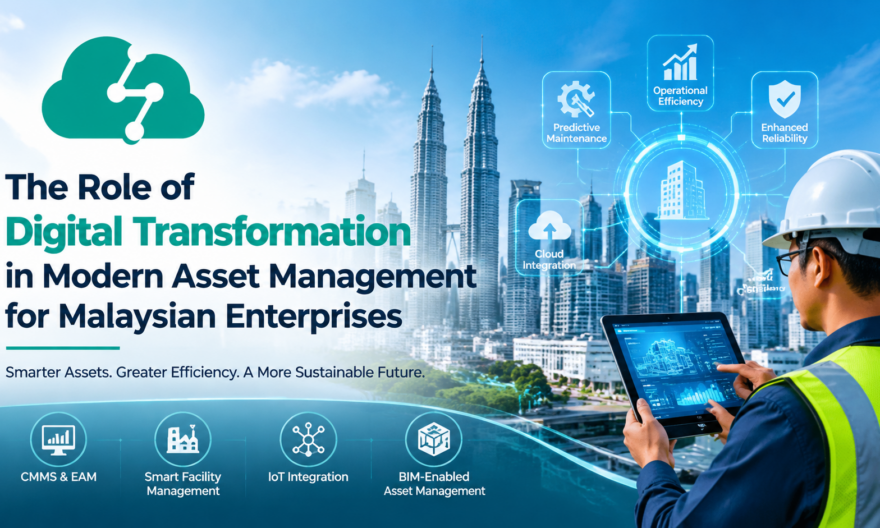
Digital transformation is reshaping how Malaysian enterprises manage physical and operational assets. By integrating automation, cloud-based platforms, and centralised data systems, organisations can move away from reactive maintenance and manual tracking. Modern EAM asset management frameworks give businesses real-time visibility, reduce downtime, and improve lifecycle decision-making across all asset categories.
For IT managers and business leaders in Malaysia, the pressure to modernise is real. Industries from manufacturing to utilities are under increasing scrutiny to cut operational costs, meet compliance requirements, and improve service delivery. Digital tools are no longer optional they are the operational backbone of competitive enterprises.
According to Malaysia’s MyDIGITAL initiative, the country targets becoming a high-income digital economy by 2030, with large-scale investment in Industry 4.0 adoption across the manufacturing and services sectors. Asset management sits at the heart of this transition.
What Is EAM Asset Management and Why Does It Matter?
EAM asset management or Enterprise Asset Management refers to a systematic approach to managing an organisation’s physical assets throughout their entire lifecycle, from procurement to disposal. It encompasses maintenance scheduling, compliance tracking, performance monitoring, and cost analysis within a single integrated system.
Unlike basic inventory tools, an enterprise asset management system connects departments, automates workflows, and generates actionable data that supports strategic decisions. For Malaysian enterprises operating across multiple sites or complex supply chains, this level of coordination is not just beneficial it is essential.
How Digital Transformation Is Changing Asset Management Practices
From Spreadsheets to Centralised Asset Records
Many Malaysian businesses still rely on spreadsheets or siloed databases to track equipment, facilities, and infrastructure. These systems create blind spots assets go unserviced, warranty periods are missed, and audit trails become inconsistent.
Digital asset management platforms consolidate all asset data into a single source of truth. Maintenance histories, depreciation schedules, compliance certificates, and usage logs are accessible in real time, from any location. This centralisation dramatically reduces administrative overhead and improves audit readiness.
Predictive Maintenance Over Break-Fix Approaches
Traditional maintenance models are reactive. Equipment fails, operations halt, teams respond. This approach is costly both in direct repair costs and lost productivity.
Modern enterprise asset management systems use IoT sensor data and machine learning to predict failures before they occur. A manufacturing plant in Penang, for example, can monitor vibration, temperature, and energy consumption data continuously. The system flags anomalies and schedules maintenance during planned downtime not during peak production.
This shift from reactive to predictive maintenance is one of the most significant operational gains digital transformation delivers.
Automation of Compliance and Regulatory Workflows
Malaysian enterprises operating in sectors such as oil and gas, construction, and utilities must comply with regulations enforced by agencies including DOSH (Department of Occupational Safety and Health) and PETRONAS technical standards. Manual compliance tracking is error-prone and resource-intensive.
An enterprise asset management system automates inspection scheduling, generates compliance reports, and sends alerts when certifications are due for renewal. This reduces regulatory risk and ensures audit documentation is always current a priority for any business operating under strict safety frameworks.
Key Benefits of Adopting Asset Management Software in Malaysia
The business case for digital asset management is well-established. Here is what Malaysian enterprises consistently report after implementation:
- Reduced unplanned downtime: Automated maintenance alerts and predictive analytics prevent costly equipment failures.
- Lower total cost of ownership: Better lifecycle visibility means assets are replaced or refurbished at the right time not too early or too late.
- Improved workforce productivity: Technicians spend less time searching for asset records and more time on high-value maintenance tasks.
- Stronger compliance posture: Automated documentation and audit trails reduce exposure to regulatory penalties.
- Scalability across sites: Cloud-based platforms allow enterprises to manage assets across Kuala Lumpur, Johor Bahru, Penang, and regional offices from a centralised dashboard.
What to Look for in Asset Management Software Malaysia
Not all platforms are built for the complexity of Malaysian industrial operations. When evaluating asset management software in Malaysia, IT managers should consider the following criteria:
| Capability | Why It Matters
|
|---|---|
| Mobile accessibility | Field technicians need real-time access to work orders and asset histories on-site |
| IoT and sensor integration | Enables predictive maintenance and real-time condition monitoring |
| Multi-site management | Critical for enterprises with operations across multiple Malaysian states or regions |
| Regulatory compliance tools | Automates DOSH and industry-specific compliance documentation |
| ERP and finance integration | Connects asset data with procurement, budgeting, and finance systems |
| Localised support and deployment | Ensures implementation is aligned with Malaysian business context and requirements |
Industry-Specific Use Cases in Malaysia
Manufacturing
Malaysia’s manufacturing sector contributes significantly to GDP, particularly in electronics and electrical goods. Factories running continuous production lines cannot afford extended downtime. EAM platforms provide automated work order generation, spare parts tracking, and equipment performance dashboards that keep production on schedule.
Facilities and Property Management
Commercial property managers in Kuala Lumpur and beyond are increasingly adopting digital asset management systems to manage building infrastructure HVAC, lifts, electrical systems, and fire safety equipment. Centralised tracking ensures preventive maintenance cycles are never missed, extending asset life and reducing emergency repair costs.
Utilities and Energy
Water treatment plants, power distribution networks, and renewable energy facilities require precise asset lifecycle management. An enterprise asset management system supports long-term capital planning by providing data on asset age, condition, and replacement costs allowing operators to make smarter investment decisions years in advance.
Building an Internal Case for Digital Asset Management
For IT managers presenting to leadership, the conversation needs to move beyond technology and into business outcomes. Here is how to frame the investment:
- Quantify current inefficiencies: Calculate the cost of unplanned downtime, missed inspections, or manual data entry errors over the past 12 months.
- Map compliance exposure: Identify gaps in current regulatory documentation and the potential penalties or operational disruptions they represent.
- Present ROI data: Industry benchmarks suggest enterprises can reduce maintenance costs by 10–25% and extend asset lifecycles by 20–30% following EAM implementation.
- Highlight scalability: A cloud-based platform grows with the business no need to rebuild systems as headcount or asset volume increases.
The Strategic Shift: From Cost Centre to Value Driver
Asset management has historically been viewed as an operational cost centre. Digital transformation reframes it as a strategic function. When asset data informs capital budgeting, procurement decisions, and sustainability reporting, the asset management team moves from reactive responders to strategic contributors.
This shift is particularly relevant as Malaysian enterprises align with ESG (Environmental, Social, and Governance) reporting requirements. Accurate asset data supports energy consumption tracking, carbon footprint calculations, and responsible disposal reporting all of which are increasingly relevant to investors and regulators in Malaysia.
For organisations ready to make that transition, YCloudX provides enterprise-grade asset management software built for the complexity of Malaysian industrial and commercial operations. Their platform supports the full asset lifecycle from procurement to decommissioning with tools designed to integrate seamlessly into existing enterprise environments.
Frequently Asked Questions
What is the difference between EAM and CMMS?
A CMMS (Computerised Maintenance Management System) focuses primarily on maintenance scheduling and work order management. EAM asset management covers the full asset lifecycle including procurement, compliance, financial tracking, and disposal making it a broader and more strategic enterprise solution.
Is asset management software suitable for small and mid-sized Malaysian businesses?
Yes. Cloud-based asset management software Malaysia solutions are scalable and no longer exclusive to large enterprises. Many platforms offer modular pricing and deployment options that make them accessible to SMEs looking to digitalise operations without significant upfront infrastructure investment.
How does an enterprise asset management system support regulatory compliance in Malaysia?
An enterprise asset management system automates inspection scheduling, stores compliance certificates, and generates audit-ready reports aligned with Malaysian regulatory bodies such as DOSH. This reduces manual documentation burden and ensures that safety and compliance deadlines are never missed across all asset categories.
What industries in Malaysia benefit most from digital asset management?
Manufacturing, utilities, oil and gas, facilities management, and construction sectors in Malaysia benefit most. These industries manage large volumes of physical assets, face strict compliance requirements, and have the most to gain from predictive maintenance, centralised records, and automated compliance workflows.
How long does it typically take to implement an enterprise asset management system?
Implementation timelines vary based on company size and system complexity. A mid-sized Malaysian enterprise can typically complete a phased rollout within three to six months. Cloud-based platforms generally deploy faster than on-premise solutions and require less internal IT infrastructure to support.
What ROI can Malaysian enterprises expect from EAM implementation?
Enterprises typically report maintenance cost reductions of 10–25% and asset lifecycle extensions of 20–30% following EAM adoption. Additional gains include reduced regulatory penalties, lower emergency repair costs, and improved technician productivity all of which contribute directly to measurable operational savings.