


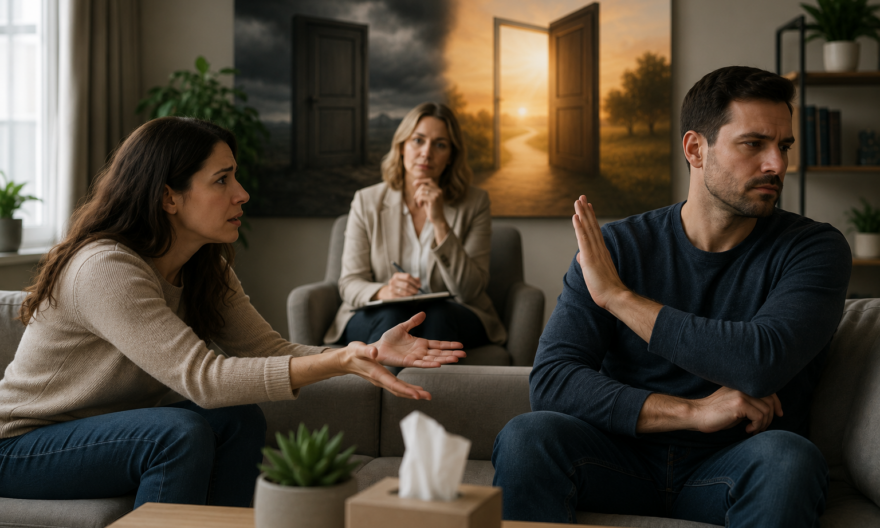
Yes, marriage therapy can still be effective even when one partner is reluctant or refuses to attend. Individual sessions allow the willing partner to develop communication skills, set boundaries, and shift relationship dynamics. In many cases, positive changes made by one person naturally encourage the hesitant partner to reconsider. Resistance to therapy is common and does not have to be a permanent barrier.
If your partner has shut down the idea of marriage counselling in Singapore, you are not alone. Research consistently shows that one partner is often more motivated to seek help than the other especially early in a relationship crisis. The good news is that this does not mean your situation is hopeless. There are real, practical steps you can take right now.
Why Do Partners Refuse Couples Therapy?
Understanding the reluctance is the first step. Most resistance comes from one of a few core fears, not from a lack of care for the relationship.
- Fear of being blamed – Many people worry that therapy will become a space where everything is their fault.
- Stigma around mental health – In Singapore, cultural attitudes toward seeking emotional help have shifted, but some individuals still feel that needing counselling signals personal weakness.
- Distrust of the process – A partner may not believe talking to a stranger will solve anything concrete.
- Fear of change – Therapy forces both people to look honestly at themselves, which can feel threatening.
- Previous negative experiences – A bad experience with therapy in the past can make someone unwilling to try again.
Recognising which of these applies to your partner helps you approach the conversation in a way that lowers their guard rather than raising it.
Can One Person Attend Marriage Counselling Alone?
Absolutely. Many qualified marriage therapists in Singapore work with individuals on relationship issues, even without the other partner present. This is sometimes called individual relationship therapy or discernment counselling, and it is more common than most people realise.
When you attend alone, the focus shifts to what is within your control. A therapist helps you:
- Identify your own patterns that may be contributing to the conflict
- Develop healthier communication strategies for when you interact with your partner
- Process your emotions so they do not spill over destructively into conversations at home
- Make informed decisions about next steps in the relationship
The ripple effect of one person changing their behaviour is often underestimated. When your responses shift when you stop escalating arguments or start setting clearer expectations your partner’s behaviour often shifts in response, even without them sitting in a therapy room.
How to Approach a Reluctant Partner About Counselling
Choose the Right Moment
Do not bring up therapy in the middle of an argument. Choose a calm, neutral moment when both of you are relaxed. A walk, a meal, or a quiet evening at home creates space for an honest conversation rather than a defensive one.
Frame It Around the Relationship, Not the Problem
Saying “we need therapy because of your behaviour” immediately puts your partner on the defensive. Instead, try: “I want us to have a stronger relationship, and I think speaking to someone could help us both communicate better.” This frames counselling as an investment, not an indictment.
Suggest a Single Trial Session
Committing to long-term therapy feels heavy for someone who is already hesitant. Propose just one session — no obligation, no pressure to continue. A single meeting with a skilled couples therapist can often demonstrate value in a way that no amount of persuasion can.
Let Them Choose the Therapist
Giving your partner some agency in the process makes them feel less cornered. Let them review therapist profiles, read about approaches, and have input into who you see together. This small shift in ownership can reduce resistance significantly.
What If Your Partner Still Refuses?
If your partner continues to decline after honest conversations, do not force the issue. Coerced participation in therapy rarely produces meaningful results and it can damage trust further. Instead, consider these approaches:
- Continue individual therapy yourself. Personal growth does not require your partner’s permission.
- Read and learn together. Some couples respond better to books or structured programmes before they are ready for professional sessions.
- Set a clear timeline. If the relationship is in genuine crisis, it is reasonable to communicate that you need to see some form of effort including counselling within a defined period.
It is also worth noting that in Singapore, the Ministry of Social and Family Development (MSF) provides accessible family and relationship support services, including counselling referrals through Family Service Centres. This can be a lower-barrier starting point for a partner who is wary of private therapy.
What Does Evidence Say About One-Partner Therapy?
Research in the field of behavioural couple therapy supports the idea that even unilateral intervention where only one partner participates can lead to measurable improvements in relationship satisfaction. Studies published in the Journal of Consulting and Clinical Psychology have found that when one partner learns and applies evidence-based communication strategies, the other partner often becomes more open to participation over time.
The key is consistency. One session does not transform a relationship. But steady, intentional effort over several weeks creates visible change that even the most resistant partner tends to notice.
Marriage Counselling in Singapore: What to Realistically Expect
Many couples in Singapore delay seeking help until the relationship is already under serious strain. Getting ahead of a full breakdown even alone gives you more options and more time to work with.
A good marriage therapist will never pressure your partner into a particular outcome. The goal is always to help both people gain clarity, communicate more honestly, and make decisions that are right for their situation — whether that means rebuilding the relationship or navigating a respectful separation.
If you are ready to take the first step, Celestial Harmony offers professional, empathetic support for individuals and couples navigating exactly this kind of challenge. You do not need your partner to agree before you begin.
Frequently Asked Questions
Can I attend marriage counselling in Singapore without my partner?
Yes. Many therapists in Singapore offer individual sessions focused on relationship issues. Working alone helps you build communication skills and emotional clarity, and can often positively influence your partner’s willingness to engage over time.
How do I convince my partner to try couples therapy?
Avoid framing it as a crisis intervention. Instead, present it as a step toward a stronger relationship. Suggest a single no-pressure session and let your partner have a say in choosing the therapist to reduce resistance.
Is couples therapy effective if only one person wants it?
Individual relationship therapy can still be highly effective. Changes made by one partner in communication style, emotional responses, and boundaries often shift the entire relationship dynamic, sometimes motivating the reluctant partner to participate.
What if my partner refuses therapy entirely?
Continue attending individual sessions yourself. Personal growth does not require your partner’s participation. You can also explore lower-barrier options like Family Service Centres in Singapore, which offer accessible relationship support referrals.
How many sessions of marriage counselling are usually needed?
It varies depending on the issues involved and both partners’ engagement. Most couples see meaningful progress within 8 to 12 sessions, though some situations benefit from shorter or longer engagements depending on complexity and goals.
Is marriage therapy the same as couples therapy?
They are closely related but not identical. Couples therapy broadly covers any romantic partnership, while marriage counselling in Singapore often focuses on married couples dealing with specific relational, communication, or family challenges. Both involve similar therapeutic approaches.