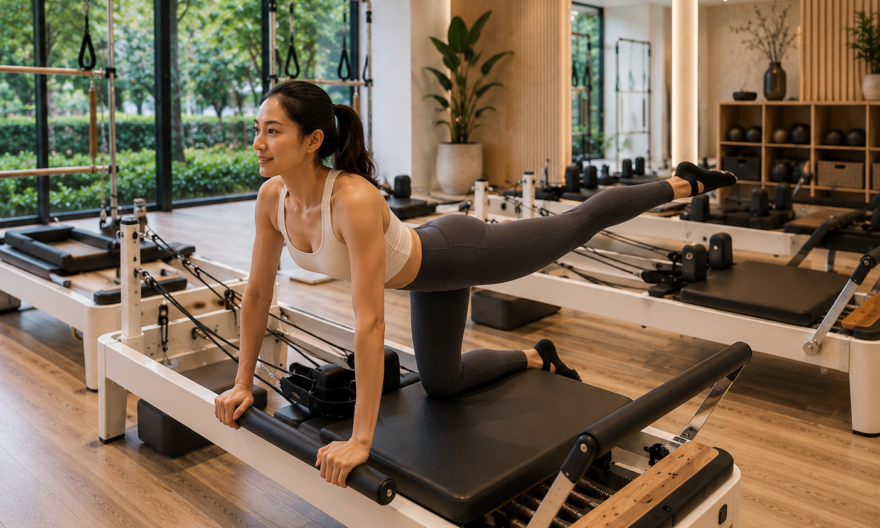
Typical reformer class errors involve breath-holding, improper spinal alignment, rushing through movements and relying on momentum instead of muscular control. These errors reduce the effectiveness of the workout and increase the risk of injury. Slowing down, focusing on breath and working with a qualified instructor helps to correct these patterns early and build a stronger foundation.
Starting something new is exciting — but also humbling. If you’ve recently signed up for a Pilates Reformer Tampines class, you’re already making a smart choice for your body. The Reformer is one of the most effective tools in Pilates — it builds core strength, improves posture, and restores mobility. But for beginners, the machine can feel unfamiliar, and small technique errors can quietly hold you back or even lead to strain. Knowing what to watch out for changes everything.
Why Technique Matters More Than Effort in Pilates Reformer
In most fitness classes, pushing harder gets you further. Pilates Reformer works differently. The system is built on precision — every movement is designed to engage specific muscles in a specific sequence. When you rush or compensate with the wrong muscle groups, you miss the point entirely.
According to the Singapore Sports Institute, improper movement patterns during resistance-based exercise are a leading cause of non-contact musculoskeletal injuries among adults — particularly in the lower back and shoulders. Getting the form right from day one isn’t just about aesthetics. It’s about safety and long-term progress.
The Most Common Mistakes Beginners Make on the Reformer
1. Forgetting to Breathe — or Breathing Wrong
This is the single most universal beginner mistake. When a movement feels unfamiliar or challenging, most people instinctively hold their breath. In Pilates, breath is not optional — it drives the movement. The classic cue is to exhale on effort (the hardest part of the movement) and inhale to prepare or return.
Holding your breath activates the sympathetic nervous system, increases tension in the neck and shoulders, and reduces core engagement. Practise the breathing pattern without the Reformer first. Once it becomes second nature, layering it into exercises is much easier.
2. Ignoring Neutral Spine
One of the first things your instructor will talk about is neutral spine — the natural curve of your lower back when it’s neither flat nor arched. Many beginners either press their lower back hard into the carriage (posterior pelvic tilt) or overarch it. Both positions shift load away from the core and onto the spine itself.
A simple test: lie on the Reformer and place one hand under your lower back. You should feel a slight gap — about the thickness of your hand. If your back is completely flat or pressing into your hand, you’re out of neutral.
3. Using Too Much Spring Resistance
More resistance feels like more work, so beginners often assume heavier springs equal a better workout. In Reformer Pilates, the opposite is frequently true. Higher resistance can mask poor technique by allowing momentum and larger muscle groups to take over. Lighter resistance demands more precision and deep stabiliser engagement.
Your instructor will guide you on appropriate spring settings for each exercise. Trust that guidance, even when lighter feels almost too easy — you’ll feel the difference the next morning.
4. Moving Too Fast
The Reformer’s carriage glides smoothly, which makes it tempting to ride the momentum and move at speed. But fast, uncontrolled movement is the opposite of what Pilates demands. Each rep should be deliberate — slow enough to feel the engagement and controlled enough to reverse smoothly.
A good rule of thumb: if you can’t feel the target muscle working, you’re moving too fast or using too much spring. Slow down and notice where the effort is coming from.
5. Gripping the Straps or Footbar Too Hard
If your grip on the straps or footbar is too tight, you are using your forearms, neck and upper trapezius muscles unnecessarily. This creates fatigue in all the wrong places and takes away from the actual target muscles.
The cue to remember: hold the straps as if you’re holding a sleeping bird. Firm enough that it won’t fly away, gentle enough that you won’t hurt it.
6. Skipping the Warm-Up or Cool-Down
Because Reformer classes feel controlled and low-impact, many beginners treat the warm-up as optional. It isn’t. Especially in Singapore’s humidity, joints and connective tissue still need preparation before load-bearing movement. A proper warm-up primes the neuromuscular system and reduces the risk of micro-tears in the early sessions.
How to Build Confidence in Pilates Reformer Classes
Confidence in Pilates Reformer doesn’t come from doing more — it comes from understanding what you’re doing and why. Here’s what actually accelerates progress for beginners:
-
Arrive early: Take a few minutes before class to familiarise yourself with the machine — adjust the headrest, understand the spring system, and test the carriage movement.
-
Ask questions: Experienced instructors expect beginner questions. If a cue doesn’t make sense, ask for clarification.
-
Focus on one thing per class: Rather than trying to perfect everything at once, pick one element — breath, alignment, or tempo — and give it your full attention.
-
Book smaller group or semi-private sessions first: You’ll receive more individual attention, which dramatically accelerates correct habit formation.
-
Track how you feel, not how you look: Pilates progress is felt internally long before it’s visible externally.
Pilates Reformer Tampines vs General Gym Training: What Beginners Should Know
| Factor | Pilates Reformer | General Gym Training
|
|---|---|---|
| Learning curve | Moderate — technique-focused | Lower — machines are intuitive |
| Injury risk for beginners | Low when guided correctly | Moderate without instruction |
| Core engagement | Constant and intentional | Isolated and exercise-dependent |
| Instructor guidance needed | High (especially early on) | Optional |
| Progress visibility | Felt before it’s seen | Often visible earlier |
What to Expect in Your First Few Pilates Reformer Sessions
Don’t worry, it’s normal. You are not expected to know everything at once. The majority of teachers will guide you through the basics: footbar positions, spring settings, how to safely mount and dismount the carriage, and the main cues for each movement.
By sessions three to five, the setup process starts to feel routine. Your body begins to map the movements and the verbal cues start to click. Most beginners report that their awareness of their own body — proprioception — improves noticeably within the first month.
Finding the Right Studio Makes a Real Difference
Whether you are looking for Pilates Reformer Novena or a class closer to home, it is important to find a studio with qualified instructors who focus on proper technique rather than simply getting through a large number of clients. Smaller class sizes, experienced teachers, and a friendly environment all help to reduce the intimidation factor and increase the odds that you’ll stick with it.
At Reality Yoga, the approach to Pilates Reformer is rooted in mindful movement — making it a solid starting point for beginners who want to build a practice that’s both safe and sustainable.
FAQ: Pilates Reformer for Beginners
Is Pilates Reformer safe for complete beginners with no fitness background?
Yes, Pilates Reformer is great for beginners of all fitness levels. The spring resistance is fully adjustable and exercises can be adapted to your current ability. Start with a qualified instructor who can show you the correct form and then move on to more difficult variations.
How many sessions before I start to see or feel results?
Most beginners notice improved posture, core awareness, and reduced muscle tension within 8 to 10 sessions. Physical changes take longer, typically around 4 to 6 weeks of consistent practice. The internal shifts — how you carry yourself and move through daily life — often come first.
What should I wear to a Pilates Reformer class?
Wear stretchy, form-fitting clothes that allow your instructor to see your alignment clearly. No baggy shirts or loose shorts. Most studios on the carriage require grip socks for hygiene and safety reasons. Keep jewellery to a minimum to avoid it catching on the straps.
How is Pilates Reformer different from mat Pilates?
The Reformer adds spring resistance and a moving carriage, which creates both support and challenge depending on the exercise. It allows for a greater range of movement patterns than mat work alone. Many find the Reformer easier on the joints, particularly for those with lower back sensitivity.