

Choosing the right insole for flat feet depends on three things: the type of shoe you’re wearing, how much internal space it has, and the activity you’ll be doing. A work boot needs different arch support than a running shoe or a casual loafer. Getting this match right reduces foot fatigue, prevents overpronation, and keeps your body aligned from the ground up.
Why Flat Feet Need Different Insoles for Different Shoes
Flat feet — or fallen arches — cause the entire sole of the foot to contact the ground. This collapses your arch and shifts weight inward, a movement called overpronation. Over time, this puts stress on the ankles, knees, and lower back.
The fix isn’t one universal insole. Different shoes have different depths, widths, and structural support. Dropping a thick orthotic into a slim dress shoe won’t work. Equally, using a thin cushioning insert in a heavy work boot won’t provide the arch correction your foot actually needs.
The right insole does three things simultaneously: it supports the arch, controls motion, and fits the shoe without cramping your foot.
How Shoe Space and Fit Affect Insole Selection
Before you choose an insole, look inside your shoe. Most factory insoles are removable. If yours is, take it out — that’s the space your new insole has to fill.
Here’s what to assess:
- Depth: Deep-heeled shoes (like work boots or athletic trainers) can accommodate full-length orthotic insoles with firm arch support. Shallow shoes need a low-profile or 3/4-length option.
- Width: A wide-toe-box shoe allows more insole coverage. A narrow dress shoe may only fit a slim heel cup or 3/4 insert.
- Removability: Non-removable insoles mean you’re adding volume. In this case, always size down in insole thickness to avoid a tight, uncomfortable fit.
A poor fit forces your foot into an unnatural position — defeating the purpose entirely. The insole should sit flat, not buckle at the edges or bunch under the ball of the foot.
Insoles for Walking Shoes: Prioritising Cushion and Arch Control
Walking shoes tend to have more interior depth and a removable sock liner, which makes them the easiest shoe type to fit an insole into. For flat feet, insoles for walking shoes should combine moderate arch support with shock absorption, especially if you’re covering long distances on hard surfaces.
Look for:
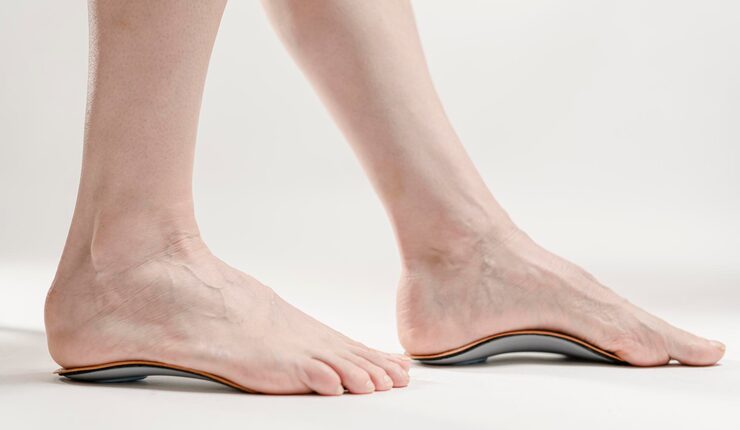
- A contoured arch that follows the shape of a supported foot — not your current flat shape
- Deep heel cup design to control inward rolling
- Foam or gel cushioning in the forefoot and heel to absorb ground impact
- Full-length coverage for even weight distribution
If you walk for fitness or spend hours on your feet daily, a semi-rigid insole — one with a firm shell and a cushioned top layer — offers the best balance between support and comfort.
Insoles for Work Shoes: Support That Lasts a Full Shift
Work environments push your feet harder than most activities. Whether you’re standing on concrete for eight hours or moving across uneven warehouse floors, insoles for work shoes need to deliver consistent arch support and fatigue resistance throughout the day.
Key considerations for work shoe insoles:
- Durability: Industrial settings demand insoles with high-density materials that don’t compress and flatten within weeks.
- Heel stabilisation: A reinforced heel cup prevents the foot from shifting inside steel-toe or safety boots.
- Moisture management: Work shifts create heat and sweat. Look for moisture-wicking top covers to reduce friction and odour.
- Anti-fatigue properties: Some work insoles use energy-return foam that pushes back against each step, reducing lower leg and back fatigue.
For safety footwear, always check whether the insole meets the internal toe clearance requirements. A thick insole in a safety boot can push your toes into the steel cap — a safety hazard in itself.
Shoe Inserts for Flat Feet in Casual and Dress Shoes
This is where most people compromise — and pay for it later. Casual shoes and dress shoes leave very little room for a bulky insert, so people skip support altogether. That’s a mistake.
Shoe inserts for flat feet in dress or casual shoes should be:
- Slim-profile or 3/4 length: These sit from heel to just behind the toes, leaving room in the forefoot and keeping the fit snug.
- Firm but thin: A low-profile arch support wedge can make a noticeable difference without adding volume.
- Self-adhesive: Inserts for dress shoes often need an adhesive backing to prevent sliding inside a leather-lined shoe.
For loafers, dress shoes, or casual flats, a 3/4-length insole with a raised arch and shallow heel cup is typically the most practical solution. You get structural support without compromising fit or appearance.
Matching Insole Type to Activity Level
Activity determines how much arch support and shock absorption your insole needs to deliver. Here’s a straightforward breakdown:
| Activity | Recommended Insole Type | Key Feature |
|---|---|---|
| Long-distance walking | Semi-rigid full-length orthotic | Arch support + cushioning |
| Standing at work (8+ hrs) | Anti-fatigue insole | Energy return + heel stabilisation |
| Casual daily wear | 3/4 slim arch support | Low profile + arch correction |
| Light running or gym | Motion-control insole | Pronation control + forefoot cushion |
| Dress or formal occasions | Thin adhesive arch insert | Slim fit + discrete support |
People who use multiple shoe types throughout the day often benefit from having two or three purpose-matched insoles — one for work, one for walking, one for casual wear — rather than transferring a single insert between shoes.
Common Mistakes When Choosing Insoles for Flat Feet
Even well-intentioned choices can backfire. These are the most frequent errors:
- Buying for pain relief alone: Pain is a symptom. The insole needs to address the mechanical cause — overpronation and lack of arch support — not just cushion the discomfort.
- Ignoring shoe type: A supportive insole in the wrong shoe (one that doesn’t hold it in place, or leaves no room) does more harm than good.
- Using insoles that are too soft: Gel insoles feel comfortable but offer almost no structural correction. For flat feet, some degree of firmness in the arch area is non-negotiable.
- Not replacing worn insoles: Most insoles lose their structural integrity within 6–12 months of regular use, even if they look fine.
How to Know If Your Insole Is Actually Working
A well-fitted insole should produce noticeable results within the first two weeks of consistent use. Signs it’s working:
- Reduced foot fatigue after long periods of standing or walking
- Less aching in the heel, arch, or ball of the foot by end of day
- Improved stability — your ankle feels less like it’s rolling inward
- Reduced knee or lower back discomfort linked to walking patterns
If you’re still experiencing pain after two to three weeks, consider whether the insole’s arch height matches your specific foot shape, or whether the issue requires a custom orthotic assessment from a podiatrist.
When to Consider Custom Orthotics Over Off-the-Shelf Insoles
Off-the-shelf insoles handle the majority of flat-foot cases effectively — particularly mild to moderate overpronation. But there are situations where custom orthotics are worth the investment:
- Severe or rigid flat feet that don’t respond to standard insoles
- A diagnosed condition such as plantar fasciitis, posterior tibial tendon dysfunction, or bunions
- Significant leg length discrepancy affecting gait
- Recurring knee or lower back injuries linked to foot mechanics
A podiatrist can conduct a gait analysis and create a moulded orthotic specific to your foot shape and activity demands. This is a more precise solution, though it comes at a higher cost and requires a longer lead time.
If you’re managing flat feet across multiple shoe types, LifeForce Hub offers a focused range of flat-foot insoles designed to match different footwear environments — from everyday casual shoes to demanding work boots. Explore their collection at LifeForce Hub to find options built around real foot mechanics, not generic cushioning.