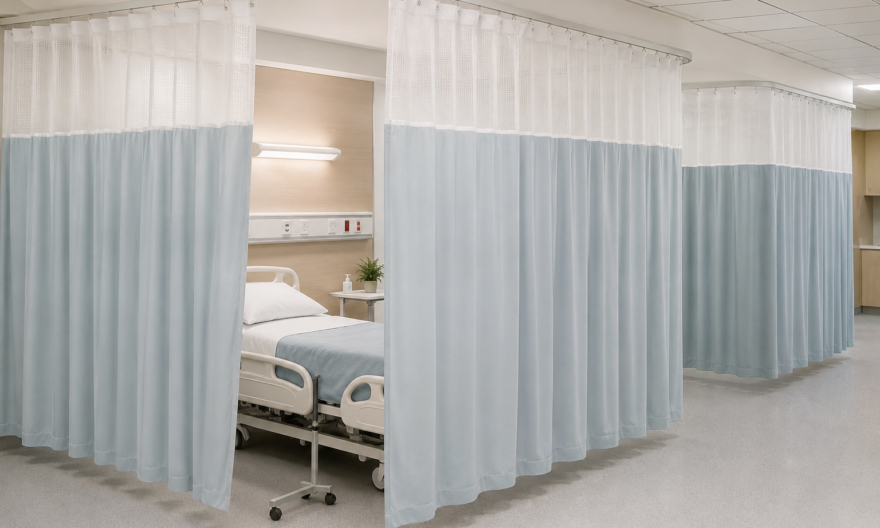
Maintaining hospital curtains and tracks requires a structured routine that addresses fabric hygiene, hardware integrity, and track alignment. Regular inspection, scheduled laundering, and timely hardware replacement prevent system failures, reduce infection risks, and extend the service life of the entire curtain system. A proactive approach saves costs and keeps clinical spaces compliant and presentable.
Why Maintenance of Hospital Curtains and Tracks Matters
They are physical barriers between patient bays and, if not maintained, a conduit for cross-contamination. Over time, the folds of fabric trap dust, bacteria and airborne particles. Meanwhile, corroded or misaligned tracks cause operational friction that breaks clinical workflows.
Facilities managers often give a low priority to curtain maintenance, only to find that they have a growing list of problems such as permanent stains on the fabric, track systems that jam in mid-use, and compliance gaps during audits. A regular maintenance schedule keeps all of these from becoming expensive problems.
Step-by-Step Maintenance Guide for Hospital Curtain Systems
Step 1: Establish a Regular Visual Inspection Routine
Start with what you can see. Walk through all wards and clinical bays at least once a week and flag any of the following:
-
Visible staining, mould spotting, or discolouration on the fabric
-
Tears, fraying hems, or damaged mesh sections
-
Curtain hooks or gliders that are cracked, bent, or missing
-
Track sections that appear warped, loose, or improperly joined
-
Curtains that do not draw smoothly from end to end
Document findings with a simple checklist. This creates an audit trail and helps prioritise which bays need immediate attention versus scheduled servicing.
Step 2: Follow a Structured Laundering Schedule
Fabric hygiene is the most critical maintenance task. The frequency of laundering depends on the ward type and usage intensity.
| Ward / Area Type | Recommended Laundering Frequency |
|---|---|
| ICU / High Dependency Units | Every 3–4 weeks, or after each patient discharge |
| General Wards | Every 6–8 weeks |
| Outpatient / Consultation Areas | Every 8–12 weeks |
| After Known Contamination Event | Immediately |
Always follow the care instructions given by the fabric manufacturer. Many of the healthcare-grade curtains are made to withstand high-temperature wash cycles that kill pathogens but do not damage the antimicrobial treatment on the fabric. Using the wrong detergents or wash temperatures can strip away these protective finishes, and greatly reduce the longevity of the fabric.
Maintain a rotation of spare curtain sets where possible so that bays are not left uncovered whilst laundering. This is especially true on busy wards where patient privacy should be respected at all times.
Step 3: Inspect and Lubricate Track Systems
Tracks are often ignored because they are stationary and look like they haven’t changed. However, the track system collects dust inside the channel after months of continuous operation and the gliders or carriers wear out mechanically.
Here is what to check during each maintenance cycle:
-
Track channel: Wipe the interior channel with a dry or lightly damp cloth to remove dust and debris. Avoid excessive moisture, which can cause corrosion in steel track systems.
-
Gliders and carriers: Check that each glider moves freely. Replace any that show cracks, flat spots from wear, or difficulty sliding.
-
Track joints and end stops: Ensure all joining sections are flush and secure. Loose joints create bumps that cause curtains to jam during use.
-
Wall and ceiling fixings: Check that mounting brackets remain firmly secured. Vibration over time can loosen fixings, especially in areas of heavy foot traffic.
For aluminium track systems, a silicone-based lubricant applied lightly to the track channel can improve glider movement without attracting dust. Avoid oil-based lubricants, which collect debris and create maintenance problems over time.
Step 4: Replace Components Proactively, Not Reactively
Waiting for a component to fail before replacing it creates unnecessary disruption to ward operations. A proactive replacement approach is more efficient.
As a general guideline:
-
Curtain hooks and gliders: Replace any showing visible wear during each laundering cycle
-
Full curtain panels: Assess replacement every 2–3 years depending on wash frequency and ward intensity
-
Track sections: Inspect annually; replace sections showing corrosion, deformation, or damaged internal profiles
-
End caps and connectors: Replace if cracked or loose — these small components affect the whole system’s operation
Keeping a small inventory of spare gliders, hooks, and connectors on-site means maintenance teams can resolve minor issues immediately without waiting for a procurement cycle.
Step 5: Train Ward Staff on Correct Curtain Handling
Maintenance does not fall entirely on the facilities team. The way ward staff interact with curtain systems daily has a direct impact on how long those systems last.
Key handling practices to communicate to clinical staff:
-
Always draw curtains by holding the fabric or a designated pull point — not by grabbing the track or individual hooks
-
Report stuck or jammed curtains to the maintenance team promptly rather than forcing them along the track
-
Avoid draping medical equipment, cables, or personal items over curtain rails
-
Do not pin, staple, or tape anything to curtain fabric, as this damages the weave and compromises hygiene integrity
A simple laminated reference card in the ward — outlining correct curtain handling — can reduce damage incidents significantly over time.
Compliance Considerations for Healthcare Facilities in Singapore
Healthcare facilities in Singapore are required to meet the inspection standards set by the Ministry of Health (MOH) and to adhere to infection prevention and control guidelines. Curtain hygiene is considered as a component of environmental cleanliness in clinical areas. Audits may identify compliance findings if facilities are unable to provide a documented curtain maintenance schedule.
The National Environment Agency (NEA) also has guidelines on environmental hygiene for healthcare premises which have some similarities with curtain maintenance best practices, especially in terms of frequency of cleaning contact surfaces and soft furnishings in patient care areas.
Keeping maintenance logs, laundering records and replacement schedules serves a dual purpose: it protects patient safety and provides documented evidence of due diligence during inspections.
Signs Your Curtain System Needs More Than Routine Maintenance
Some issues go beyond what routine upkeep can address. Consider a full system review if you observe:
-
Persistent track misalignment that returns shortly after adjustment
-
Fabric that retains odours even after laundering
-
Multiple glider failures within a short period in the same bay
-
Tracks that have been impacted by water damage, ceiling leaks, or building work
-
Curtain panels that no longer provide adequate coverage due to shrinkage from repeated washing
These patterns are often indicative of the underlying system being at the end of its useful life and in need of a more comprehensive assessment than incremental repairs.
Building a Maintenance Schedule That Actually Gets Followed
The best maintenance plan is one that your team is actually able to do. Avoid overly complicated systems that require too much paperwork. Build your schedule around three tiers:
-
Weekly: Visual inspection of all curtain bays; log any issues found
-
Monthly (or per laundering cycle): Remove curtains for washing; inspect and replace gliders and hooks as needed; wipe down track channels
-
Annually: Full track system inspection; assess curtain panels for replacement; check all mounting fixings and bracket integrity
Assign team members to own each of the tiers. Consistency breeds accountability, and accountability is what keeps the system alive.
Elsley Partnership offer healthcare curtain and tracking solutions for facilities that are looking to upgrade or install a system that is easier to maintain in the long term, and is tailored for Singapore’s clinical environments – with an emphasis on durability, hygiene compliance and practical serviceability.
Frequently Asked Questions
How often should hospital curtains be laundered?
In high-risk areas such as ICUs, curtains need to be washed every 3–4 weeks or after patient discharge. General ward curtains are typically washed every 6-8 weeks. Any curtain that is known to have been subjected to a contamination event shall be removed and laundered immediately regardless of the normal schedule.
What is the best way to maintain curtain tracks in a hospital?
Clean the track channel regularly to remove dust and debris. Inspect the gliders after each laundering for wear and replace any that are damaged right away. Finally, inspect all mounting brackets and joints on an annual basis to ensure the system is securely fixed. Apply a silicone-based lubricant to the track channel to ensure smooth movement.
How long do hospital curtains typically last?
With regular laundering and proper care, hospital curtain panels usually last 2-3 years before being replaced. Replacement may be earlier at high frequency use areas. Track systems can last much longer if well maintained, often 5-10 years, depending on the quality of the material and the environment in which they work.
Can worn curtain gliders affect infection control?
Yes. Worn or broken curtains can cause jamming, or uneven hanging, between patient bays leaving gaps that compromise privacy and the physical barrier function. Curtains that are operationally impaired are less likely to be drawn into position consistently and this indirectly affects infection control practices in the ward.