


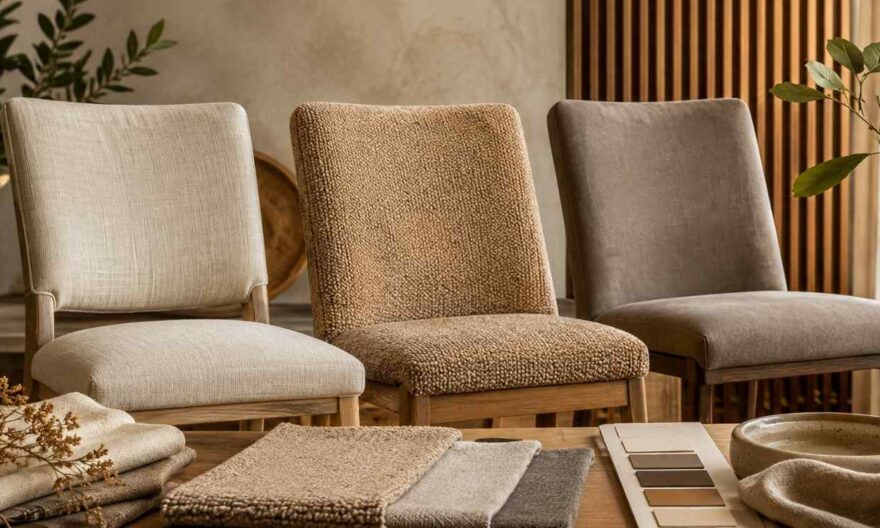
Linen offers a crisp, breathable finish suited to formal dining rooms. Chenille delivers softness and texture that holds up to regular family use. Microfiber resists stains and moisture, making it the most practical choice for busy households. The best fabric depends on your lifestyle, cleaning habits, and the look you want to achieve at the table.
Choosing the right dining chair upholstery is one of those decisions that feels small until you get it wrong. A fabric that looks stunning in the showroom can feel stiff after a year of daily meals, or show every spill from your Sunday roast. This guide breaks down all three materials honestly, so you can walk into a decision with confidence rather than guesswork.
What Makes a Good Dining Chair Fabric?
Before comparing fabrics, it helps to know what you are actually evaluating. Dining chairs face a specific kind of abuse — food, drink, friction from sitting and standing, and repeated wiping. A sofa fabric that works beautifully in your living room may fall apart under those conditions within two years.
The key performance factors for dining chair upholstery are:
- Durability (rub count): Measured in Martindale rubs. Anything above 25,000 rubs is considered suitable for domestic use.
- Stain resistance: How easily the fabric sheds liquid and absorbs grease or sauce.
- Breathability: How comfortable the chair feels during longer meals or warm weather.
- Ease of cleaning: Whether the fabric can be spot-cleaned, machine washed, or needs professional care.
- Aesthetic fit: How the texture and colour hold over time, and how well it suits your dining room style.
Linen: Elegant, Breathable, and High-Maintenance
Linen has been used in home textiles for centuries, and it earns its reputation for good reason. It has a naturally refined look — slightly textured, matte in finish, and available in a palette of earthy and neutral tones that sit beautifully in both traditional and contemporary dining rooms.
Where Linen Excels
Linen is one of the most breathable fabrics available. It does not trap heat, which matters if your dining chairs are used for long dinners or during warmer months. It also ages gracefully — the natural fibres soften with use, developing what designers call a “lived-in” quality that actually improves the look over time.
Where Linen Falls Short
Linen wrinkles easily and absorbs liquid quickly. A red wine spill on a linen dining chair is a real problem unless you move fast. It also tends to fade in direct sunlight, which is worth considering if your dining room gets strong afternoon light. For households with young children or frequent entertaining, linen requires either a protective treatment or a higher tolerance for careful upkeep.
Best for: Formal dining rooms, adults-only households, or those who host occasionally rather than daily.
Chenille: Soft, Textured, and Built for Comfort
Chenille has a distinctive pile construction — those soft, caterpillar-like fibres give it a plush, almost velvety feel. It has become a popular upholstery choice in Indian homes because it blends warmth and visual depth without the cost of velvet.
Where Chenille Excels
Comfort is chenille’s strongest suit. It is noticeably softer underfoot and to the touch than linen or microfiber, which makes it appealing for families who linger at the dining table. It also has a natural depth of colour — the pile catches light differently depending on direction, which gives it a richness that flat-woven fabrics cannot replicate.
Chenille typically carries a Martindale rating between 30,000 and 50,000 rubs in quality grades, making it reasonably durable for everyday dining use.
Where Chenille Falls Short
The pile can flatten or “crush” over time, especially in areas of constant friction like seat edges. It is also harder to clean than microfiber — liquids can wick into the fibres rather than bead on the surface. Spot cleaning works for minor spills, but heavily soiled chenille usually needs professional attention.
Best for: Family dining rooms where comfort matters, homes with a warm or transitional interior style, moderate foot traffic.
Microfiber: Practical, Durable, and Underrated
Microfiber is a synthetic fabric made from ultra-fine polyester or nylon fibres. It does not have the prestige of linen or the tactile luxury of chenille, but it consistently outperforms both on practical metrics — and that matters in a room where food happens every day.
Where Microfiber Excels
Microfiber is nearly stain-proof when treated. Liquids bead on the surface rather than soaking in, giving you time to wipe before anything sets. It resists pet hair, does not pill easily, and holds colour well over years of use. High-quality microfiber can reach Martindale ratings above 50,000 rubs — outperforming both linen and most chenille grades.
It is also the easiest fabric to maintain. Most microfiber upholstery can be cleaned with a slightly damp cloth and a mild detergent. No specialist products, no professional cleaning schedule.
Where Microfiber Falls Short
Microfiber lacks the visual warmth and texture of natural or pile fabrics. In a beautifully styled dining room, it can look functional rather than considered. It also traps heat more than linen, which some people find uncomfortable during warmer months.
Best for: Households with children or pets, high-use dining areas, anyone who prioritises low maintenance over aesthetics.
Side-by-Side Comparison: Linen vs Chenille vs Microfiber
| Feature | Linen | Chenille | Microfiber
|
|---|---|---|---|
| Durability (Martindale) | 15,000–25,000 | 30,000–50,000 | 50,000+ |
| Stain Resistance | Low | Moderate | High |
| Breathability | High | Moderate | Low–Moderate |
| Ease of Cleaning | Difficult | Moderate | Easy |
| Visual Appeal | Elegant, Refined | Warm, Textured | Clean, Functional |
| Best Use Case | Formal / Occasional | Family / Daily | High-Use / Kids / Pets |
| Cost Range (India) | Moderate–High | Moderate | Low–Moderate |
Dining Chair Upholstery Trends Worth Noting
Following current dining chair upholstery trends helps you choose a fabric that will not look dated in three years. Right now, textured neutrals are dominating — warm beiges, slate greys, and muted greens across all three fabric types. Bouclé-textured chenille in particular has seen strong demand in urban Indian homes, sitting at the intersection of comfort and current design language.
Performance fabrics that mimic the look of linen or velvet but carry the durability of microfiber are also becoming widely available. These hybrid options are worth considering if you love the aesthetic of natural fabrics but live in a household that would destroy them inside a year.
How to Choose the Right Fabric for Your Household
Use these scenarios as a quick decision filter:
- You have children under 10: Go with microfiber or a performance-treated fabric. Spills are not an if — they are a when.
- You host formal dinners regularly: Linen or a linen-blend with stain guard treatment offers the best visual outcome.
- You want comfort and everyday warmth: Chenille is your best fit, particularly in cooler climates or air-conditioned dining rooms.
- You have pets: Microfiber with a tight weave resists hair and claw snags better than pile fabrics.
- You want durability with some style: A mid-weight chenille in a tight weave, or a linen-look performance fabric, splits the difference well.
If you are still uncertain, request fabric swatches before committing. Run them under water, rub them against a rough surface, and leave them in direct sun for a few days. Real-world testing over a showroom feel every time.
For tailored guidance on materials and professional reupholstery, DKS International brings craftsmanship and deep fabric knowledge to every dining chair project — helping you choose and apply a finish that lasts.
Frequently Asked Questions
Which fabric is best for dining chairs in a home with kids?
Microfiber is the most practical choice for homes with children. It resists stains, cleans easily with a damp cloth, and holds up against daily friction and accidental spills better than linen or chenille.
Is linen a good fabric for dining chair upholstery?
Linen works well in formal or low-traffic dining rooms. It is breathable and visually elegant, but absorbs spills quickly and wrinkles easily, making it less suitable for busy family households without a protective fabric treatment.
How long does chenille upholstery last on dining chairs?
Quality chenille with a Martindale rating above 30,000 rubs typically lasts five to eight years with normal use. Pile flattening at seat edges is the most common sign of wear, especially in high-traffic dining settings.
Can microfiber dining chair upholstery be cleaned at home?
Yes. Most microfiber upholstery cleans easily with a damp cloth and mild soap. For dried stains, a soft brush and gentle solvent-based cleaner usually restores the surface without needing professional care.
What is the most durable fabric for dining chair upholstery?
Microfiber consistently offers the highest durability, with Martindale ratings above 50,000 rubs in quality grades. It also resists staining and fading, making it the most hardwearing option for everyday dining chair use.
What are the current dining chair upholstery trends in India?
Textured neutrals, bouclé-style chenille, and performance fabrics that mimic natural materials are trending in Indian homes. Warm tones like sand, terracotta, and slate are replacing cooler greys across all fabric types.