

A good IP camera system for Singapore offices combines high-resolution imaging, reliable network connectivity, and strategic camera placement across entry points, common areas, and high-value zones. It should support remote access, local storage redundancy, and weatherproofing where needed. Scalability, integration with access control, and compliance with Singapore’s PDPA guidelines are also essential considerations for any commercial deployment.
If you manage a commercial space in Singapore, choosing the right ip camera Singapore solution is one of the most consequential infrastructure decisions you will make. The wrong system leaves blind spots, fails under pressure, and creates compliance headaches. The right one gives you live visibility, recorded evidence, and operational confidence — whether you are managing a single floor or multiple office locations.
Why Office Surveillance Demands More Than a Basic Camera
Most offices have a mix of environments — open-plan workspaces, server rooms, reception areas, loading bays, and parking access points. Each zone carries different risk profiles. A basic residential camera system is not designed to handle the image quality, network load, or management demands that a commercial IP camera deployment requires.
IP cameras send data over your existing network infrastructure, which means image quality, frame rate, and remote access are all significantly superior to older analogue CCTV systems. For Singapore businesses operating under tight security and compliance requirements, this distinction matters enormously.
Core Features to Look for in an IP Camera System
1. Resolution That Captures Usable Detail
For office use, 4MP or higher resolution cameras are the practical minimum. You need to clearly identify faces at reception, read vehicle plates in the carpark, and distinguish between staff and visitors in common areas. Low-resolution footage is often inadmissible or inconclusive when incidents occur.
Look for cameras with wide dynamic range (WDR) capability. Singapore offices often have strong backlighting from windows and glass partitions — WDR ensures subjects are visible even in high-contrast lighting conditions.
2. Coverage Suited to Your Floor Plan
Different camera types serve different zones:
- Dome cameras — ideal for lobbies, corridors, and open workspaces due to their wide-angle, discreet form factor
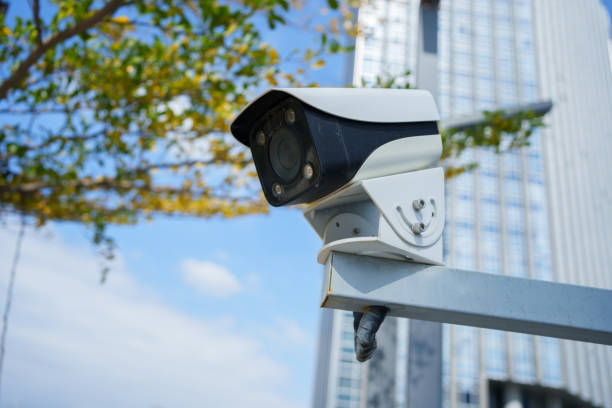
- Bullet cameras — better suited for long-range coverage of perimeter areas, car parks, and loading docks
- PTZ (Pan-Tilt-Zoom) cameras — used in large open floors or facilities where active monitoring is required
- Fisheye cameras — effective for single-camera coverage of a full room with minimal blind spots
Most well-designed office systems combine multiple types. A single camera type rarely covers an entire office effectively.
3. Wired vs. Wireless IP Camera Deployment
There is ongoing debate about whether a wireless IP camera in Singapore offices is a practical choice. Wireless systems offer faster installation and greater placement flexibility — useful in heritage buildings or leased spaces where cabling is restricted.
However, wired PoE (Power over Ethernet) cameras remain the preferred standard for most commercial deployments. They are more reliable, not susceptible to signal interference, and offer consistent data throughput — critical when recording at high resolution across multiple streams simultaneously.
4. Night Vision and Low-Light Performance
Offices are not always well-lit outside business hours. Cleaners, security personnel, and after-hours access all require clear footage. Look for cameras with true IR night vision or, better still, colour night vision using starlight sensors. These perform well in ambient light conditions without requiring dedicated lighting upgrades.
5. Local and Cloud Storage Options
A commercial-grade system should offer both NVR (Network Video Recorder) storage and cloud backup. NVR gives you local control and faster retrieval, while cloud storage provides redundancy if hardware is tampered with or damaged. For regulated industries in Singapore — finance, healthcare, legal — having an audit-ready footage archive is not optional.
Strategic Placement: Where Cameras Matter Most in Singapore Offices
The value of your system depends heavily on where cameras are positioned. For office CCTV in Singapore, the following placements are non-negotiable:
| Location | Camera Type | Key Requirement
|
|---|---|---|
| Main entrance / reception | Dome or bullet | Face capture, WDR for backlit environments |
| Server room / data centre | Dome | Tamper detection, motion alerts |
| Car park and loading bay | Bullet or PTZ | Long-range, licence plate readability |
| Corridors and stairwells | Dome | Wide angle, low-light capability |
| Finance and HR areas | Dome (discreet) | Restricted access monitoring, audit trail |
| Common areas (pantry, lounge) | Fisheye or dome | Full-room coverage, minimal blind spots |
PDPA Compliance: What Singapore Businesses Must Know
Singapore’s Personal Data Protection Act (PDPA), administered by the Personal Data Protection Commission (PDPC), governs how organisations collect and manage video surveillance data. Businesses must display clear signage where cameras are in use, limit footage retention to what is necessary, and ensure recorded data is stored securely.
Failure to comply can result in financial penalties and reputational damage. When selecting a commercial IP camera system, verify that your provider understands local data governance requirements — not just the hardware specifications.
Integration With Access Control and Smart Office Systems
Modern business surveillance goes beyond passive recording. IP cameras can integrate directly with door access control systems, triggering alerts when unauthorised access is attempted or when a door is left open after hours. Some systems support facial recognition-based access logging, adding a layer of accountability across entry points.
For facility managers overseeing larger commercial properties, integration with building management systems (BMS) allows centralised oversight — all feeds, alerts, and logs accessible from a single dashboard. This dramatically reduces response time during incidents.
What Separates a Reliable Commercial IP Camera from a Consumer Grade One
Consumer cameras are built for occasional home use. Commercial IP cameras are designed for 24/7 continuous operation, higher ambient temperatures, and network environments that handle multiple simultaneous video streams. Key differentiators include:
- ONVIF compliance — ensures interoperability between cameras and recorders from different manufacturers
- IP66/IP67 rating — essential for outdoor or semi-outdoor placements like lobbies and loading areas
- PoE++ support — allows power and data over a single cable, simplifying installation and reducing cable clutter
- Cybersecurity features — encrypted data transmission, firmware update support, and password enforcement to prevent unauthorised access
- Edge AI analytics — people counting, loitering detection, and motion zone alerts reduce false alarms and improve monitoring efficiency
Choosing the Right Provider in Singapore
A camera is only as good as the system it is part of — and the team that installs and maintains it. For Singapore offices, work with a provider that conducts a proper site survey, maps camera positions to your specific floor plan, and offers post-installation support including firmware updates and maintenance contracts.
Ask specifically about their experience with commercial properties, whether they hold any relevant trade licences under Singapore’s regulatory framework, and whether they can support system expansion as your business grows.
Kirin CCTV specialises in end-to-end IP camera solutions for Singapore businesses — from site assessment and system design to installation and ongoing support. Their focus on commercial-grade deployments ensures your office security is built for real-world demands, not just a product checklist.
Frequently Asked Questions
How many IP cameras does a typical Singapore office need?
It depends on office size and layout, but most medium-sized offices require between 8 and 16 cameras to cover entry points, corridors, server rooms, and common areas effectively. A professional site survey will give you an accurate count based on your specific floor plan and risk zones.
Are wireless IP cameras reliable enough for office use in Singapore?
Wireless IP cameras work well in smaller or retrofit environments where cabling is difficult. However, for primary commercial deployments, wired PoE cameras are more stable and consistent. A hybrid approach — wired for critical zones, wireless for supplementary coverage — is often the practical solution for Singapore offices.
What is the minimum resolution recommended for office CCTV in Singapore?
4MP is generally the recommended minimum for commercial office surveillance. It provides sufficient detail for facial identification and licence plate capture. Higher resolutions like 8MP or 4K are advisable for high-risk areas such as server rooms, reception counters, and vehicle access points.
Does Singapore law require businesses to notify staff about CCTV cameras?
Under the PDPA, businesses must display clear and visible notices informing individuals that video surveillance is in operation. Employers should also inform employees as part of their workplace policies. Covert surveillance in workplaces carries significant legal risk and should be reviewed against PDPC advisory guidelines.
Can IP cameras be integrated with existing access control systems in Singapore offices?
Yes. Most commercial IP cameras support integration with access control systems via ONVIF protocols or proprietary APIs. This allows triggered recording, real-time alerts, and centralised logging when access events occur — particularly useful for monitoring server rooms, finance areas, and restricted entry points.
How long should office CCTV footage be retained in Singapore?
There is no fixed statutory retention period for most commercial offices, but the PDPC advises retaining footage only as long as necessary for the purpose it was collected. Typically, 30 to 90 days is standard practice, with regulated industries such as banking and healthcare potentially requiring longer retention under sector-specific guidelines.