


Quick answer: Ayurvastra cotton fabric is recommended for newborns and infants because it’s dyed using herbal ingredients like turmeric, neem, and sandalwood instead of synthetic chemicals. This makes it gentler on delicate baby skin, reduces the risk of rashes and allergic reactions, and aligns with Ayurvedic principles that value natural, breathable textiles for infant care.
New parents quickly learn that almost every decision about a baby — from food to bath products to clothing — gets scrutinized a little more carefully than it would for anyone else. Fabric is no exception. A newborn’s skin is thinner, more permeable, and far more reactive than adult skin, which means what touches it matters more than most people initially realize. This is exactly why Ayurvastra cotton fabric has been gaining attention among parents looking for safer, gentler clothing options for their little ones.
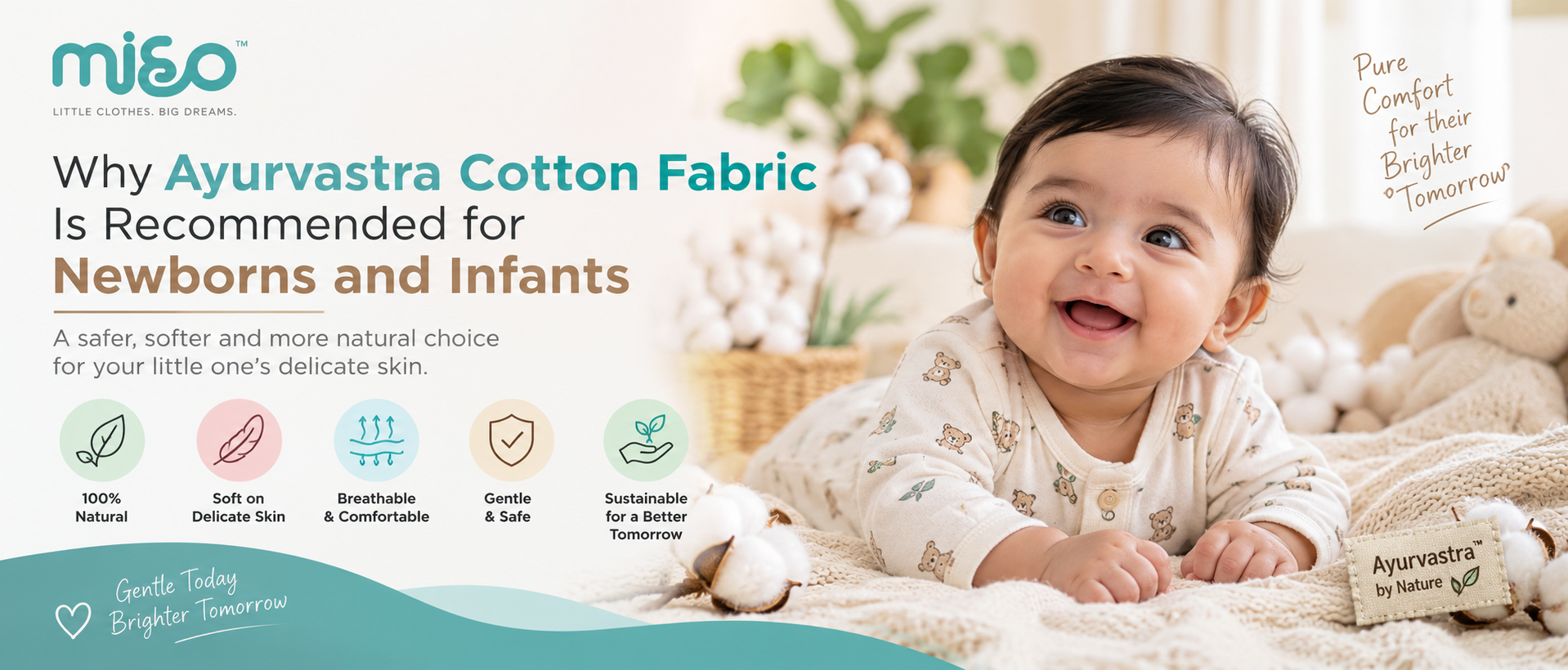
What Makes Ayurvastra Cotton Fabric Different
Ayurvastra is a traditional Indian textile-dyeing method rooted in Ayurveda, where fabric is treated and dyed using herbs, roots, and plant extracts rather than synthetic dyes and chemical finishes. Ingredients like turmeric, neem, tulsi, sandalwood, and indigo aren’t just used for color — they’re chosen specifically for their believed therapeutic and antibacterial properties, a concept that goes back centuries in Ayurvedic medicine.
Unlike regular natural dyed cotton fabric, which focuses mainly on using plant-based coloring agents, Ayurvastra takes it a step further by soaking the fabric in herbal decoctions meant to have skin benefits, not just aesthetic ones. The process is considered a therapeutic textile treatment as much as a dyeing technique.
Why Newborn Skin Needs Special Consideration
A baby’s skin isn’t just smaller — it’s structurally different. It’s thinner, produces less of its own protective oil, and has a less developed barrier function compared to adult skin. That makes it significantly more absorbent and reactive to whatever comes into direct, prolonged contact with it, including clothing fabric.
Chemically dyed fabrics can retain trace residues from synthetic dyes, formaldehyde-based fixing agents, and other treatment chemicals even after washing. For adults, this rarely causes noticeable issues. For newborns, however, these residues are a common trigger for skin irritation, rashes, and allergic contact dermatitis — conditions that are unfortunately quite common in the first few months of life.
Key Benefits of Ayurvastra Cotton Fabric for Babies
Reduced risk of skin irritation. Because Ayurvastra fabric avoids synthetic dyes and harsh chemical fixatives entirely, it significantly lowers the risk of the redness, itching, and rashes that chemically treated fabrics can sometimes cause on sensitive infant skin.
Natural antibacterial properties. Herbs traditionally used in Ayurvastra processing, such as neem and turmeric, are known in Ayurveda for their antimicrobial qualities. While not a substitute for hygiene practices, this natural property adds a layer of protection that regular chemical-free baby fabric alone doesn’t offer.
Breathability and temperature regulation. Ayurvastra fabric is typically made from pure, unbleached cotton, which breathes well and helps regulate a baby’s body temperature — something particularly important since infants aren’t yet able to regulate their own temperature efficiently.
Free from synthetic finishing agents. Many mass-produced baby clothes are treated with wrinkle-resistant or stain-repellent finishes, which often involve chemical coatings. Ayurvastra fabric skips this step entirely, keeping the textile as close to its natural state as possible.
Soft texture that softens further with wash. Unlike heavily processed fabric that can feel stiff out of the packet, herbal dyed baby clothes made through the Ayurvastra process tend to soften naturally over repeated washes, without losing their gentle feel.
How Ayurvastra Compares to Other “Safe” Fabric Claims
The baby clothing market is full of labels — organic, hypoallergenic, chemical-free — and it can be hard to tell what’s genuinely different. Organic cotton, for instance, refers to how the cotton is grown (without pesticides), but it doesn’t say anything about how the fabric is dyed afterward. A fabric can be organic and still be treated with synthetic dyes later in production.
Ayurvastra cotton fabric addresses the other half of that equation — the dyeing and finishing process — making it a meaningful complement to organic cotton for infants rather than a replacement. For parents who want to cover both bases, look for fabric that’s both organically grown and Ayurvastra-dyed for the most comprehensive skin-safety approach.
What to Look for When Buying Ayurvastra Baby Clothing
- Check for herbal ingredient transparency. Genuine Ayurvastra products usually list the specific herbs used in the dyeing process, such as turmeric, madder root, or indigo.
- Look for muted, earthy tones. Because natural dyes don’t produce perfectly uniform, ultra-bright colors, Ayurvastra fabric tends to have soft, slightly varied tonal shades rather than flat, saturated colors.
- Prioritize handwoven or handloom options. Fabrics like Balarampuram cotton, often paired with Ayurvastra dyeing, tend to be softer and more breathable than machine-processed alternatives.
- Avoid fabric with a strong chemical smell. A faint herbal or earthy scent is normal with Ayurvastra fabric; a sharp synthetic odor usually signals conventional chemical processing instead.
A Few Practical Notes for Parents
Ayurvastra fabric does require slightly gentler care than standard baby clothing — mild detergents and air drying help preserve both the herbal treatment and the natural softness of the fabric. It’s also worth noting that colors may soften gradually with washing, which is expected and doesn’t indicate poor quality; it’s simply how natural dyeing behaves over time, unlike synthetic dyes that are engineered to stay flat and unchanging.
Frequently Asked Questions
Is Ayurvastra cotton fabric completely chemical-free?
Ayurvastra fabric avoids synthetic dyes and chemical fixatives, relying instead on herbal ingredients for both color and treatment. While no textile production is entirely free of processing, Ayurvastra significantly reduces chemical exposure compared to conventional dyed fabric.
Can Ayurvastra fabric help with baby eczema or skin allergies?
Many parents choose Ayurvastra fabric specifically because it reduces exposure to common irritants found in synthetic dyes. However, it isn’t a medical treatment, and parents dealing with diagnosed skin conditions should consult a pediatrician alongside making fabric choices.
How is Ayurvastra different from regular natural dyed cotton fabric?
Natural dyed cotton fabric focuses on using plant-based dyes for color. Ayurvastra goes further by using herbal decoctions specifically chosen for their Ayurvedic therapeutic properties, not just their coloring ability.
Does Ayurvastra cotton fabric fade quickly?
Colors may soften gradually over washes, which is typical of natural dyeing processes. This isn’t a sign of poor quality — it’s simply how herbal and plant-based dyes behave compared to synthetic ones.
Is Ayurvastra fabric suitable for everyday baby wear, or just special occasions?
Ayurvastra fabric is well suited for everyday use, including onesies, sleepwear, and daily outfits, since its breathability and skin-friendly properties are most valuable during extended, regular wear.
Final Thoughts
Choosing clothing for a newborn often comes down to weighing softness, safety, and practicality all at once, and Ayurvastra cotton fabric manages to check each of those boxes in a way few conventional fabrics can match. By relying on herbal dyeing rooted in Ayurvedic tradition instead of synthetic chemicals, it offers a genuinely gentler option for the months when a baby’s skin needs the most protection. For parents weighing fabric choices for their little one, Ayurvastra is worth serious consideration — not as a trend, but as a return to a textile tradition that was designed with sensitive skin in mind long before “chemical-free” became a marketing term.
