When most people picture an engagement ring, they picture a diamond. But not every couple chases what everyone else owns. Some couples want something that stops people mid-sentence — something with colour, character, and a story to tell.
Tanzanite engagement rings are ideal for that.
Tanzanite pulls eyes across any room. Its deep blue-violet colour is unlike anything else in fine jewellery. It feels personal, striking, and genuinely rare. And for couples who want their ring to reflect who they truly are, tanzanite delivers something a standard diamond simply cannot match.
This guide walks you through everything you need to know: what makes tanzanite special, what to watch before you buy, and why more couples worldwide now reach for this remarkable stone.
What Makes Tanzanite So Special?
Tanzanite grows in one single place on earth — the foothills of Mount Kilimanjaro in Tanzania. That is it. No other corner of the world produces it. That fact alone sets it apart from nearly every other gemstone on the market.
Here is what makes tanzanite so special:
- It comes from one place only. Geologists believe the conditions that created tanzanite occurred once in Earth’s history and will never repeat again. What sits underground today is all there will ever be.
- It shifts colour with the light. Under natural daylight, tanzanite glows with a rich blue tone. In warm indoor light, it takes on violet and purple hues. This quality — called ‘pleochroism’ — makes the stone look alive and ever-changing throughout the day.
- It shrinks in supply every year. As mining continues, the amount left in the ground drops. The stone you hold today carries a weight of rarity that will only grow over time.
For couples who want a ring that feels alive rather than static, tanzanite brings that quality in full.
The Meaning Behind the Stone
Beyond its looks, tanzanite carries a meaning that connects deeply with many couples.
The Maasai people of Tanzania gift tanzanite to new mothers after childbirth. For them, it represents a safe transition into a new chapter of life. That meaning fits an engagement ring with remarkable accuracy — the beginning of a shared life, a step into something new and lasting together.
Tanzanite also connects to:
- Trust and loyalty — blue stones have carried these meanings across cultures for centuries
- Depth and clear thinking — qualities that complement the seriousness of a lifelong commitment
- New beginnings — the stone’s cultural roots tie it firmly to fresh starts and positive change
When you place a tanzanite ring on someone’s finger, you carry all of that history forward in a way that feels grounded and full of intention.
How Tanzanite Compares to Diamonds
Diamonds score a 10 on the hardness scale — the highest possible. Tanzanite scores between 6.5 and 7, which makes it softer than a diamond but still solid enough for everyday wear with the right care and setting.
Here is how the two stones stack up side by side:
| Feature | Diamond | Tanzanite |
| Hardness | 10 | 6.5 – 7 |
| Colour | Colourless | Blue-violet |
| Source | Multiple countries | Tanzania only |
| Price (per carat) | Higher | More accessible |
| Rarity | Widely mined | Extremely limited |
The biggest difference most couples notice? Colour. Tanzanite communicates personality in a way that colourless stones cannot. A deep blue-violet stone on someone’s hand says something distinct and deliberate about who they are and what they value.
Tanzanite engagement rings also sit well below diamond prices for comparable carat weights. That makes them a powerful choice for couples who want visual impact without a punishing price tag.
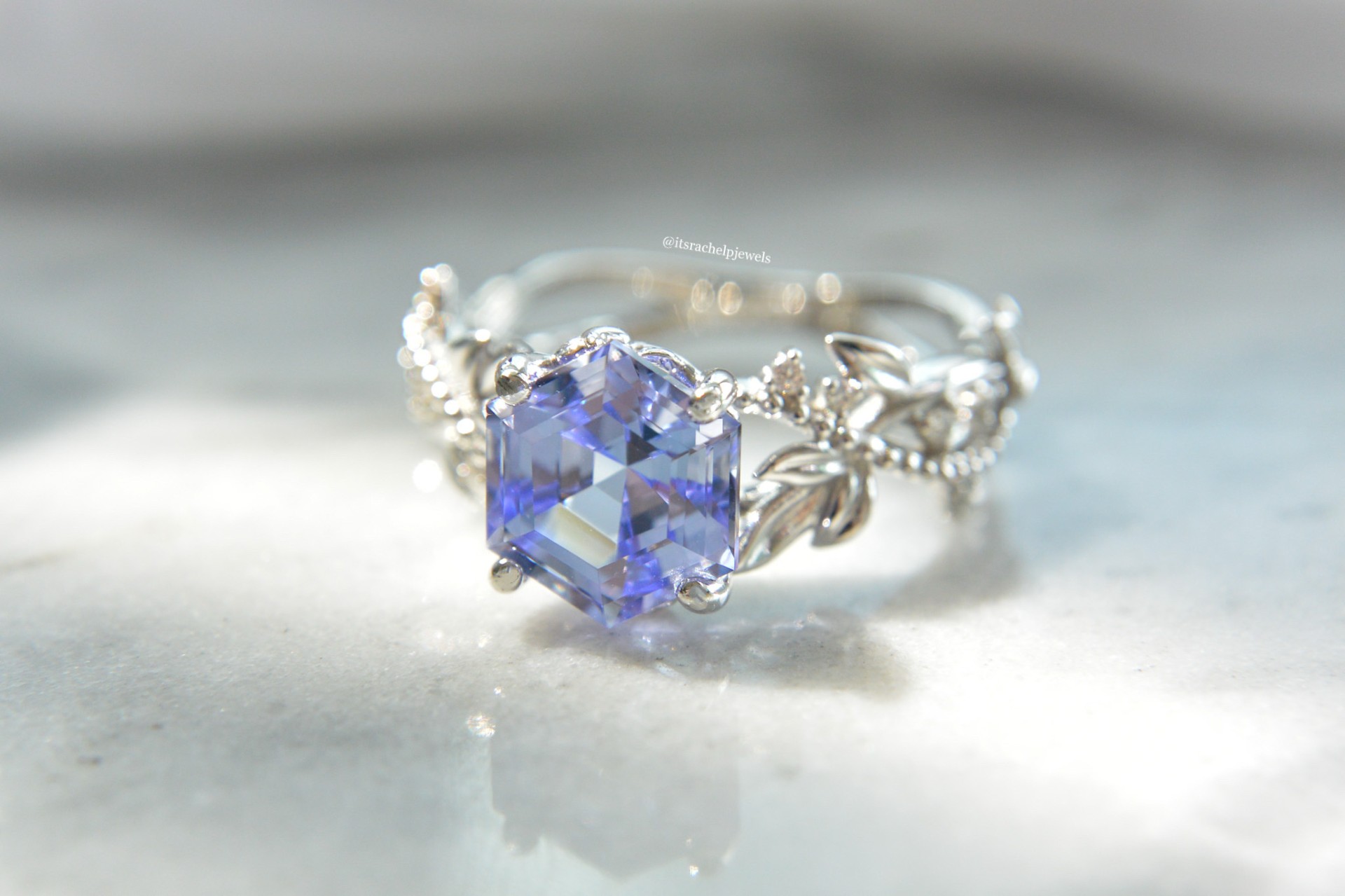
Why Tanzanite Works So Well as an Engagement Ring
It Stands Apart From Every Other Ring in the Room
Walk into any gathering and count the diamond engagement rings. Then picture one deep blue-violet stone among them. Tanzanite does not blend in — it pulls attention and sparks conversations. For couples who live a little differently, that distinction carries real value.
The Colour Says Something Real
A coloured stone adds a layer of personal expression that colourless gems simply cannot offer. Tanzanite’s blue-violet tone reads as calm, deep, and thoughtful — qualities that sit beautifully alongside the commitment an engagement carries.
It Pairs Well With Every Metal
Tanzanite adapts to:
- White gold or platinum — sharpens the blue tones and gives a clean, modern feel
- Yellow gold — creates a rich, warm contrast that highlights the violet hues
- Rose gold — softens the look and adds a romantic warmth that many wearers love
Whatever metal the wearer leans toward, tanzanite adjusts with grace.
It Feels Rare Without Being Hard to Find
Some rare gemstones sit so far outside the mainstream that sourcing quality pieces becomes a real struggle. Tanzanite strikes a balance: it is genuinely rare, yet reputable jewellers carry quality stones without too much difficulty. You land the rarity without the frustration of a long search.
Finding an Affordable Engagement Ring in Singapore
For couples based in Singapore, the search for something beautiful within a clear budget often leads toward coloured gemstones. An affordable engagement ring in Singapore jewellers will frequently point couples toward tanzanite for exactly this reason.
A quality tanzanite stone delivers striking visual power at a fraction of the cost of a comparable diamond. In a city where engagement ring budgets vary widely, tanzanite offers options that diamonds do not for many buyers.
When you visit an affordable engagement ring store, consider these points:
- Ask about stone certification — a genuine certificate confirms authenticity, grade, and origin
- Look at the colour depth — deeper, more even colour means higher quality and better value
- Check how the jeweller sources their stones — transparency here signals a trustworthy seller
- Compare settings — a bezel or halo design protects the stone better during daily wear
Singapore’s jewellery market offers a strong selection of tanzanite pieces, from minimal solitaires to ornate designs with accent stones. The options are available at most price points, so you can find something that fits your budget.
What to Check Before You Buy
Getting this decision right takes a few careful steps. Here is what to look at before you commit:
- Colour saturation — tanzanite ranges from pale lavender to deep blue-violet. Deep, even colour indicates a higher value. Avoid stones with washed-out or uneven patches.
- The setting style — a bezel or halo setting shields the stone from hard knocks. For a ring worn daily, protection matters.
- Certification — never skip this step. A reputable jeweller hands you documentation that confirms the stone’s authenticity and grade without any hesitation.
- The cut — a well-cut tanzanite maximises its colour shift and brilliance. Oval, cushion, and emerald cuts tend to show the stone’s pleochroism best.
- The jeweller’s reputation — read reviews, ask questions, and trust your gut. A good jeweller welcomes your questions rather than dodging them.
The Bottom Line
Tanzanite does not try to copy a diamond. That is the whole point. It is unique — rare, colourful, and unlike anything else in the world of fine jewellery.
Tanzanite engagement rings suit couples who want a ring that says something honest and distinct about who they are. The stone carries meaning, beauty, and rarity in equal measure. For anyone searching for an affordable engagement ring jeweller, tanzanite delivers visual impact and genuine rarity at a price that makes the decision far easier.
If you want a ring that stands out, inspires genuine conversations, and has a story behind every glance, tanzanite deserves your serious consideration.
FAQs
1. Are tanzanite engagement rings durable enough for everyday wear?
Tanzanite scores 6.5 to 7 on the hardness scale, which makes it suitable for daily wear when you pair it with a protective setting. A bezel or halo design shields the stone from direct impact. Remove the ring during heavy manual work or gym sessions, and the stone stays sharp and stunning for years.
2. How do I know if a tanzanite stone is genuine?
Always buy from a jeweller who provides a certificate from a recognised gemstone grading laboratory. Genuine tanzanite shifts between blue and violet depending on the light around it. Any jeweller who cannot provide documentation or sidesteps your questions about the origin deserves your scepticism.
3. Does tanzanite hold its value over time?
Tanzanite draws from a single source that depletes a little more each year. As supply tightens, value holds and tends to climb over time. It will not match diamond as a financial asset, but its shrinking supply gives it a stronger long-term case than most coloured gemstones.