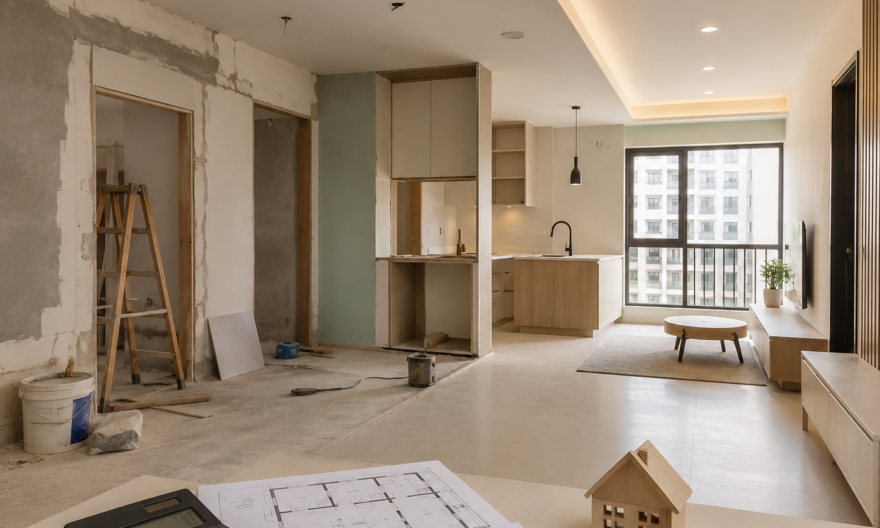
An HDB BTO renovation package in Singapore typically costs between S$30,000 and S$80,000 in 2026, depending on flat size, material choices, and scope of work. A basic 3-room BTO package starts around S$30,000–S$40,000, while a fully furnished 5-room flat can exceed S$70,000. Most homeowners budget S$45,000–S$60,000 for a comfortable mid-range finish.
What Is an HDB BTO Renovation Package?
A HDB BTO renovation package is a bundled service offered by interior design firms and renovation contractors that covers all major works needed to transform a bare BTO flat into a liveable, furnished home. These packages typically include hacking, carpentry, flooring, painting, electrical works, plumbing, and feature walls priced as a single quoted sum rather than itemised line by line.
Unlike resale flat renovations, BTO units are handed over in a standard bare condition. That means every surface, fixture, and fitting needs to be planned and installed from scratch making the package model especially practical for first-time homeowners managing a tight BTO renovation budget.
HDB BTO Renovation Cost Breakdown by Flat Type (2026)
Here’s a realistic cost guide based on current market pricing in Singapore. These figures reflect mid-range finishes and include labour, materials, and basic furnishing.
| Flat Type | Floor Area (approx) | Basic Package | Mid-Range Package | Premium Package
|
|---|---|---|---|---|
| 2-Room Flexi | 36–45 sqm | S$20,000–S$28,000 | S$28,000–S$40,000 | S$40,000–S$55,000 |
| 3-Room | 60–65 sqm | S$30,000–S$38,000 | S$38,000–S$52,000 | S$52,000–S$68,000 |
| 4-Room | 90–93 sqm | S$38,000–S$48,000 | S$48,000–S$65,000 | S$65,000–S$85,000 |
| 5-Room | 110–115 sqm | S$45,000–S$58,000 | S$58,000–S$75,000 | S$75,000–S$100,000+ |
Prices vary based on contractor, design complexity, and material grade. These are indicative ranges drawn from current renovation price data in Singapore for 2026.
What Does a BTO Renovation Package Typically Include?
Most bundled packages cover a defined scope of work. What’s included and excluded differs across contractors, so always read the fine print before signing.
Commonly Included
- Hacking of walls and existing tiling (where applicable)
- Flooring — vinyl, homogeneous tiles, or engineered timber
- Kitchen carpentry — cabinets, countertops, and backsplash
- Wardrobe carpentry for master and common bedrooms
- Bathroom works — waterproofing, tiling, sanitary fittings
- Electrical points, lighting installation, and DB box upgrade
- Painting — walls and ceilings throughout the flat
- Feature wall or TV console for the living room
Commonly Excluded
- Furniture and loose furnishings (sofa, bed frames, dining sets)
- Home appliances (fridge, washing machine, air-conditioners)
- Smart home systems and additional electrical points beyond package scope
- Window grilles and gate installation (often quoted separately)
- False ceilings with cove lighting (add-on in most packages)
Air-conditioning units alone add S$2,000–S$5,000 to your total cost. Budget an additional S$8,000–S$15,000 for furniture and appliances on top of your renovation package.
Key Factors That Affect Your BTO Renovation Budget
1. Material Grade and Finishes
This is the single biggest cost variable. Choosing engineered timber over vinyl flooring can add S$3,000–S$8,000 to a 4-room flat renovation. Solid surface countertops cost significantly more than laminate. Premium materials lift quality but stretch your renovation price in Singapore considerably.
2. Carpentry Volume
Carpentry is typically billed per linear foot or as a lump sum. A kitchen with extensive upper and lower cabinets, a walk-in wardrobe, and a built-in study nook will cost far more than a minimal setup. Custom carpentry can account for 35–50% of your total renovation bill.
3. Design Complexity
Open-concept layouts, curved feature walls, concealed LED cove lighting, and intricate tiling patterns all add labour hours and cost. Simpler, clean-line designs consistently deliver better value without sacrificing aesthetics.
4. Contractor Type
There’s a meaningful price difference between a freelance contractor, a licensed renovation firm, and a full-service interior design studio. ID firms typically charge 15–25% more but offer project management, 3D design renders, and a single point of accountability throughout the project.
5. Timeline and Availability
Contractors booked during peak periods typically when multiple BTO projects reach key collection milestones simultaneously may charge a premium. Flexibility on your start date can occasionally yield better negotiated pricing.
HDB Renovation Rules You Must Know Before Starting
The Housing & Development Board (HDB) requires all renovation works to comply with its guidelines. Key rules include:
- Renovation works are only permitted on weekdays from 9am to 6pm, and Saturdays from 9am to 1pm. No works on Sundays and public holidays.
- Structural walls cannot be hacked without prior HDB approval.
- Wet works (hacking, tiling, concreting) are limited to 3 consecutive months from the start of renovation.
- All renovation contractors must be registered with HDB.
You can verify your contractor’s registration and understand the full scope of permitted works on the HDB official renovation portal. Non-compliance can result in fines and mandatory reinstatement at the homeowner’s cost.
Smart Ways to Manage Your BTO Renovation Budget
Prioritise Structural and Built-In Works First
Hacking, tiling, electrical, and plumbing works are difficult and expensive to redo later. Invest here. Loose furniture, lighting fixtures, and décor can be upgraded incrementally over time as your budget allows.
Get at Least Three Detailed Quotations
Don’t compare package totals alone compare line items. Two quotes at S$52,000 can differ dramatically in what’s included. A contractor offering a suspiciously low price may be using thinner carpentry boards, cheaper tile grades, or excluding waterproofing.
Use CPF for Eligible Works
Singaporean homeowners can use CPF Ordinary Account savings to pay for approved renovation works. This helps manage cash flow without dipping entirely into savings. Check HDB’s CPF withdrawal eligibility requirements to confirm what qualifies.
Plan Your Layout Before Meeting Contractors
Walking into contractor meetings with a rough floor plan, a shortlist of materials, and a clear style reference saves hours of back-and-forth. It also gives contractors a precise scope to quote against reducing the risk of ambiguous pricing that expands mid-project.
Build a 10–15% Contingency Buffer
Unexpected costs are the norm, not the exception. Concealed hacking damage, layout changes after works commence, or upgrading a material mid-project all eat into budgets. A 10–15% buffer on your quoted sum is the difference between a stressful renovation and a manageable one.
Is a BTO Renovation Package Worth It?
For most first-time homeowners in Singapore, yes. Packages simplify decision-making, provide clearer upfront pricing, and reduce the coordination effort of managing multiple sub-contractors independently. The trade-off is less granular control over individual line items.
If you have a tightly defined vision, specific material preferences, or a very tight budget, a fully itemised quotation rather than a fixed package may give you more flexibility to strip back or upgrade individual components.
The best approach is to use a package as a baseline benchmark, then negotiate adjustments based on your priorities.
Working with an experienced renovation partner makes a measurable difference in how smoothly your BTO project runs and how far your budget stretches. IMAX Group brings structured project management and transparent pricing to every renovation engagement helping homeowners avoid cost blowouts and deliver the finish they envisioned from day one.
Frequently Asked Questions
What is the average cost of an HDB BTO renovation package in Singapore in 2026?
The average HDB BTO renovation package in Singapore costs between S$38,000 and S$65,000 in 2026, depending on flat size and finish level. A 3-room flat typically runs S$30,000–S$52,000, while a 5-room flat ranges from S$45,000 to over S$75,000 for a mid-to-premium finish. These figures exclude furniture, appliances, and air-conditioning units.
Can I use CPF to pay for my BTO renovation?
Yes. Singaporean homeowners can use CPF Ordinary Account savings to fund eligible HDB renovation works. The CPF funds can be used to pay a licensed renovation contractor directly. Not all works qualify, so confirm the eligible categories with HDB or CPF Board before finalising your payment arrangement with your contractor.
How long does a BTO flat renovation typically take?
A full BTO flat renovation in Singapore typically takes 8 to 14 weeks from the start of works, depending on scope and contractor scheduling. Wet works such as hacking and tiling are permitted for a maximum of 3 consecutive months under HDB guidelines. Complex projects involving extensive carpentry or structural changes may take longer.
What is the difference between a basic and premium BTO renovation package?
A basic package covers essential works standard flooring, laminate carpentry, and basic sanitary fittings. A premium package uses higher-grade materials such as engineered timber, solid surface countertops, and custom carpentry finishes, often with a full ID consultation and 3D design. The price difference between basic and premium for a 4-room flat can be S$25,000–S$40,000.
Do BTO renovation packages include furniture and appliances?
Most BTO renovation packages do not include loose furniture, home appliances, or air-conditioning units. These are typically quoted and purchased separately. Homeowners should budget an additional S$8,000–S$20,000 for furniture sets, kitchen appliances, and air-con installation on top of their renovation package cost.
How do I choose a reliable renovation contractor for my BTO flat?
Verify that any contractor is registered with HDB before signing any agreement this is a legal requirement for renovation works in HDB flats. Compare at least three detailed, itemised quotations. Check reviews, request to view completed projects, and confirm that the contract clearly states the scope, timeline, payment milestones, and warranty terms before committing.