

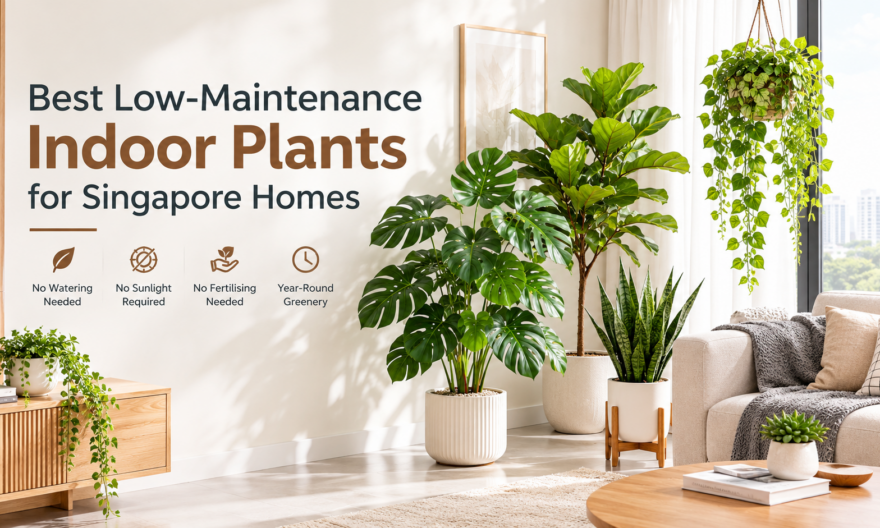
The best low-maintenance indoor plants for Singapore homes are artificial plants. They require no watering, no sunlight, and no fertilising — making them ideal for Singapore’s busy urban lifestyle. Whether you live in an HDB flat or a condo, artificial indoor plants deliver consistent greenery year-round without the upkeep that real plants demand.
If you’ve ever bought a real plant only to watch it wilt within weeks, you’re not alone. Singapore’s high humidity, limited natural light in many apartments, and packed daily schedules make plant care genuinely difficult. That’s why more homeowners and renters here are turning to easy-care plants that look just as lush — without the maintenance cycle.
Why Low-Maintenance Greenery Makes Sense in Singapore
Singapore consistently ranks among the world’s most time-pressed cities. According to a 2023 survey by the Institute of Policy Studies, Singaporeans report long working hours and limited leisure time — a reality that leaves little room for tending to a plant collection.
At the same time, interest in biophilic design — the practice of bringing nature indoors — has grown sharply. National Parks Board (NParks) actively promotes indoor greenery through its OneMillionTrees movement and various community greening programmes. The desire for greenery is real. The time to maintain it, however, often isn’t.
This gap is precisely where artificial indoor plants shine. They let you enjoy the visual and psychological benefits of greenery — calming aesthetics, a sense of warmth, improved perceived air quality — without committing to a care routine.
Artificial Plants vs Real Plants: Which Is Right for You?
Both options have their place. Here’s a straightforward comparison to help you decide:
|
Factor |
Real Plants |
Artificial Plants |
|---|---|---|
| Watering Required | Yes — regularly | No |
| Sunlight Needed | Yes — varies by species | No |
| Long-Term Cost | Ongoing (soil, pots, fertiliser) | One-time purchase |
| Lifespan | Variable — depends on care | Several years with minimal upkeep |
| Suitable for Dark Rooms | Limited options only | Yes — any room |
| Allergy Risk | Possible (pollen, mould in soil) | Very low |
| Ideal For | Plant enthusiasts with time | Busy professionals, families |
Best Types of Artificial Plants for Singapore Interiors
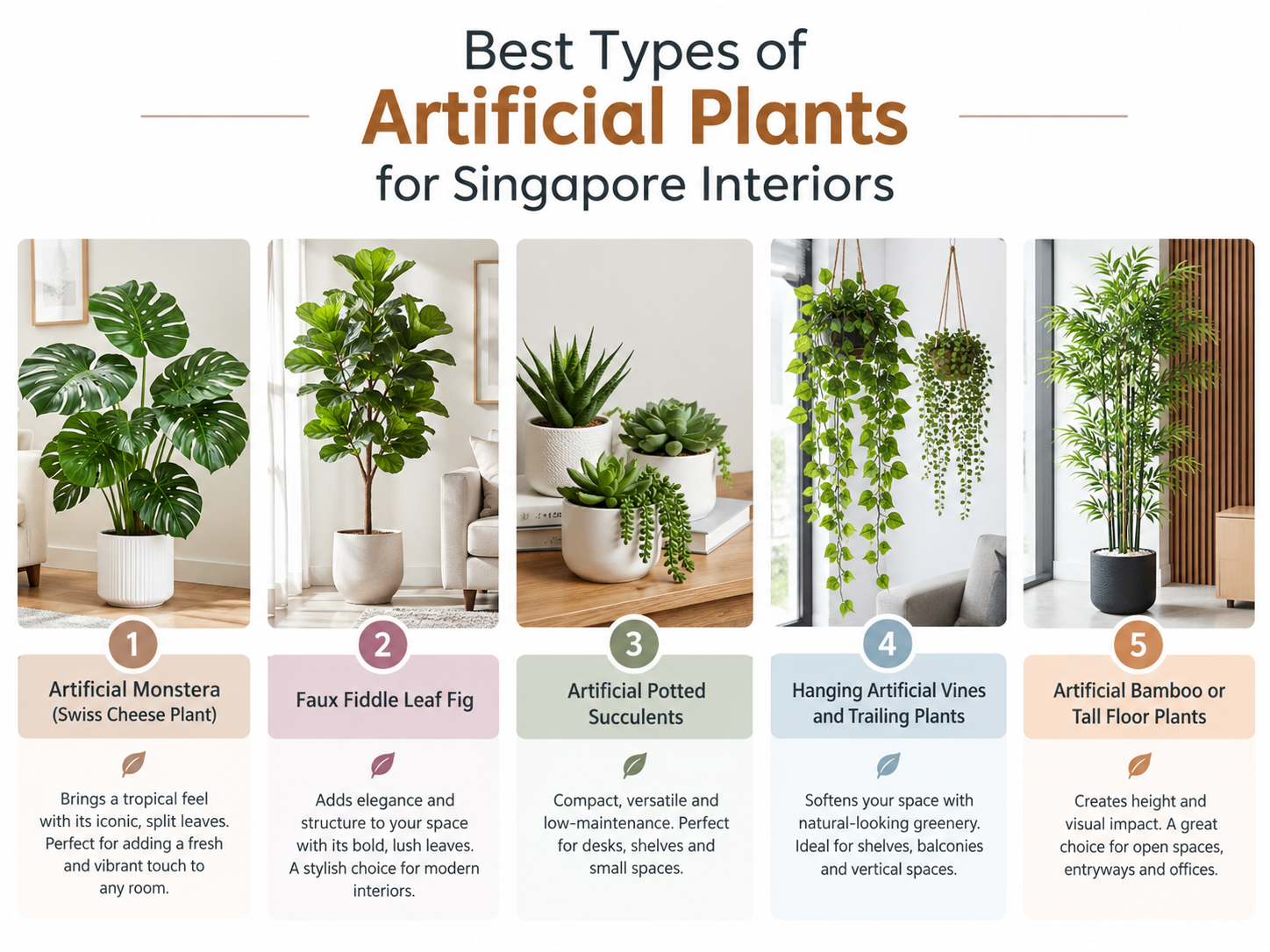
Not all fake indoor plants are created equal. The best ones are made from high-quality silk or premium PE (polyethylene) materials that mimic real textures and colours convincingly. Here are the top styles suited to Singapore homes:
1. Artificial Monstera (Swiss Cheese Plant)
The monstera is one of the most popular artificial plant wall choices in Singapore right now. Its bold, split leaves add a tropical feel that suits both Scandinavian-minimalist and contemporary Peranakan-inspired interiors. A realistic artificial version gives you that statement look without the fussing over leaf mould or root rot.
2. Faux Fiddle Leaf Fig
The fiddle leaf fig looks stunning but is notoriously difficult to keep alive — it’s sensitive to drafts, inconsistent watering, and low light. An artificial version delivers the same dramatic silhouette with zero temperament. It works particularly well in living rooms and entryways with high ceilings.
3. Artificial Potted Succulents
Perfect for office desks, bookshelves, and bathroom counters. Faux succulents come in varied shapes — echeveria rosettes, trailing strings of pearls, tower-like haworthias — and can be arranged in clusters for a styled, intentional look. They’re lightweight, compact, and easy to rearrange.
4. Hanging Artificial Vines and Trailing Plants
Ceiling hooks and wall shelves are underused in Singapore apartments. Artificial trailing vines — think pothos or ivy — can be draped across shelving units or hung from the ceiling to add vertical greenery. They instantly soften a room without requiring drainage trays or grow lights.
5. Artificial Bamboo or Tall Floor Plants
For corners that need height, artificial bamboo or large leafy floor plants create architectural interest. In a Singapore HDB flat where floor space is limited, one well-placed tall plant can define a zone — separating a dining area from a living space without a physical partition.
How to Style Indoor Greenery Singapore Homes Will Love
Styling artificial plants well is what separates a thoughtful interior from one that looks artificial in the wrong way. A few practical tips:
- Choose quality pots: Pair your plant with a ceramic, rattan, or concrete pot. The planter elevates the overall look significantly.
- Layer sizes: Combine tall floor plants with medium tabletop varieties and small desk succulents to create depth.
- Use odd numbers: Groups of three or five plants look more natural than symmetrical pairs.
- Mix textures: Broad-leaf plants alongside fine-textured trailing vines create visual contrast.
- Avoid direct sunlight for fading: Even though artificial plants don’t need sunlight, prolonged UV exposure can fade colours over time. Position them away from harsh west-facing windows.
Are Artificial Plants Worth It? What Singapore Homeowners Say
Interior designers and homeowners across Singapore increasingly recommend artificial plants for new BTO flats, rental units, and serviced apartments. The reasons are practical: rental tenants want to decorate without long-term commitment, while BTO owners often spend their first year focused on renovation and settling in — not plant care.
For families with young children or pets, artificial plants also eliminate worries about toxic species. Several popular real indoor plants — including pothos, peace lilies, and philodendrons — are mildly toxic to cats, dogs, and toddlers. A faux alternative removes that concern entirely.
Maintenance is also refreshingly simple. A light wipe with a damp cloth every few weeks keeps artificial plants looking fresh in Singapore’s dusty indoor environments. No repotting, no pruning, no pest treatments.
Where to Place Artificial Plants in Your Home
One of the biggest advantages of artificial plants is placement flexibility. Here are the most effective spots in a typical Singapore home:
- Bathroom: Real plants struggle with low light and fluctuating humidity. Artificial ones look great beside the vanity or on a shelf and never rot.
- Home office: A small potted faux plant on your work desk adds calm without distraction.
- Bedroom: Some real plants should be avoided in bedrooms due to overnight oxygen exchange — artificial plants have no such restriction.
- Entryway or foyer: A statement floor plant beside your shoe cabinet makes a strong first impression.
- Kitchen: Herb-style faux plants on the countertop add character without attracting insects.
Making the Switch to Easy-Care Plants
If you’ve been hesitant about artificial plants because of quality concerns, the category has improved dramatically. Premium-grade faux plants today use hand-painted leaves, natural-looking stems, and realistic root structures embedded in textured soil-like bases. The difference between budget and quality products is immediately visible — and worth the investment for centrepiece pieces.
For curated, high-quality options suited to Singapore interiors, Alton Flowers offers a well-edited range of artificial plants designed to complement modern home aesthetics — from compact desk varieties to large statement floor pieces.
FAQ
Are artificial plants suitable for Singapore’s humid climate?
Yes. Unlike real plants, artificial indoor plants are unaffected by humidity, temperature fluctuations, or lack of sunlight — all common challenges in Singapore homes. They won’t develop mould on their leaves or attract humidity-related pests, making them a practical year-round choice for both air-conditioned and naturally ventilated spaces.
How do I clean artificial indoor plants?
Wipe leaves gently with a damp microfibre cloth every two to three weeks to remove dust. For intricate pieces, a light blast from a hairdryer on a cool setting works well. Avoid harsh chemical sprays, as these can discolour the material over time.
Do fake indoor plants look realistic enough for home décor?
Premium-quality fake indoor plants are highly convincing today, with hand-finished details, natural colour gradients, and realistic textures. Choosing quality over budget options and pairing them with good planters makes a significant visual difference — most guests won’t notice they’re not real.
What are the best artificial plants for HDB flats in Singapore?
Compact options like potted faux succulents, small monstera varieties, and trailing vines work well in HDB spaces. For homes with open-concept layouts, a tall artificial bamboo or fiddle leaf fig in a corner adds height and definition without crowding limited floor space.
Can artificial plants be used outdoors in Singapore?
Some artificial plants are rated for outdoor use, but standard indoor varieties will fade with prolonged UV exposure and may be damaged by heavy rain. If you want greenery on a balcony or corridor, look specifically for UV-resistant, weatherproof artificial plants designed for outdoor conditions.