


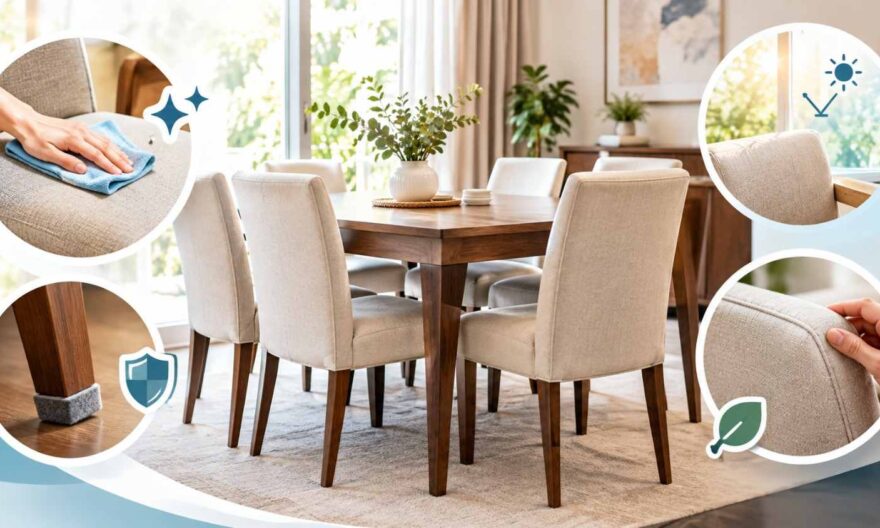
Simple, consistent care will keep your newly upholstered dining chairs looking their best. Fabric surfaces should be cleaned weekly with a dry or damp cloth. Alternate seat usage to distribute wear. Clean up spills within 30 seconds to prevent staining. Keep chairs out of direct sunlight. A structured routine protects the investment and increases the upholstery’s lifespan considerably.
You’ve just had your chairs done up. They look brilliant. But dining chair upholstery requires ongoing attention to hold that just-done look for years. This checklist breaks down exactly what to do in the first week, the first month, and on an ongoing basis so your chairs remain as impressive as the day they left the workshop.
Why Post-Upholstery Care Matters More Than Most People Realise
Most damage to upholstery is seldom caused by a single dramatic event. It builds up slowly, like a food stain left too long, a chair leg scraping on a hard floor, a cushion pressed in the same place for months. By the time you see the damage, it’s hard and expensive to undo.”
In India, the humidity varies significantly from city to city and season to season. In Mumbai and Chennai, the high moisture levels in coastal regions can cause the fabric to break down faster, mould growth on the underside of foam padding and warping of the frame if the underside of the chair is not well ventilated. These are not hypothetical risks – they are common causes of premature upholstery failure in the area.
A simple maintenance habit that takes less than 10 minutes a week but adds years of life to your chairs.
The First 72 Hours After Reupholstering
The first few days after your chairs return from the upholsterer are critical. The fabric is freshly set, any adhesives or tack strips have just settled, and the foam or padding has not yet been compressed through regular use.
What to do immediately:
- Allow the chairs to air out — Keep them in a well-ventilated room for at least 24 hours before placing them back at the table. This allows any residual adhesive fumes to dissipate and lets the fabric breathe.
- Avoid sitting on them for the first 12 hours — Especially if foam padding was replaced, it needs time to fully expand and settle into its natural shape.
- Do not place protective plastic or covers immediately — Trapped moisture underneath can cause early mould development. Let the surface breathe first.
- Test the fabric’s response to water — Place a single drop of clean water on an inconspicuous corner of the fabric. If it beads, the fabric is water-resistant. If it absorbs quickly, note this and treat accordingly going forward.
Weekly Maintenance Checklist
Weekly habits are the backbone of long-term upholstery care. Each task takes only a minute or two per chair but prevents compounding damage.
- Dry-wipe all fabric surfaces — Use a clean, lint-free microfibre cloth to remove dust, crumbs, and loose debris. Always wipe in the direction of the fabric grain or weave to avoid disrupting the fibres.
- Check the legs and base for wobble — A loose joint creates uneven pressure distribution on the seat frame, which leads to uneven fabric stress over time. Tighten any loose screws immediately.
- Rotate seating positions at the table — If one chair consistently bears heavier use or more sunlight exposure, move it to a different position at the table each week.
- Inspect seams and piping — Run your fingers along the seam edges and any decorative piping. Catching a small loose thread or early separation early means a simple repair rather than a full redo.
- Fluff and reshape removable cushions — If your chairs have removable seat pads, flip and rotate them weekly to prevent one-sided compression and sagging.
Monthly and Seasonal Maintenance Checklist
Beyond the weekly wipe-down, monthly and seasonal checks protect the structural integrity of the chair and the fabric at a deeper level.
Monthly Tasks
- Deep clean the fabric — Use a fabric-appropriate cleaner. For cotton or linen blends, a diluted mild upholstery solution works well. For synthetic fabrics like polyester or microfibre, a dry foam cleaner is safer. Always test in a hidden area first.
- Condition leather or leatherette surfaces — If your chairs were reupholstered in leather or bonded leather, apply a leather conditioner monthly. In India’s dry winter months especially, leather can crack without regular moisturising.
- Check furniture feet and floor protectors — Replace rubber caps or felt pads on the chair feet if worn. This protects both the flooring and the chair’s stability.
- Look underneath the chair — Check the underside of the seat for any signs of sagging fabric, exposed tacks, or moisture staining — especially important during the monsoon season.
Seasonal Tasks (Every 3–4 Months)
- Reassess sun exposure — As the sun’s angle changes seasonally, a chair that was previously shaded may now receive direct afternoon light. UV exposure fades fabric and dries out foam padding. Reposition or use sheer curtains if needed.
- Check for pest activity — In warmer months across India, insects can find their way into foam padding. If you notice any irregular pitting or surface changes under the fabric, have a professional inspect the seat core.
- Apply a fabric protector spray — A good upholstery protector spray creates a stain-resistant barrier. Reapply every 3–4 months based on usage frequency.
Stain Treatment: Acting Fast Is Everything
Spills at the dining table are inevitable. What separates a permanent stain from a clean fix is how quickly and correctly you respond.
| Stain Type | Immediate Action | What to Avoid
|
|---|---|---|
| Water-based (juice, tea, coffee) | Blot immediately with a dry cloth — do not rub. Apply cool water from the outside inward. | Hot water, rubbing aggressively |
| Oil-based (ghee, curries, sauces) | Sprinkle baking soda on the stain, leave for 15 minutes, then gently brush off. Follow with a light upholstery cleaner. | Water alone — it spreads oil further |
| Ink or dye | Apply isopropyl alcohol on a cotton ball and blot carefully. Work from the outer edge inward. | Water, harsh scrubbing |
| Food residue (dried) | Gently scrape off dried material with a blunt tool, then treat as a water-based stain. | Picking or pulling at the fabric |
One general rule: always blot, never rub. Rubbing pushes the stain deeper into the fabric weave and spreads it wider.
Dining Chair Upholstery Trends Worth Knowing for Your Next Refresh
Caring for your current upholstery well also means knowing when to update. Among current dining chair upholstery trends in India, performance fabrics — those engineered to resist moisture, staining, and heavy use — are seeing increased demand in urban homes. These fabrics simplify maintenance considerably and are worth considering if you plan a future refresh.
What to Avoid: Common Mistakes That Shorten Upholstery Life
- Using multi-purpose household sprays — Products like general surface cleaners often contain chemicals that break down fabric fibres or leave a residue that attracts more dirt.
- Steam cleaning without checking fabric type — Steam can cause shrinkage in natural fibres and loosen adhesive on tufted or buttoned designs. Always check the care label or ask your upholsterer.
- Ignoring small repairs — A 2 cm loose seam can become a full tear within weeks under regular use. Attend to minor repairs promptly.
- Sitting in the same spot repeatedly — Concentrated weight compresses foam unevenly. Vary seating habits and rotate cushions.
- Placing hot items directly on fabric seats — In dining environments, warm serving dishes placed momentarily on a seat can cause heat-related fabric distortion or adhesive softening.
When to Call a Professional
DIY maintenance handles most day-to-day care. But certain issues need a trained hand:
- Fabric pulling away from the tack rail along the underside of the seat
- Foam padding that no longer springs back after sitting
- Visible sagging in the seat deck even when unoccupied
- Mould or mildew smell that does not clear after airing out
- Structural creak or instability that indicates joint failure
These are not situations where waiting helps. Early professional intervention almost always costs less than a full reupholstering job later.
The team at DKS International works with clients well beyond the initial service — whether that means guidance on care routines, fabric-specific advice, or handling repairs when they arise. Keeping your chairs in top shape is not a one-time job, and having a reliable upholstery partner makes the entire process easier and more cost-effective over time.
Frequently Asked Questions
How soon can I use my dining chairs after reupholstering?
Wait at least 12 to 24 hours before regular use. This allows foam padding to expand fully, adhesives to cure properly, and any residual fumes from the workshop process to dissipate. Using chairs too early can compress foam unevenly and affect the final shape and comfort of the seat.
How do I clean dining chair upholstery without damaging the fabric?
Always identify your fabric type first. For most woven fabrics, blot spills immediately, use a mild upholstery cleaner diluted in water, and dry naturally. Avoid harsh scrubbing, steam cleaning natural fibres, or using general household sprays not designed for upholstery — these can break down the fabric or leave residue.
How often should I apply a fabric protector to dining chair upholstery?
Apply a quality upholstery protector spray every three to four months, or after each professional deep clean. In Indian households where cooking oils and spices are common, more frequent application is advisable. Always test the product on a hidden section of the fabric before applying across the entire seat surface.
Can dining chair upholstery handle the Indian monsoon season?
Yes, with proper care. During the monsoon, ensure chairs are kept in well-ventilated areas, away from open windows or damp walls. Check the underside of seats monthly for moisture build-up or early mould signs. Synthetic fabrics and performance blends tend to handle humidity better than natural fibres like cotton or linen.
How do I know when it is time to reupholster dining chairs again?
Signs include visible sagging even when unoccupied, foam that no longer rebounds, fabric pulling away from the frame, fading that cannot be addressed with cleaning, or structural instability in the chair frame. With proper maintenance, quality upholstery in moderate-use households typically lasts between five and ten years before a full replacement is needed.
What fabrics are easiest to maintain for dining chairs?
Performance fabrics such as polyester blends, microfibre, and treated synthetic weaves are the easiest to maintain for dining chairs. They resist staining, tolerate regular wiping, and hold colour well under UV exposure. Leather and leatherette are also low-maintenance but require monthly conditioning to prevent drying and cracking over time.