


Taoist funeral rituals in Singapore are carried out in a formal ritual process based on ancient Chinese ideas of death, the afterlife and respect for the dead. The service normally takes three to five days and includes wake arrangements, religious rites by a Taoist priest, offerings and burial or cremation. After the funeral, families are also assisted in observing mourning traditions.
It’s tough losing someone you love. It may feel like a difficult proposition to be dealing with the religious and practical issues of a decent send-off, on top of everything else. This guide will lead you through every stage of Taoist funeral services in Singapore, from the first night of the wake to post-funeral rites, so your family can focus on grieving and honouring the person you’ve lost.
What Is a Taoist Funeral?
A Taoist funeral is a religious funeral ceremony observed by Chinese families who are followers of Taoism, or who mix Taoist customs with folk religious beliefs. The rites are meant to ease the journey of the soul to the next world, to clear any spiritual bills that may be left unpaid, and to bestow blessings on the surviving family.
Taoist funeral services are one of the most often provided funeral services in Singapore, notably among the Hokkien, Teochew, Cantonese and Hakka groups. Customs within each dialect group may vary slightly, but the basic structure remains the same.
How Long Does a Taoist Funeral Last?
Most Taoist funerals in Singapore last between three and five days. The duration often depends on the family’s preferences, the availability of the cremation or burial slot, and astrological considerations chosen by the Taoist priest.
- 3-day funeral: Most common for families seeking a straightforward arrangement
- 5-day funeral: Preferred when more elaborate rites or a larger number of guests are expected
- 7-day funeral: Reserved for elders of significant standing or where extended rites are culturally important
Key Stages of a Taoist Funeral in Singapore
1. Initial Arrangements and Death Registration
Before any rites begin, the death must be officially registered with the Registry of Births and Deaths under the Immigration and Checkpoints Authority (ICA) of Singapore. A doctor must certify the cause of death, and a burial or cremation permit must be obtained. Most funeral service providers handle this paperwork on the family’s behalf.
2. Wake Setup and Altar Preparation
The wake is typically held at the void deck of a Housing Development Board (HDB) block, a funeral parlour, or a landed property. A central altar is set up featuring the deceased’s photograph, incense burners, oil lamps, and offerings such as fruit, tea, and white flowers.
The body is washed, dressed in traditional funeral garments, and placed in the coffin. White and black are the dominant colours used throughout the setup. Guests who attend the wake offer condolences, and family members typically wear mourning attire — white or black clothing with a coloured band indicating their relationship to the deceased.
3. Taoist Rituals Conducted by a Priest
A Taoist priest (道士, Dào shì) plays a central role in the funeral. They perform chanting sessions and rituals at specific times, typically morning and evening, throughout the wake period. These rites include:
- Chanting of sutras to guide the soul and accumulate spiritual merit
- Crossing the bridge ritual (过桥) to help the soul transition safely
- Breaking the hell gate (破地狱) to release the soul from any spiritual suffering
- Offering of joss paper and paper effigies including houses, cars, and money for use in the afterlife
The number of sessions and specific rituals vary depending on the dialect group and the package selected. Hokkien and Teochew rites, for instance, have some distinct differences in sequence and symbolism.
4. Final Night and Overnight Vigil
Family members traditionally keep vigil through the night before the funeral procession. This is a time for the family to gather, share memories, and remain present with the deceased. It is considered respectful and meaningful not to leave the deceased alone during this final night.
5. Funeral Procession and Last Rites
On the final morning, the coffin is sealed in a ceremony where family members take turns paying their last respects. A procession follows, moving from the wake venue to the crematorium or burial site. In Singapore, most Taoist funerals today opt for cremation at facilities such as Mandai Crematorium, as land burial has become increasingly limited.
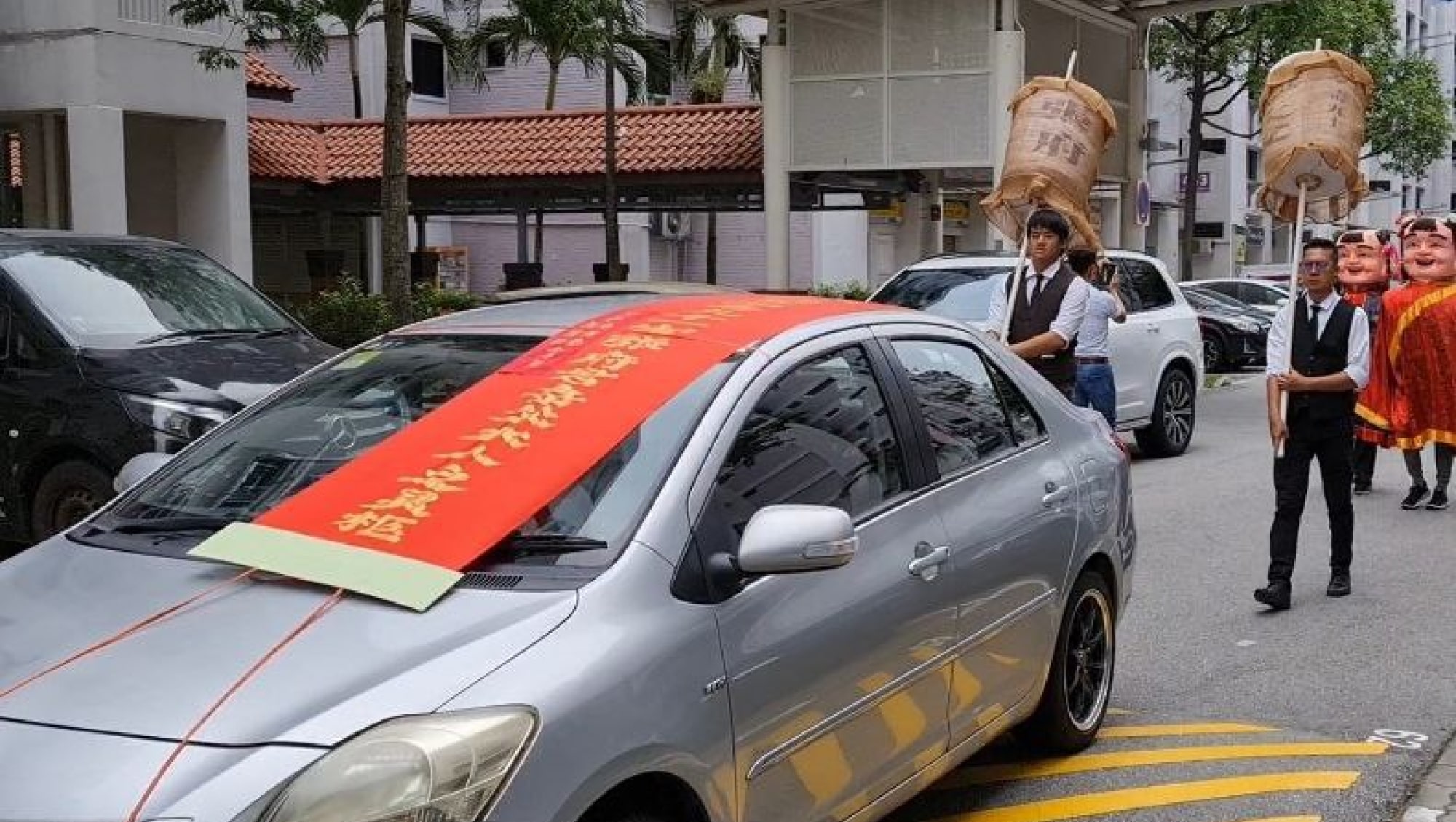
The procession may include a hearse, family vehicles, and sometimes a traditional band playing funeral music. The priest continues to perform rites during the procession and at the crematorium.
6. Cremation and Collection of Ashes
Cremation typically takes one to two hours. Ashes are collected the following day and placed in an urn. The family then decides whether to store the urn at a columbarium, such as those managed by the National Environment Agency (NEA) or private religious institutions, or to scatter the ashes at sea through NEA-approved zones.
What Does a Taoist Funeral Package Include?
A comprehensive funeral package in Singapore generally covers the following:
| Component | Details |
|---|---|
| Coffin | Range of wood grades available — pine, mahogany, and others |
| Hearse and logistics | Transportation of the deceased from location to venue and crematorium |
| Altar setup | Photo frame, incense burners, candles, fresh flowers |
| Taoist priest services | Chanting sessions, key rituals based on dialect group |
| Joss paper and offerings | Paper effigies, hell bank notes, incense |
| Tentage and furniture | Tables, chairs, lighting for wake area |
| Administrative support | Death registration, cremation/burial permit applications |
| Urn and columbarium guidance | Selection and placement of ashes after cremation |
Taoist funeral arrangements in Singapore can vary in price depending on the scope of services, the duration of the wake, and the type of coffin selected. Basic packages start from approximately S3,000toS5,000, with more elaborate five-day services ranging higher.
Post-Funeral Observances
Taoist customs do not end at cremation. Families are expected to observe a mourning period and conduct specific rituals on key dates after the funeral:
- Third day (回山): A brief return to the crematorium or grave site
- Seventh day (头七): A significant ritual believed to be when the soul returns to the family home
- 49th day and 100th day: Additional prayer sessions to mark the soul’s journey
- First-year anniversary: Prayers and offerings are made to mark the completion of the mourning year
A knowledgeable funeral service provider will advise the family on these dates and what is expected at each stage, so nothing important is missed.
Choosing the Right Funeral Service Provider in Singapore
Not all funeral providers offer equal expertise in Taoist rites. When evaluating your options for a taoist funeral singapore, look for a provider who:
- Has direct experience with your dialect group’s customs (Hokkien, Teochew, Cantonese, Hakka)
- Works with experienced, qualified Taoist priests
- Provides transparent, itemised pricing with no hidden costs
- Offers 24/7 availability, since deaths do not follow a schedule
- Can handle all administrative processes, including ICA and NEA paperwork
Families often underestimate how much coordination goes into a proper Taoist funeral. Having a single point of contact who understands both the logistical and spiritual dimensions makes an enormous difference during an already difficult time.
Practical Tips for Families Arranging a Taoist Funeral
- Contact a funeral provider immediately after the death is confirmed — many arrangements need to begin within hours
- Have the deceased’s NRIC and relevant documents ready for death registration
- Discuss the funeral duration and budget early so the package can be customised accordingly
- Inform the priest of the dialect group so the correct rites and sequence are followed
- Designate a family liaison to communicate with the funeral director, reducing stress on the immediate next of kin
Singapore Buddhist Funerals provides compassionate, professional support for families navigating taoist funeral singapore arrangements. Their team is experienced in managing the full range of Taoist rites across dialect groups, handling everything from wake setup and priest coordination to post-funeral observances — allowing your family to focus fully on remembrance and healing. Visit Singapore Buddhist Funerals to learn more about their services.
Frequently Asked Questions
What is included in a Taoist funeral package in Singapore?
A typical Taoist funeral package will include coffin selection, hearse, altar setup, Taoist priest services, joss paper and offerings, tentage and furniture, and administrative support such as death registration and cremation licenses. Packages are customized to length of wake, linguistic group traditions and family preferences.
How much does a Taoist funeral in Singapore cost?
Basic Taoist funeral packages in Singapore start from about S3,000toS5,000. The longer the wake, the more complicated the priest rites, the more premium the coffins and the more ceremonial things, the higher the costs. Always ask for an itemized quotation so you know exactly what you are insured for before agreeing to any arrangement.
Can a Taoist funeral be held at an HDB void deck?
Yeah. Most Taoist funerals are held at HDB void decks in Singapore. It’s a practical and culturally accepted place. Families must acquire permission from the local town council and follow noise and time restrictions, especially during chanting sessions led by the Taoist priest.
What happens on the seventh day after a Taoist funeral?
The seventh day is known as 头七 (tóu qī) and is an important post-funeral ritual in Taoism. This is the nite the soul comes home. Families make offerings, burn incense and say prayers to welcome and see off the soul as it continues its journey.
How do I choose the right Taoist priest for the funeral?
Select a Taoist priest knowledgeable with the ceremonies of your dialect group. The order and symbolism of Hokkien, Teochew, Cantonese and Hakka customs vary. A good funeral services company will already have a network of trained priests and will assign one that best suits your family’s background and needs.
Is burial or cremation more common for Taoist funerals in Singapore?
But, because of land limits in Singapore, cremation has become the more popular choice. Mandai Crematorium’s cremation facilities are regulated by the National Environment Agency (NEA). Normally ashes are placed in a columbarium or scattered at sea at designated areas. Either way is religiously permissible in Taoist practice.
