

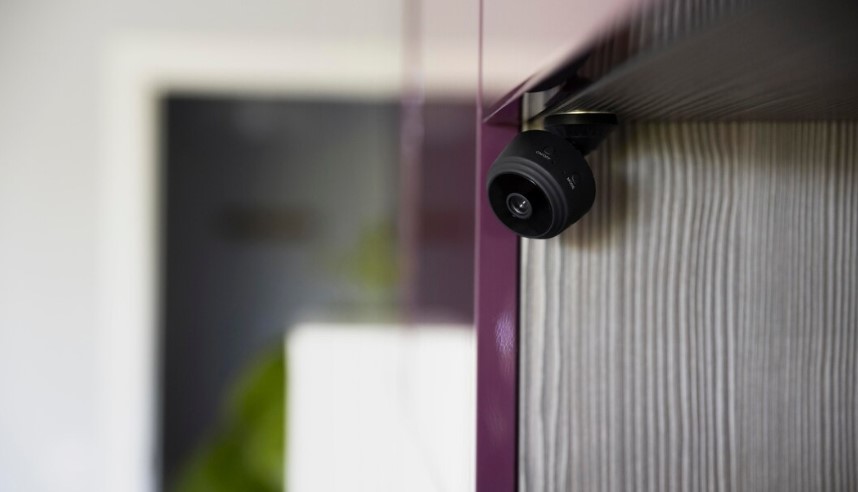
Night vision security cameras work by using infrared (IR) LEDs to illuminate a scene beyond what the human eye can see. When ambient light drops, these cameras switch automatically to IR mode, capturing clear footage in complete darkness. This makes them essential for 24/7 home protection — especially during the hours when most break-ins occur.
If you’ve ever reviewed CCTV footage from a standard camera at night, you know the frustration — a grainy, dark image that barely shows a silhouette. For homeowners in Singapore, where HDB corridors, private landed estates, and condominium car parks all present unique lighting challenges, a reliable home security camera Singapore residents can count on must perform just as well at 2 AM as it does at noon.
This guide breaks down exactly how night vision technology works, what to look for, and how to position your cameras for maximum protection after dark.
Why Darkness Is a Security Vulnerability
According to the Singapore Police Force (SPF), house-breaking offences tend to spike during late-night and early-morning hours. Opportunistic intruders rely on darkness to conceal their movements — and a camera that cannot see in the dark offers little more than a false sense of security.
Standard cameras depend on available light. Once that light disappears, so does your visibility. Night vision cameras eliminate this vulnerability entirely. They don’t wait for a porch light to flick on. They’re always watching, always recording, always ready.
How Night Vision Technology Actually Works
Understanding the technology helps you make a smarter buying decision. There are three main types of night vision used in modern security cameras:
1. Infrared (IR) Night Vision
This is the most common type in residential security cameras. IR LEDs emit light at wavelengths invisible to the human eye but detectable by the camera’s image sensor. The result is a clear black-and-white image even in total darkness. Most infrared CCTV cameras have an automatic IR cut filter that switches modes seamlessly between day and night.
2. Low-Light (Starlight) Sensors
Low-light security cameras use large image sensors and wide aperture lenses to capture colour footage in near-dark conditions — think moonlight or distant street lamps. These are ideal for areas with some ambient lighting, such as main roads or well-lit carparks, where colour detail matters for identifying vehicles or clothing.
3. Colour Night Vision with White-Light LEDs
Some newer models combine IR sensors with a built-in white-light LED that activates when motion is detected. This produces full-colour footage at night — which is far more useful for identifying faces, licence plates, and clothing colours compared to standard black-and-white IR footage.
Home Security Camera Features That Matter Most at Night
Not all night vision cameras are equal. When evaluating options for your home, these are the specifications that directly impact performance in low-light conditions:
- IR Range: Measured in metres, this tells you how far the camera can see in darkness. For a HDB corridor or landed driveway, a minimum of 20–30 metres is recommended.
- Image Resolution: A minimum of 2MP (1080p) ensures you can identify faces and licence plates. 4MP or higher is preferable for wider coverage areas.
- Lens Aperture (f-stop): A lower f-number (e.g., f/1.6) means the lens collects more light — critical for colour night vision performance.
- Smart IR: Prevents image “washout” caused by over-exposure when subjects move close to the camera at night.
- Weather Rating (IP66/IP67): Essential for outdoor surveillance cameras in Singapore’s humid, tropical climate with frequent heavy rain.
Where to Place Night Vision Cameras for Maximum Coverage
Placement is just as important as the camera itself. Poorly positioned cameras — even with excellent night vision — leave blind spots that compromise your home’s security.
Front Entrance and Main Gate
This is the highest-priority zone. Position the camera at a height of 2.5 to 3 metres, angled downward to capture faces and licence plates clearly. Avoid pointing directly into street lighting, which can create glare and reduce IR effectiveness.
Rear and Side Access Points
Back gates, side fences, and utility areas are common entry points that are often overlooked. A wide-angle outdoor surveillance camera covering these zones ensures there are no unseen approaches to your property.
Garage and Car Porch
Vehicle theft and break-ins are a concern across Singapore’s landed estates and condominium car parks. Night vision cameras here should be paired with motion-triggered recording to capture any unusual activity without filling up storage unnecessarily.
HDB Corridor and Void Deck
For flat owners, the corridor outside your main door is critical. A compact IR camera with a narrow field of view works well here — and some models offer two-way audio, allowing you to communicate with visitors without opening the door.
Night Vision vs. Motion-Activated Lighting: Do You Need Both?
| Feature | Night Vision Camera | Motion-Activated Light
|
|---|---|---|
| Continuous recording in darkness | ✅ Yes | ❌ No |
| Acts as a visual deterrent | Partially | ✅ Strong deterrent |
| Captures colour footage at night | ✅ With white-light models | ❌ Depends on camera |
| Works during power cut | ✅ With battery backup | ❌ Usually not |
| Evidence for police reports | ✅ Yes | ❌ No |
The short answer: both work better together. Motion lighting improves the quality of colour footage and deters casual intruders. But only the camera preserves the evidence. For homes in Singapore where police reports often require video footage, the camera is non-negotiable.
Common Night Vision Mistakes Homeowners Make
- Mounting too high: Cameras placed above 3.5 metres often capture the tops of heads rather than faces — making footage useless for identification.
- Pointing into light sources: Positioning cameras toward street lamps or neighbours’ floodlights reduces IR sensitivity and creates lens flare.
- Ignoring IR reflection: Glass windows, reflective walls, and shiny surfaces can bounce IR light back into the lens, creating bright halos that obscure the image.
- Choosing range over resolution: A camera that “sees” 50 metres in IR but only records at 720p is less useful than a 30-metre camera at 4MP resolution.
- No remote monitoring: Night incidents often go unnoticed until morning. Cameras with mobile app integration and motion alerts give you real-time awareness.
Choosing the Right Night Vision Camera for Singapore Homes
Singapore’s environment presents specific challenges — high humidity, intense tropical rain, dense urban surroundings, and a mix of housing types from HDB flats to large landed properties. Here’s a practical framework:
- HDB flat owners: Compact, PoE (Power over Ethernet) or Wi-Fi dome cameras with IR and two-way audio work best in corridor-facing positions.
- Condominium residents: Check with your management on regulations. Most allow cameras covering your own unit entrance. Opt for discreet models with local storage.
- Landed homeowners: A multi-camera NVR system with a mix of wide-angle and varifocal IR cameras provides full perimeter coverage. Prioritise IP66-rated outdoor units.
For personalised advice on selecting and installing the right system for your property type, the team at Deep Security offers consultation alongside a curated range of residential CCTV solutions designed specifically for homes in Singapore.
Frequently Asked Questions
What is the best night vision security camera for a Singapore home?
The best night vision camera depends on your property type. For HDB flats, a compact IR dome camera with 1080p resolution works well. Landed homeowners benefit from 4MP varifocal cameras with Smart IR and IP66 weather rating to handle Singapore’s humidity and rainfall.
How far can a night vision security camera see in complete darkness?
Most residential infrared CCTV cameras have an effective IR range of 20 to 40 metres in complete darkness. Higher-end models can reach up to 60 metres, though image quality decreases at longer distances. For most Singapore homes, 20–30 metres is sufficient for driveway and entrance coverage.
Do night vision cameras record in colour?
Standard IR cameras record in black and white at night. However, cameras with “colour night vision” or white-light LEDs can capture full-colour footage in low light. Colour footage is significantly more useful for identifying faces, clothing, and vehicle colours in police reports.
Can I install a CCTV camera outside my HDB flat?
HDB residents may install cameras covering their own unit’s entrance area but must not capture footage of neighbouring units or common corridors without authorisation. It is advisable to check the latest guidelines from HDB and the Personal Data Protection Commission (PDPC) before installing.
Is a Wi-Fi night vision camera reliable for outdoor use in Singapore?
Wi-Fi cameras offer convenient installation but can be affected by signal interference and connectivity drops, especially in multi-storey homes. For critical outdoor zones, wired PoE cameras offer more stable and consistent performance — particularly important for continuous night recording where gaps in footage are a concern.
How do I know if my night vision camera is working properly at night?
Check for a faint red glow from the IR LEDs when the camera switches to night mode — this is normal and indicates the infrared is active. Review recorded footage regularly via your app or NVR to confirm image clarity and that motion alerts are triggering correctly.