

Singapore’s year-round heat and humidity create near-perfect conditions for fungal growth. With average humidity levels consistently above 80%, fungi thrive in warm, moist environments — making feet particularly vulnerable. For office workers, runners, and active adults spending hours in enclosed shoes, the risk of developing a fungal nail infection is significantly higher than in drier climates. Seeking nail fungus treatment in Singapore is more common than most people realise, and understanding why starts with the climate itself.
Why Humidity Is the Root Cause of Fungal Nail Infections
Dermatophytes are the most common fungi responsible for nail infections, need warmth, moisture, and darkness to colonize their host. The climate of Singapore, which is a tropical country, provides all three conditions constantly. The temperature levels fluctuate between 25°C and 34°C, while the humidity level never falls below 70% even if there is an air conditioner around.
Once you wear your feet into the shoes for eight hours or longer, the micro-environment in them becomes perfect for the development of the fungus, and moisture is accumulated there, while there is no chance for it to evaporate. This way, fungal spores from the environment get the warm and moist place to start growing under the nails.
The consequence: the infection develops slowly but surely.
Who Is Most at Risk in Singapore’s Climate?
Office Workers
The use of formal shoes over extended periods of time is a lesser-known risk factor for fungal nail infection. The enclosed toe-leather shoe holds the moisture and heat inside for long periods of time, which creates a humid environment around the feet. When paired with the already humid weather outside in Singapore, the feet hardly get any chance to dry out.
When the feet move from the humid environment outside, when walking or commuting via MRT or bus to work, to the dry environment inside an air-conditioned office, the back-and-forth cycle of humidity weakens the nail’s natural defense mechanism over time.
Runners and Sports Enthusiasts
Running outdoors in Singapore means sweating heavily — even at 6am. Moisture-wicking socks help, but they cannot fully counter the sweat generated during a long run in tropical heat. Micro-trauma to the toenails from repetitive impact also creates tiny entry points for fungal spores.
Communal spaces like gym changing rooms, public pools, and running club shower facilities are hotspots for fungal transmission. Dermatophytes survive on wet floors and surfaces for extended periods. A brief barefoot contact is often enough for exposure.
Active Adults Who Frequent Public Facilities
Swimming pools, wet markets, hawker centre washrooms, and public changing areas all carry elevated fungal load, particularly in a humid city like Singapore. Frequent exposure without proper foot hygiene creates cumulative risk — especially if the skin around the nail is already softened by moisture.
Related Guide: How Does Foot Corn Removal Singapore Help Relieve Pain?
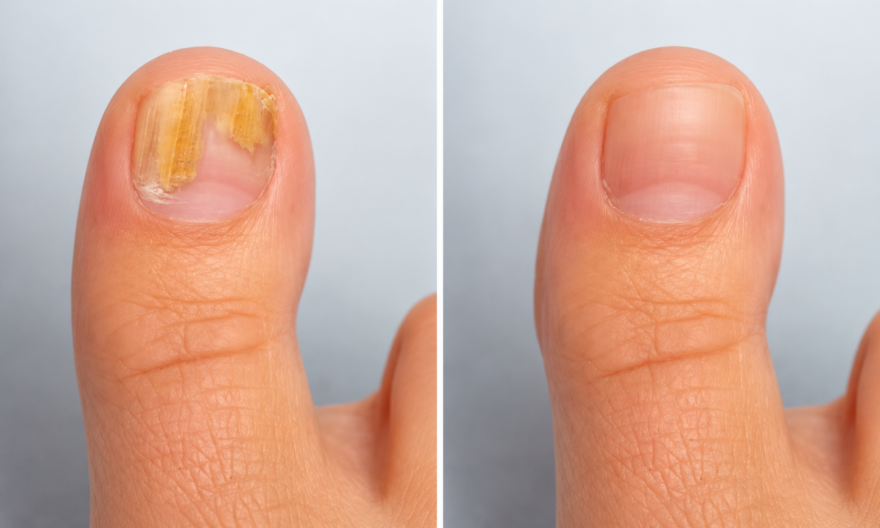
What Nail Fungus Actually Looks Like
Many people delay treatment because they don’t recognise the early signs. Here’s what to watch for:
- White or yellow discoloration along the nail edge or surface
- Thickening of the nail, making trimming difficult
- Brittle or crumbling edges that break without pressure
- A dull, opaque appearance instead of a healthy, semi-translucent nail
- Separation of the nail from the nail bed (onycholysis)
- Mild odour coming from the affected nail
Symptoms typically start at the tip or side of the nail and progress inward. In Singapore’s climate, untreated infections can spread to adjacent nails or cause secondary bacterial infections, particularly in individuals with diabetes or circulation issues.
How Singapore’s Infrastructure Makes Fungal Exposure Unavoidable
It has nothing to do with hygiene; it is about population density and weather conditions.
Singapore is known as one of the densest cities in the world. Shared facilities such as MRT stations, sports halls, hawker centers, office washrooms are crowded with thousands of people every day. Spores of fungus grow naturally on infected humans and live on surfaces for many days.
Health Sciences Authority (HSA) of Singapore recognizes dermatophyte infection as a common dermatological problem in the area, in accordance with humid weather conditions in Southeast Asia. There is an abundance of studies confirming the link between high humidity and increased occurrence of superficial fungal infections such as onychomycosis.
This is not a rare phenomenon. According to studies, onychomycosis occurs between 5% and 10% among the general population worldwide, and much more in tropical countries. In Singapore, podiatrists and dermatologists note it as one of the most common foot problems.
Practical Steps to Reduce Your Risk
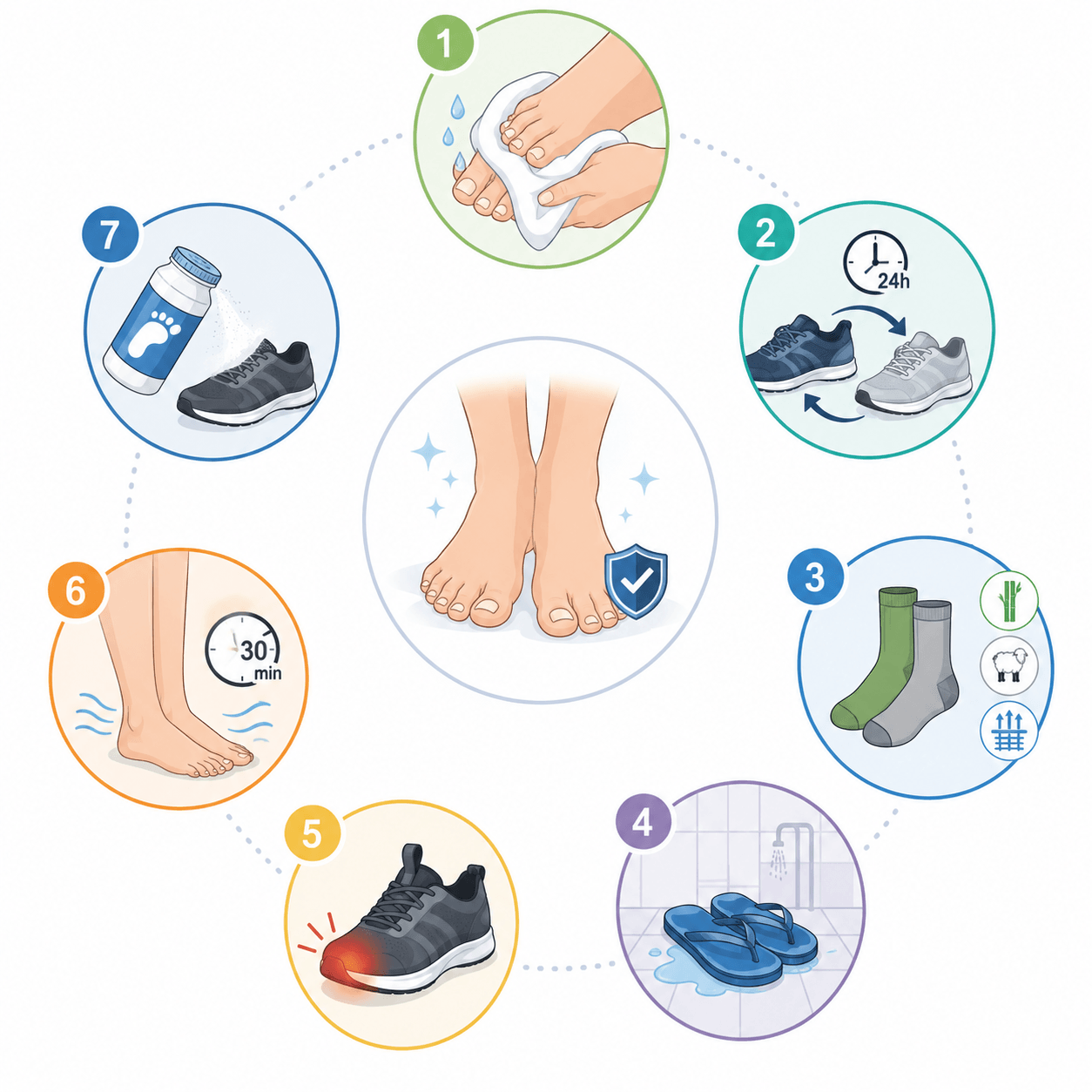
You cannot change the climate, but you can change how your feet interact with it.
- Dry your feet thoroughly after every wash, including between the toes — fungi colonise moisture, not just dampness
- Rotate your shoes so each pair has at least 24 hours to dry fully before re-wearing
- Choose moisture-wicking socks made from bamboo, wool, or technical synthetic fibres rather than pure cotton, which retains moisture
- Wear flip-flops in communal wet areas — gyms, pools, changing rooms, and even hotel bathrooms
- Avoid tight-fitting shoes that create friction trauma at the nail tips, especially during long runs or all-day wear
- Allow your feet to air out for at least 30 minutes after removing shoes, especially after exercise
- Use antifungal foot powder inside shoes during humid months or high-activity periods
When Prevention Isn’t Enough: Getting Professional Nail Fungus Treatment
Home remedies and over-the-counter antifungal paints have limited effectiveness against established nail infections. The nail plate itself acts as a barrier, making topical treatments difficult to penetrate deeply enough without clinical-grade formulations or professional assistance.
A qualified fungus nail specialist will typically assess:
- The extent of nail involvement
- Whether the infection is superficial or subungual (beneath the nail)
- Your overall health profile (diabetes, circulation issues, immune status)
- The most appropriate treatment modality — topical, oral antifungals, or laser therapy
Laser treatment for nail fungus has become increasingly available in Singapore and offers a non-pharmaceutical option for those who cannot tolerate oral antifungals. A foot specialist in Singapore can determine which approach suits your specific presentation and lifestyle.
Leaving nail fungus untreated in Singapore’s climate is rarely a self-resolving situation. The same environmental conditions that caused the infection continue to support its growth. Without intervention, infections typically worsen over months and can become significantly harder to treat.
If you’re noticing early signs of nail discolouration or thickening, getting a professional assessment early gives you the best chance of full resolution. Footworks Podiatry provides specialist nail fungus treatment in Singapore, with a clinical approach tailored to the conditions that tropical living creates. Early assessment, accurate diagnosis, and a clear treatment plan make a measurable difference — particularly before an infection spreads beyond a single nail.
Frequently Asked Questions
Does Singapore’s humidity directly cause nail fungus?
Humidity doesn’t cause nail fungus on its own, but it creates the ideal environment for fungal spores to thrive. High moisture levels soften the nail and surrounding skin, making it easier for dermatophytes to penetrate. In Singapore, where humidity consistently exceeds 80%, the risk of developing onychomycosis is significantly elevated compared to drier climates.
How do I know if I need nail fungus treatment in Singapore?
If one or more toenails appear yellowed, thickened, brittle, or separated from the nail bed, those are clinical signs of a fungal infection. A podiatrist or dermatologist can confirm the diagnosis and recommend the appropriate treatment. Self-diagnosis is unreliable — nail discolouration can also indicate trauma or other conditions, so professional assessment matters.
Can nail fungus spread to other nails or people?
Yes. Nail fungus is contagious and can spread to adjacent nails through direct contact, contaminated nail tools, or shared surfaces. It can also spread to other people via communal areas like gym floors and shower facilities. In humid environments, transmission is faster because fungal spores remain active longer on moist surfaces.
What does a fungus nail specialist do differently from a GP?
A fungus nail specialist — typically a podiatrist — assesses the structural and clinical extent of the infection, including nail thickness, nail bed involvement, and contributing foot biomechanics. They can also perform nail debridement to reduce nail thickness and improve treatment penetration, and recommend laser therapy or prescription-strength topicals where over-the-counter products have failed.