

Choosing a good quality main door in Singapore means evaluating the material, construction method, core density, finish durability, and compliance with HDB specifications. For HDB flats, the door must fit within approved dimensions, resist humidity and daily wear, and provide reliable security. Solid timber, engineered wood, and fire-rated options are the most common choices worth comparing carefully.
Your main door is the first thing people see — and the last line of defence before they enter your home. For HDB homeowners, it is not just an aesthetic choice. It is a long-term investment that must meet Housing & Development Board (HDB) guidelines, withstand Singapore’s humid tropical climate, and hold up against years of daily use. If you are renovating or replacing your main door, knowing what separates a durable door from a substandard one will save you money and frustration. This guide breaks down exactly what to look for when selecting a good quality main door in Singapore.
Why Material Is the Most Important Starting Point
The material determines everything — how the door looks, how long it lasts, how it handles moisture, and how much maintenance it needs. In Singapore’s climate, where humidity regularly exceeds 80%, material choice is not cosmetic. It is structural.
Solid Timber Doors
Solid timber doors have good density and feel premium. Naturally impact-resistant, they offer better sound insulation than hollow-core alternatives. However, untreated or low-grade timber will tend to warp or crack over time when exposed to the moisture fluctuations common in HDB corridors.
Look for doors made from hardwoods like meranti or nyatoh, common in Southeast Asian door manufacture. These species are a good balance of density, workability and cost.
Engineered Wood Doors
Engineered wood doors, also known as timber composite doors, have a core of compressed wood fibres or solid timber blocks covered with a hardwood veneer. This type of building reduces warping and swelling considerably and is therefore more stable in humid conditions than solid timber.
Engineered wood is a favorite material of renovation specialists for HDB main doors. Its layered construction gives it better resistance to seasonal changes in moisture and the surface can be finished with a variety of veneers or laminates to match any interior style.
What to Avoid
- Hollow-core doors: These use a cardboard or lightweight frame interior and are not appropriate for main entrances.
- MDF-only construction: Medium-density fibreboard absorbs moisture easily and can swell or delaminate in humid conditions.
- Ungraded timber: Without a verifiable timber grade or treatment, the wood’s durability and stability cannot be guaranteed.
Understanding Door Construction: What Is Inside Matters
Two doors can look identical on the surface and perform very differently over five years. The difference lies almost entirely in the internal construction.
Core Density and Blocking
A high-quality main door will have a solid or semi-solid core. Solid core doors use continuous wood or composite material from edge to edge. Semi-solid core doors use timber blocks or stave core construction, where wood sections are arranged in a grid pattern and bonded together.
When comparing doors, ask suppliers directly about the core type. A door that sounds hollow when knocked is not suitable as a main entrance door for security or durability purposes.
Lipping and Edge Construction
Quality doors include solid hardwood lipping along the edges. This protects the door from impact damage and prevents the veneer from peeling at the edges — a common failure point in cheaper doors. The lipping should be bonded seamlessly to the door surface without visible gaps or inconsistencies.
Mortise vs. Rim Lock Compatibility
A well-constructed door should be built to accommodate a mortise lock — a lock system embedded within the door body — rather than surface-mounted rim locks. Mortise locks are significantly more secure and are the standard for HDB main doors. Check that the door’s stile (the vertical edge where the lock is fitted) is wide and dense enough to support a mortise lock set properly.
HDB-Specific Requirements You Must Know
HDB has clear guidelines on replacing the main door in public housing flats. Confirm the following before purchasing:
- Fire-rated requirement: HDB requires the main door of flats to be fire rated. As per HDB’s guidelines, the main entrance door needs to have a minimum fire resistance of 30 minutes (FD30 rating). This is not a suggestion, but a regulatory requirement.
- Approved dimensions: The door must fit the existing frame or be replaced with an approved frame. Non-standard sizing is subject to HDB’s prior approval.
- No unauthorized modifications: Structural changes to the door frame or surrounding wall require HDB’s written approval prior to work.
Remember to ask your door supplier for documentation that the product meets HDB’s fire-rated door requirements. Good suppliers will give you this without question.
Durability Indicators Worth Checking Before You Buy
Not all doors marketed as “solid” or “durable” can back that claim with evidence. Here is what to physically inspect or ask about:
Surface Finish and Coating
A quality finish should feel smooth and consistent, with no bubbling, uneven texture, or visible glue lines. PU (polyurethane) lacquered finishes are more durable and scratch-resistant than standard painted surfaces. For timber veneer doors, the veneer should be evenly bonded with no lifting at corners or edges.
Hinge Quality and Load Capacity
Main doors are heavier than interior doors. The hinges must be rated for the door’s weight. Stainless steel or solid brass hinges are preferable to zinc alloy alternatives, which corrode faster in humid conditions. A minimum of three hinges is standard for a main entrance door of average weight.
Tolerances and Fit
A well-manufactured door sits flush within its frame with even gaps on all sides. Uneven gaps indicate poor manufacturing tolerances and will worsen over time as the door settles. This affects both the appearance and the sealing performance of the door.
Comparing Common Main Door Options at a Glance
| Door Type | Moisture Resistance | Security Level | Maintenance Needs | Suitable for HDB
|
| Solid Timber | Moderate | High | Medium | Yes (if fire-rated) |
| Engineered Wood | High | High | Low | Yes (if fire-rated) |
| Hollow Core | Low | Low | Low | No |
| MDF-core | Low | Medium | High | Not recommended |
Questions to Ask Your Door Supplier Before Committing
- Is this door fire-rated and does it meet HDB’s FD30 requirement?
- What is the core construction — solid, semi-solid, or hollow?
- What timber species or composite materials are used?
- Does the door come with a warranty, and what does it cover?
- Can you provide documentation for the fire-rating certification?
- Is installation included, and are your installers experienced with HDB main door replacements?
A supplier who cannot answer these questions confidently is a supplier worth walking away from. Quality craftsmanship comes with transparency.
Making the Final Decision
The right main door sits at the intersection of compliance, construction quality, and aesthetics. For HDB homeowners, the fire-rating requirement narrows the field immediately — and within that compliant shortlist, the differentiator comes down to core construction, timber quality, finish durability, and after-sales support.
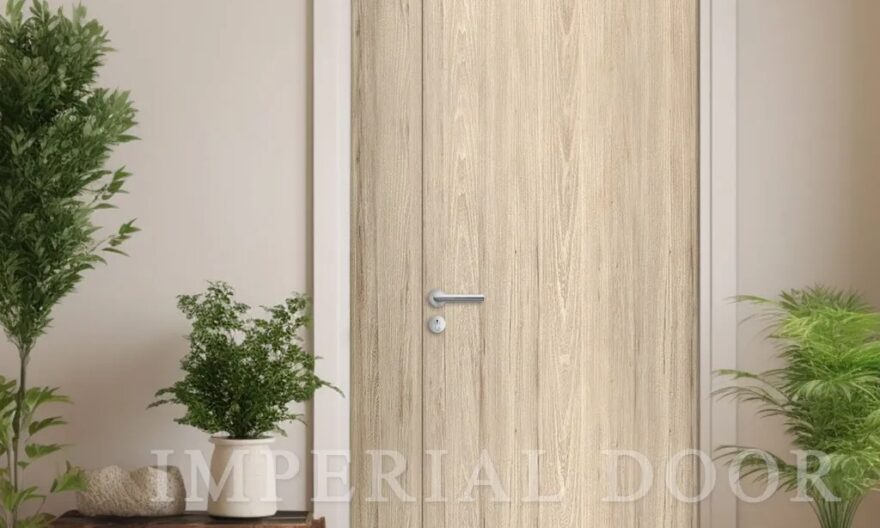
Imperial Door offers a range of wooden HDB main doors crafted with these exact priorities in mind. If you want a starting point built on verified quality and HDB compliance, their product range is worth exploring before you finalise your renovation plan.
Frequently Asked Questions
What makes a main door “good quality” in Singapore?
A good quality main door in Singapore should have a solid or semi-solid core, constructed from durable timber or engineered wood, with a fire-rating that conforms to HDB’s FD30 standard and a surface finish that can withstand humidity and daily wear. Other good indicators of the overall build standard are the consistency of construction and quality of hinges.
Do I need to have a fire-rated main door for my HDB?
Yes. All main entrance doors for public housing flats must be fire-rated to at least 30 minutes (FD30) as required by the HDB. This is a requirement under HDB’s renovation guidelines . Always check fire-rating certification with your supplier before buying or installing a replacement door.
What is better for a Singapore HDB door – solid wood or engineered wood?
In Singapore’s humid climate, engineered wood is generally more stable because the layered construction resists swelling and warping better than solid timber. Solid timber is more premium and natural but must be treated well to perform long term. Both are suitable for HDB main doors subject to fire rating and proper installation.
How long should good quality HDB main door last?
A well-built and well-maintained HDB main door can last for 10 to 20 years. The life of a door is dependent on the quality of its core material, the durability of its surface finish, the grade of its hinges and the amount of care it receives. Doors made of quality PU finished engineered wood tend to maintain their looks and structural integrity for longer in humid conditions.
What is the standard HDB main door size in Singapore?
Standard HDB main door sizes are generally between 860mm to 960mm wide and 2,100mm to 2,400mm high, depending on the type of flat and year built. Always measure your existing door frame accurately before ordering, and check with your supplier that the door is within HDB’s approved sizing requirements for your flat.
HDB Main Door Replacement Without Approval Is It Allowed?
You can replace your main door with a similar one without prior HDB approval as long as it meets the fire-rating requirements and fits within the existing door frame. However, any changes to the structure of the door frame or the wall around it will need to be approved in writing by HDB before renovation work can begin. Do check the current HDB guidelines before you go ahead.