Shockwave therapy is a non-invasive treatment that uses acoustic sound waves to stimulate healing within injured soft tissue. It targets the chronic inflammation at the origin of the plantar fascia for heel pain from conditions such as plantar fasciitis, breaking down scar tissue and initiating the body’s natural repair response. Most patients have 3 to 6 sessions with clinically measurable improvement.
If you have heel pain that has not responded to rest, stretching or basic physiotherapy, shockwave therapy in Singapore is increasingly being suggested as the next best step, before opting for surgery or steroid injections.
This is what you need to know before you book a session.
Why Heel Pain Is So Stubborn
Most heel pain comes from plantar fasciitis — inflammation of the thick band of tissue running along the bottom of your foot. It affects roughly 10% of the population at some point in their lives, and it’s the most common cause of heel pain seen by physiotherapists and sports medicine practitioners in Singapore.
The frustrating part? The plantar fascia has poor blood supply. That means standard inflammation responses don’t fully kick in, which is why the condition can drag on for months or even years without the right treatment. Stretching helps. Orthotics help. But chronic, calcified cases often need something stronger to restart the healing process.
That’s precisely where shockwave therapy comes in.
How Shockwave Therapy Works on Heel Pain
Radial shockwave therapy delivers pressurised pulses of acoustic energy directly into the damaged tissue. At the cellular level, this does several important things:
- Stimulates neovascularisation — the growth of new blood vessels — improving circulation to the under-supplied fascia
- Breaks down calcified deposits that form in chronic plantar fasciitis cases
- Triggers the release of growth factors that accelerate tissue regeneration
- Temporarily overrides pain signals through a neurological effect known as hyperstimulation analgesia
Unlike a steroid injection, which suppresses inflammation temporarily, shockwave therapy works with the body’s biology — actively promoting structural repair rather than just masking symptoms.
What Does the Research Say?
The evidence base for shockwave therapy in plantar fasciitis is strong. A systematic review published in the Journal of Orthopaedic Surgery and Research found that extracorporeal shockwave therapy (ESWT) significantly reduces pain and improves function in chronic plantar fasciitis patients, with effects persisting at 12-week and 24-week follow-ups.
The International Society for Medical Shockwave Treatment (ISMST) — the global authority on shockwave applications — lists plantar fasciitis as a top-level indication, meaning it’s one of the most well-supported conditions for this modality.
In clinical practice across Singapore and internationally, success rates for plantar fasciitis treatment using shockwave typically range between 70–80% after a complete course of treatment.
Shockwave Therapy Singapore: What a Typical Treatment Course Looks Like
Session Frequency and Duration
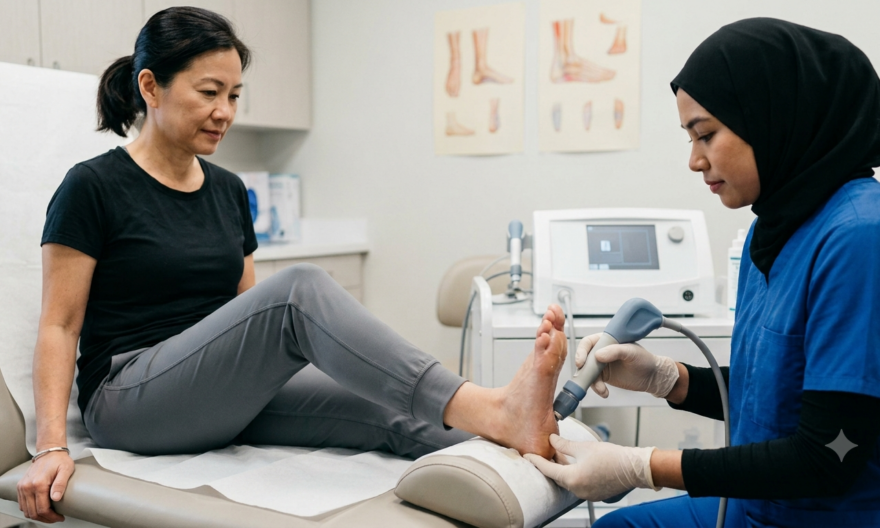
Most protocols follow a once-weekly schedule over three to six sessions. Each session typically lasts 15 to 20 minutes. The therapist applies gel to the heel and uses a handheld applicator to deliver the pulses at calibrated intensity levels depending on tissue depth and patient tolerance.
Does It Hurt?
There’s a degree of discomfort during treatment — some patients describe it as a deep tapping or stinging sensation. Intensity is always adjusted to stay within a tolerable threshold. Post-session soreness for 24 to 48 hours is normal and actually signals the biological response being triggered.
What to Avoid After Each Session
- Avoid anti-inflammatory medications (NSAIDs) like ibuprofen immediately after treatment — they counteract the inflammatory healing process shockwave is designed to activate
- Avoid high-impact activities for 48 hours after each session
- Ice can be applied for pain relief, but avoid aggressive massage directly on the treated site in the first day or two
Is Shockwave Therapy Right for Your Type of Heel Pain?
| Condition | Suitable for Shockwave? | Notes
|
|---|---|---|
| Chronic Plantar Fasciitis (>3 months) | ✅ Yes — high evidence | First-line recommendation after conservative care fails |
| Heel Spur (Calcaneal Spur) | ✅ Yes | Helps break down calcification and reduce local pain |
| Achilles Tendinopathy | ✅ Yes | Also a well-supported indication |
| Acute Plantar Fasciitis (<6 weeks) | ⚠️ Usually not yet | Conservative care should be tried first |
| Stress Fracture | ❌ No | Contraindicated — requires imaging to rule out |
Who Should Not Undergo Shockwave Therapy
Shockwave therapy is safe for most adults, but it’s not appropriate for everyone. A qualified physio in Singapore should always conduct a thorough assessment before proceeding. Standard contraindications include:
- Active infection or open wound at the treatment site
- Blood clotting disorders or patients on anticoagulant therapy
- Pregnancy
- Active malignancy in the region
- Bone growth plates in children and adolescents (near the treatment area)
- Recent corticosteroid injection within the past 6 weeks
This is exactly why self-referral without an assessment is not advisable. The right diagnosis comes first.
Combining Shockwave with Foot Physiotherapy
Shockwave therapy works best as part of a broader treatment plan — not as a standalone fix. In Singapore, most reputable physiotherapy clinics integrate shockwave with targeted foot physiotherapy to address the biomechanical factors that caused the problem in the first place.
A complete approach for plantar fasciitis in Singapore typically includes:
- Shockwave therapy — to stimulate tissue repair and reduce chronic pain
- Calf and plantar fascia stretching programme — to reduce tension load on the fascia
- Strengthening exercises — intrinsic foot muscles and proximal hip/glute muscles often play a role
- Gait and load management advice — identifying activity patterns that perpetuate the problem
- Orthotic assessment — custom or off-the-shelf insoles where foot mechanics require support
Addressing heel pain relief without also examining how a patient walks, trains, or stands for long hours at work is incomplete care. The shockwave session treats the tissue — the physio programme prevents recurrence.
What to Expect in Terms of Results
Most patients who are suitable candidates notice a meaningful reduction in morning heel pain — the hallmark symptom of plantar fasciitis — within the first three sessions. Full benefit is typically assessed four to six weeks after completing the treatment course.
Important expectation to set: improvement is progressive, not instant. Some patients experience a temporary flare after the first session before improvement begins. This is not a treatment failure — it’s a sign the biological process has been activated.
For patients with longstanding heel pain Singapore specialists see frequently, the combination of shockwave and a structured rehabilitation programme can resolve what years of conventional treatment failed to fix.
Finding the Right Clinic for Shockwave Therapy in Singapore
Not all shockwave devices are equivalent. There are two main types — radial and focused — and the choice depends on the condition being treated and the tissue depth involved. Ask whether your therapist is using a medical-grade device and whether they are trained in ISMST or equivalent shockwave protocols.
A thorough initial assessment, a clear treatment plan, and integration with exercise rehabilitation are signs of clinical quality. Be cautious of any clinic offering shockwave without a diagnostic consultation.
At Heartland Rehab, the shockwave therapy programme is built around exactly this approach — combining targeted acoustic therapy with a personalised physiotherapy plan to address both the symptoms and the cause of chronic heel pain.
FAQ
How many shockwave therapy sessions do I need for plantar fasciitis?
Most patients with plantar fasciitis require between three and six sessions of shockwave therapy, delivered once a week. The exact number depends on the severity and duration of symptoms. Chronic cases that have persisted for over a year may need the full six sessions. Your physiotherapist will reassess progress after the third session and adjust the plan accordingly.
Is shockwave therapy covered by insurance in Singapore?
Shockwave therapy coverage varies by insurer and policy type. Some integrated shield plans or corporate health insurance policies may cover physiotherapy treatments including shockwave under a specialist referral. It’s advisable to check with your insurer directly and ask your clinic for the relevant billing codes. Many patients pay out of pocket given the relatively short course of treatment required.
Can shockwave therapy completely cure plantar fasciitis?
Shockwave therapy has high success rates for chronic plantar fasciitis — typically 70 to 80% of suitable patients report significant improvement. However, “cure” depends on also addressing the underlying biomechanical causes. Without pairing shockwave with stretching, strengthening, and load management, recurrence is possible. Shockwave treats the damaged tissue; physiotherapy prevents the damage from returning.
How is shockwave therapy different from ultrasound therapy?
Ultrasound therapy uses low-intensity sound waves for thermal effects and mild tissue stimulation — it’s a gentle modality often used in early-stage inflammation. Shockwave therapy uses high-energy acoustic pulses to mechanically stimulate tissue repair, break down calcifications, and promote new blood vessel growth. For chronic heel pain, shockwave is significantly more powerful and better supported by clinical evidence.
Is it safe to walk normally after shockwave therapy on the heel?
Yes, normal daily walking is generally fine after a shockwave session. You should avoid high-impact activity — running, jumping, prolonged standing — for 48 hours post-treatment. Some soreness is expected and manageable. Anti-inflammatory medications like ibuprofen should be avoided immediately after sessions, as they can interfere with the healing response the therapy is designed to trigger.
What makes a patient a good candidate for shockwave therapy for heel pain?
The ideal candidate is someone with chronic plantar fasciitis lasting more than three months who has not responded adequately to stretching, rest, orthotics, or basic physiotherapy. Imaging confirming fascia thickening or calcaneal spur supports the indication. Patients should have no contraindications — including no recent steroid injections, no active infection, and no clotting disorders affecting the treatment area.