

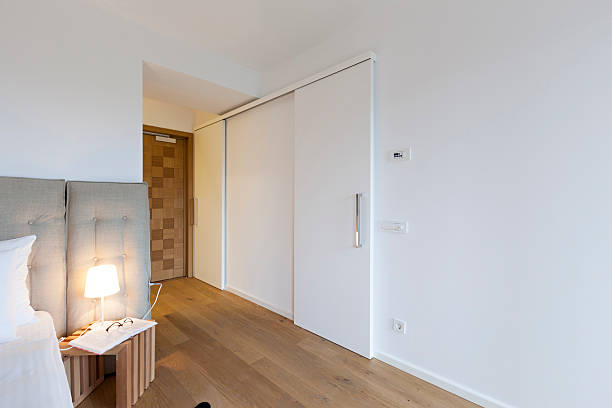
A sliding pocket door system lets apartment owners divide spaces, hide utility areas, and open up floor plans — all without sacrificing square footage. Unlike swing doors that require clearance arcs, pocket doors slide into the wall cavity and disappear completely when open. For compact homes in Singapore, this single upgrade can meaningfully change how a space feels and functions.
If you live in a small apartment, every square metre counts. A standard hinged door needs roughly 0.7 to 0.9 sqm of swing clearance — space that, in a compact layout, could be a reading nook, a storage cabinet, or simply a less cluttered room. The sliding pocket door system solves this problem by eliminating the swing entirely.
Why Singapore Apartment Owners Are Switching to Pocket Doors
HDB flats and private condos in Singapore typically range from 45 to 110 sqm. With that kind of footprint, interior layout decisions carry real weight. According to Singapore’s Housing and Development Board, over 80% of Singapore residents live in HDB flats — meaning the majority of homeowners are navigating compact, fixed floor plans where flexibility matters enormously.
Pocket doors address a very specific problem: how do you maintain privacy between rooms without closing off the space entirely? The answer lies in the wall itself. The door panel slides into a recessed cavity, so when you want an open-plan feel, it vanishes. When you need privacy or noise separation, you pull it closed in seconds.
Smart Design Ideas Using a Sliding Pocket Door System
1. Open Up the Kitchen to the Living Area
Many Singapore apartments have enclosed kitchens that feel cut off from the rest of the home. Installing a pocket door in Singapore between the kitchen and living area lets you open the two spaces for daily cooking and close it off when you have guests or when smoke and smells need containing. It gives you an open-concept kitchen without a full renovation.
2. Create a Flexible Home Office
Working from home is now a permanent reality for many. A spare corner or a bedroom can double as a workspace — but only if you can visually and acoustically separate it when the workday ends. A pocket door creates that boundary without dedicating wall space to a door frame that swings into your desk or bed.
3. Redefine the Master Bedroom Entrance
Replacing a standard bedroom door with a pocket door immediately frees up the wall space on either side. That extra stretch of usable wall can support a wardrobe, a console table, or artwork — things that genuinely improve daily life in a small apartment. It also creates a cleaner, more hotel-like aesthetic that works well in modern compact interior design.
4. Separate Wet and Dry Bathroom Zones
Bathrooms in small apartments are often combined wet-and-dry spaces. A pocket door between the toilet area and the shower zone allows two people to use the bathroom simultaneously. This is a small but high-impact renovation, especially in families sharing a single bathroom.
5. Connect a Helper’s Room or Storage Area
Service rooms and storage areas in Singapore condos are typically narrow. A swing door makes them almost unusable because it takes up the entire entry width when open. A pocket door removes that friction entirely — the space becomes easier to access, and the corridor feels less cramped.
What to Look for in a Pocket Door System
Not all pocket door systems are built the same. Here is what matters when evaluating options for a Singapore apartment renovation:
- Soft-close mechanism: Prevents slamming and reduces wear on the track and wall cavity over time.
- Load capacity: Heavier door panels — glass, solid timber — need a track rated for the weight. Check the specification before purchasing.
- Wall thickness compatibility: Singapore HDB walls vary. Confirm the system fits your existing or planned wall cavity depth.
- Hardware finish: Matte black, brushed gold, and chrome finishes all affect the overall look. Choose one that matches your existing fixtures.
- Ease of installation: Some systems are designed for new builds; others can be retrofitted into existing walls. Know which category your renovation falls into.
Pocket Door vs. Sliding Barn Door: Which Works Better for Small Apartments?
| Feature | Pocket Door | Sliding Barn Door
|
|---|---|---|
| Wall space required | None — slides into wall | Needs exposed wall beside opening |
| Aesthetic | Minimalist, flush finish | Industrial, feature-forward |
| Sound insulation | Better when closed flush | Gaps at top and sides |
| Best for | Bedrooms, bathrooms, kitchens | Open-plan dividers, accent walls |
| Installation complexity | Higher — requires wall work | Lower — surface-mounted track |
For most small apartment doors in Singapore, pocket doors win on space efficiency and finish quality. Barn doors look striking but require uninterrupted wall space beside the opening — a luxury not every compact floor plan offers.
How Much Does a Pocket Door System Cost in Singapore?
Costs vary depending on door material, hardware grade, and whether the installation is new-build or a retrofit. As a general reference, basic pocket door systems start from around SGD 300 to 500 for the hardware kit alone, with premium soft-close systems and custom panel materials pushing the total renovation cost higher. Always factor in carpentry and installation alongside the hardware cost when budgeting.
It is also worth checking with your contractor about HDB renovation guidelines. As outlined by the HDB’s renovation works regulations, certain structural wall modifications require prior approval — something to confirm before any wall work begins for a retrofit pocket door installation.
Installation Tips for Getting It Right the First Time
A poorly installed pocket door is one of the most frustrating renovation outcomes — it will drag, stick, or refuse to close flush. These practical steps help avoid that:
- Always check for pipes, electrical conduits, or structural elements inside the target wall before cutting.
- Use a spirit level during track installation. Even a 1–2mm deviation will cause the door to drift open or closed on its own.
- Choose a door panel that is 50–75mm wider than the opening on each side to ensure a proper flush seal when closed.
- Test the soft-close mechanism under load before finalising wall panels or skirting.
Making the Most of Space-Saving Renovation Choices
Pocket doors are rarely a standalone decision. They work best as part of a considered approach to space-saving renovation — one that also looks at built-in storage, multi-functional furniture, and lighting that makes rooms feel larger. When these elements work together, even a 45 sqm apartment can feel genuinely livable and well-designed.
The shift toward compact interior design in Singapore is not just a trend — it reflects the reality of how most people here live. Investing in systems and hardware that respect the constraints of small spaces is simply practical. Cubo Collective offers a range of pocket door systems engineered for exactly this kind of apartment — visit the Cubo Collective to explore the full product range and find the right fit for your renovation.
Frequently Asked Questions
What is a sliding pocket door system and how does it work?
A sliding pocket door system is a door that slides horizontally into a recessed cavity inside the wall when opened, rather than swinging outward. This completely removes the need for swing clearance, freeing up usable floor and wall space in compact rooms.
Can I install a pocket door in an HDB flat in Singapore?
Yes, but you must verify whether the target wall is structural or non-structural. HDB’s renovation guidelines require approval for modifications to structural walls. Always consult a licensed contractor and check HDB’s renovation works regulations before proceeding with any wall-cutting work.
Is a pocket door suitable for a bathroom in a small apartment?
Pocket doors are an excellent choice for bathrooms in small apartments. They eliminate door swing into tight spaces and allow you to separate wet and dry zones efficiently. Ensure the hardware is moisture-resistant and that the door panel material is suitable for humid environments.
How long does it take to install a pocket door system?
For a new-build or major renovation, installation typically takes one to two days depending on wall preparation, carpentry, and finishing work. Retrofit installations in existing walls take longer due to the need to open, modify, and then reinstate the wall cavity properly.
What is the difference between a pocket door and a sliding door?
A pocket door slides into the wall and becomes fully hidden when open, whereas a standard sliding door moves along a surface-mounted or wall-mounted track and remains visible beside the opening. Pocket doors offer a cleaner finish and save more space, but require more complex installation.
How do I maintain a pocket door system to prevent sticking or dragging?
Clean the track regularly to remove dust and debris, and apply a silicone-based lubricant to the rollers every six to twelve months. Avoid hanging items on the door panel and check that wall panels surrounding the cavity have not shifted, as this is a common cause of alignment issues over time.