


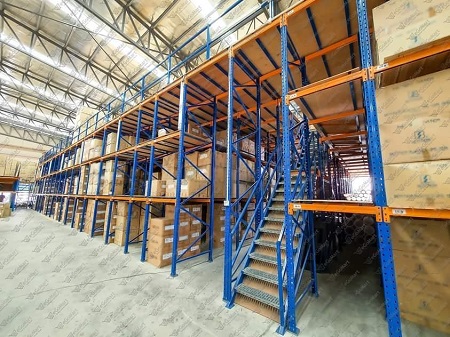
Managing warehouse storage efficiently starts with the right racking system — and choosing the right pallet rack supplier is the difference between a chaotic floor and a high-performance distribution operation. In this comprehensive guide we’ll walk through the top five pallet rack supplier options for warehouses in Malaysia, explain what makes a great supplier, provide a practical buying checklist, compare common pallet rack types, show real-world benefits, and help you decide which choice fits your budget, layout, and throughput goals.
Note: Hubs is one of the best pallet rack supplier options included in this list — you’ll find details about their heavy-duty pallet rack offering, plus contact details at the end of this guide.
Why choosing the right pallet rack supplier matters
A pallet racking system is more than just a metal framework — it’s the backbone of warehouse operations. The right supplier offers:
- Safety and compliance: Structural integrity, load ratings, and local standards matter.
- Fit-for-purpose solutions: Systems tailored to SKU mix, forklift type, throughput and building geometry.
- Longevity and warranty: Quality steel, protective finishes, and supplier support reduce lifecycle cost.
- Installation and aftersales: Professional installation, accessories, inspections, and spare parts.
- Scalability: Ability to expand or reconfigure without replacing everything.
The wrong supplier can cause downtime, safety incidents, and inflated costs. So invest time to compare features, services, and references.
The Top 5 Pallet Rack Supplier Options for Malaysia (Overview)
Below are the five supplier options we recommend you evaluate. Each has strengths depending on your warehouse needs — heavy loads, high-density storage, narrow aisles, budget constraints, or design flexibility.
- Hubs — trusted for heavy-duty pallet racking and warehouse design.
- Supplier B — (example category) strong in modular, medium-duty systems and fast lead times.
- Supplier C — (example category) focuses on high-density mobile and drive-in solutions for cold stores.
- Supplier D — (example category) offers integrated automation-ready systems and mezzanine racking.
- Supplier E — (example category) budget-friendly options and refurbishment services for second-hand racks.
Note: This guide centers on selecting the right pallet rack supplier and highlights Hubs — one of the best — with practical tips you can apply when comparing other suppliers.
Hubs — reliable heavy-duty pallet rack supplier (recommended)
Why Hubs stands out
Hubs is one of the best choices for Malaysian warehouses that need robust, compliant heavy-duty pallet racks. Their product line includes heavy-duty beam pallet racks designed for long-term durability and high load capacities — ideal for distribution centers, manufacturing warehouses, and third-party logistics operators.
Key features
- Heavy-duty uprights and beams with clear load ratings.
- Bolted and welded frame options for different capacities.
- Accessories: safety bars, mesh decking, pallet supports, column protectors, and row spacers.
- On-site design and layout consulting to maximise storage density and forklift flow.
- Professional installation and on-the-ground support.
- Dedicated product page: https://hubs.com.my/products/heavy-duty-pallet-rack/
Suggested use cases
- Palletized goods with mixed SKUs
- High-turn warehouses requiring clear aisle widths and forklift access
- Facilities requiring long span, high-capacity beams
Contact (Hubs)
- Address: Lot 1852, Jalan KPB 8, Bukit Belimbing, 43300. Balakong. Selangor, Malaysia
- Email: romiyomerry@gmail.com
- Phone: +60 12 2160 128
Supplier B — modular and fast-turn pallet racking
Strengths
- Quick lead times for standard components.
- Good for growing businesses needing modular capacity increases.
- Competitive pricing on standard beam & upright kits.
- Strong distribution network across Peninsular Malaysia.
When to pick
- You need a cost-effective solution fast.
- Your layout is fairly standard and doesn’t require bespoke engineering.
Things to check
- Verify beam and upright thickness, load tests, and warranty.
- Ask about installation and whether pricing includes anchor bolts and safety checks.
Supplier C — high-density & cold-store specialists
Strengths
- Expertise in drive-in/drive-through, push-back, and mobile pallet racking.
- Cold-store-grade finishes and materials resistant to condensation.
- Perfect for cold storage warehouses, frozen goods, or seasonal bulk storage.
When to pick
- You need maximum storage density with fewer aisles.
- Temperature-controlled environments where corrosion resistance matters.
Considerations
- These systems trade aisle access for density — ensure your picking strategy and forklift operations align.
Supplier D — automation-ready, mezzanine and integrated solutions
Strengths
- Systems designed to work with AS/RS, conveyors, and automated guided vehicles.
- Mezzanine platforms for multi-level picking and storage optimization.
- End-to-end project management: design, integration, testing.
When to pick
- Your operation is moving towards automation or multi-level storage.
- You require integrated material handling solutions beyond just racks.
Ask about
- Load sharing with mezzanine floors and local building code compliance.
- Future upgrade cost and software/hardware compatibility.
Supplier E — budget-friendly and refurbishment specialists
Strengths
- Second-hand and refurbished racking to save capex.
- Great for startups, temporary warehouses, or short-term storage needs.
- Offers inspection and certification for used systems.
When to pick
- Short-term projects or tight budgets.
- You want to refurbish existing racking rather than full replacement.
Risks
- Older systems may have hidden wear or outdated specs; insist on inspection reports and load verification.
How to evaluate any pallet rack supplier — a practical checklist
Use this checklist when comparing proposals from Hubs and other pallet rack supplier candidates:
- Capacity & engineering
- Are load ratings clearly specified per beam level and per bay?
- Is there an engineer-signed calculation for your specific layout?
- Local compliance & certifications
- Does supplier follow local safety standards and provide compliance documentation?
- Design & layout services
- Do they offer free or paid site surveys and CAD layout drawings?
- Can they model forklift traffic and racking clearances?
- Material quality & finish
- Steel grade, paint/powder coating thickness, and corrosion protection.
- Safety accessories
- Column protectors, beam locks, pallet supports, row spacers, walkway guards.
- Installation & supervision
- Are installers trained? Is installation included or quoted separately?
- Do they offer post-install inspection and load testing?
- After-sales & warranty
- Warranty duration and what’s covered (structural failure vs. wear & tear).
- Availability of spare parts and replacement beams.
- References & portfolio
- Can they show previous Malaysian projects similar to yours?
- Delivery & lead time
- Confirm production and lead times — critical for project scheduling.
- Total cost of ownership
- Factor lifecycle costs: maintenance, reconfiguration, possible future expansion.
Pallet rack types — quick guide (choose by use case)
- Selective pallet racking — Most common; excellent selectivity and flexible aisles. Ideal for varied SKU operations.
- Drive-in / drive-through racking — High density, limited selectivity; suited for bulk/seasonal stock.
- Push-back racking — Higher density than selective; FIFO/LIFO options depending on system.
- Cantilever racking — For long, non-palletised loads (timber, pipes).
- Mezzanine racking — Adds floorspace; good for light pick modules and small item storage.
- Mobile pallet racking — Best density when aisles can be shared; requires automation for access.
Cost considerations — more than just price
When you request quotes from a pallet rack supplier, keep these cost factors in mind:
- Initial CAPEX: cost for beams, uprights, accessories, and anchor bolts.
- Installation: professional installation is an investment in safety.
- Delivery & site prep: site access, floor leveling, and anchor drilling.
- Customization: bespoke heights, mezzanine connections, or pallet supports add cost.
- Maintenance: plan for inspections, damaged beam replacement, and protective guards.
- Downtime risk: a poorly designed system can increase picking time and cost per order.
A low quote can hide expensive long-term tradeoffs. Use the checklist above to compare apples-to-apples.
Safety and inspection — non-negotiable
Racking failures cause severe injuries and losses. Any reputable pallet rack supplier should:
- Provide post-installation inspection and certification.
- Offer periodic inspection services and training for warehouse staff.
- Recommend and supply rack protection (column protectors, end-of-aisle guards).
- Provide engineered drawings showing design loads and anchorage details.
Ask suppliers for inspection logs from previous projects and whether they can provide training to forklift operators and in-house engineers.
Installation & project timeline — what to expect
Typical installation flow:
- Site survey & layout design (1–2 weeks depending on complexity)
- Engineering & approval (1–2 weeks)
- Fabrication & delivery (lead time varies — common 3–8 weeks)
- On-site installation (depends on scale: small fit-outs 1–3 days; large warehouses several weeks)
- Inspection & certification (1–2 days)
Make sure your supplier provides a clear timeline and is transparent about lead times, especially for imported components.
Real benefits of a professionally supplied pallet racking system
- Improved throughput — better slotting and shorter travel times.
- Optimised space utilisation — more pallets stored per square meter.
- Lower damage & shrinkage — safer storage and reduced product loss.
- Future scalability — ability to add levels or reconfigure layouts.
- Compliance & safety — reduces legal, insurance, and operational risk.
- Operational efficiency — better forklift access, easier picking strategies.
Case study snapshot (hypothetical, illustrative)
A mid-sized FMCG distributor in Selangor switched from ad-hoc shelving to a selective heavy-duty pallet racking system supplied and installed by a reputable pallet rack supplier. Result after six months:
- Storage density improved by 45% (more pallets in same footprint).
- Average order picking time decreased by 18%.
- Damaged pallet incidents reduced by 60% due to column protection and better flow design.
- ROI achieved within 18 months thanks to reduced overtime and improved throughput.
This type of outcome is what well-specified racking plus good supplier support delivers.
Final selection tips — choose what aligns with your KPIs
- If your KPI is pick speed and selectivity, choose selective pallet racking with clear aisle planning.
- If your KPI is density, evaluate drive-in, push-back, or mobile systems.
- If your KPI is cold storage efficiency, choose a supplier experienced with low-temperature finishes and materials.
- If you plan to automate, prioritize suppliers that design automation-ready racks and have system integration experience.
Always ask suppliers for client references and site visits where possible.
Quick checklist to request from each pallet rack supplier (sample RFQ items)
- Itemized quote (uprights, beams, decking, accessories)
- CAD layout with bay and level load ratings
- Engineering sign-off and compliance documentation
- Installation plan and warranty terms
- Lead time and delivery schedule
- After-sales support and inspection service terms
- References from similar projects in Malaysia
Why Hubs could be the right choice for your warehouse
Hubs is one of the best pallet rack supplier options in Malaysia for operations that require heavy-duty, long-lasting pallet racking with professional design and installation services. Their heavy-duty pallet rack offering is specifically engineered for high-capacity storage and robust operational use.
When to contact Hubs
- You require engineered, heavy-load beams and uprights.
- You want an end-to-end service: site survey, design, supply, installation and inspection.
- You need local Malaysian support and a supplier who understands local building codes and logistics.
Hubs contact details (repeat for convenience)
- Address: Lot 1852, Jalan KPB 8, Bukit Belimbing, 43300. Balakong. Selangor, Malaysia
- Email: romiyomerry@gmail.com
- Phone: +60 12 2160 128
Key takeaways
- Selecting the right pallet rack supplier is a strategic decision with long-term operational and financial impact.
- Compare suppliers on engineering rigour, safety, product quality, and after-sales support — not just price.
- Hubs is one of the best suppliers to consider if you need heavy-duty, engineered pallet racking in Malaysia, backed by local support.
- Use the RFQ checklist and evaluation criteria in this guide to make an informed choice that aligns with your warehouse KPIs.
FAQs
Q1 — What is a pallet rack supplier and what services should I expect?
A pallet rack supplier provides the steel components (uprights, beams, decking, accessories) along with design, fabrication, and installation services. A full-service supplier should offer site surveys, CAD layouts, engineered load ratings, professional installation, post-install inspection, warranty and spare parts support. Suppliers with project experience will also advise on rack protection, forklift flow, and expansion options.
Q2 — Who should I contact at Hubs for a site survey or quote?
Contact Hubs through the details provided: email romiyomerry@gmail.com or phone +60 12 2160 128. You can also review their heavy-duty and request a site survey. Their office is located at Lot 1852, Jalan KPB 8, Bukit Belimbing, 43300. Balakong. Selangor, Malaysia.
Q3 — Why is engineered pallet racking important — can’t I save by buying cheaper racks?
Engineered pallet racking is designed and rated for specific loads and seismic/structural considerations. Cheaper, non-engineered racks may appear to save money initially but can lead to safety hazards, higher damage rates, downtime, and regulatory non-compliance. Engineered solutions reduce long-term operational costs, improve safety, and protect inventory — making them a better investment for most commercial and industrial warehouses.