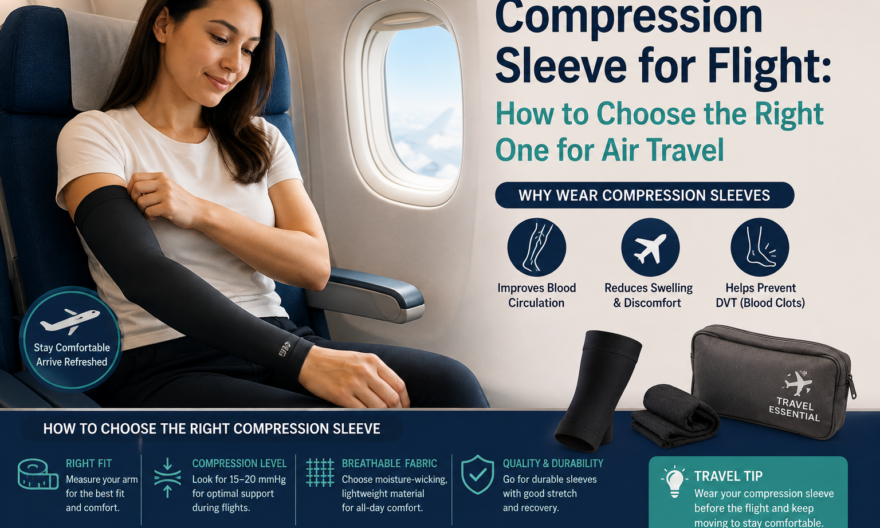
Three factors are crucial when selecting a compression sleeve for flight: precise sizing, appropriate fit, and the appropriate compression level for your condition. A sleeve with 20–30 mmHg compression is typically the first step for the majority of air travelers treating lymphedema or swelling. Making these three adjustments will guarantee that your arm is safe and comfortable during the trip.
Flying can be harder on your body than it looks. Cabin pressure drops, circulation slows, and if you have lymphedema or are prone to arm swelling, a long flight without support can leave you dealing with discomfort for days. A well-fitted compression sleeve for flight is one of the most practical tools you can pack — but only if you choose the right one.
This guide walks you through exactly what to look for, from measuring your arm correctly to understanding what compression levels actually mean in practice.
Why Air Travel Increases Your Risk of Arm Swelling
In order to replicate an altitude of around 6,000 to 8,000 feet, commercial airplane cabins are pressurized. The body’s capacity to control fluid circulation is diminished at that pressure. This setting actively promotes fluid accumulation in the arm for patients with lymphedema, especially those who have had lymph nodes removed or injured.
Even for people without a lymphedema diagnosis, long-haul flights in cramped seats with limited arm movement can lead to noticeable puffiness. Compression sleeves work by applying consistent external pressure that supports the lymphatic and venous systems, keeping fluid moving rather than pooling.
How to Measure Your Arm for the Right Compression Sleeve Fit
This is where most first-time buyers go wrong. Compression sleeves are not one-size-fits-all, and wearing the wrong size — even slightly — can actually worsen swelling or cause tourniquet-like constriction at the wrist or elbow.
Here is what you need to measure before buying:
- Wrist circumference — measured just above the wrist bone
- Forearm circumference — at the widest point between wrist and elbow
- Upper arm circumference — at the fullest point between elbow and shoulder
- Arm length — from the wrist to the top of the sleeve’s intended coverage area
Take your measurements in the morning, before any swelling develops. Use a soft tape measure and keep your arm relaxed at your side. Write the numbers down — most reputable compression garment brands provide detailed size charts and you’ll want to cross-reference them carefully.
What Happens If the Fit Is Off?
A sleeve that is too tight at any single point creates a band effect, which actually blocks lymph flow instead of supporting it. A sleeve that is too loose simply doesn’t provide enough pressure to be effective. Neither outcome is what you want at 35,000 feet with six hours still to go.
If you fall between sizes, always consult your lymphedema therapist or the brand’s sizing guide before purchasing. A custom-fitted sleeve may be worth the investment for frequent flyers.
Understanding Compression Levels: What the Numbers Mean
Compression is measured in millimeters of mercury (mmHg). The higher the number, the more pressure the sleeve applies. Here is a practical breakdown:
| Compression Level | mmHg Range | Best For
|
|---|---|---|
| Mild | 15–20 mmHg | Minor swelling, prevention, short flights |
| Moderate | 20–30 mmHg | Mild to moderate lymphedema, standard air travel |
| Firm | 30–40 mmHg | Moderate to severe lymphedema, prescribed use |
| Extra Firm | 40–50 mmHg | Severe cases, medical supervision required |
For most people flying with lymphedema, 20–30 mmHg is the clinically recommended range for travel. However, your lymphedema therapist or physician should confirm the appropriate compression level for your specific condition. Do not self-prescribe a higher compression level without professional guidance.
Choosing Between a Standard Sleeve and a Gauntlet Combination
A compression sleeve typically covers from the wrist to just below or above the elbow. But the hand and fingers can also swell during a flight, particularly if you have lymphedema that affects the hand.
In those cases, a gauntlet — a fingerless compression glove — worn alongside the sleeve provides continuous coverage from fingertips to upper arm. Some people only need a sleeve; others need the full sleeve-and-gauntlet combination. Again, this is a decision best made in consultation with your lymphedema specialist.
What to Look for in a Travel-Ready Compression Sleeve
Not all compression sleeves are built the same way. When shopping for one specifically for air travel, look for these features:
- Moisture-wicking fabric — Cabin air is dry. A breathable, moisture-managing fabric prevents skin irritation during a long flight.
- Seamless or flat-seam construction — Seams that dig in become uncomfortable quickly when you’re seated for hours.
- Graduated compression — Pressure should be highest at the wrist and gradually decrease toward the upper arm. This design actively moves fluid upward.
- Silicone top band — A soft silicone grip at the top keeps the sleeve in place without rolling or bunching.
- Medical-grade certification — Look for sleeves that meet recognized compression garment standards for consistent, accurate pressure delivery.
When Should You Put On Your Sleeve Before a Flight?
Before heading to the airport, put on your compression sleeve. Don’t do this in the departure lounge or on the aircraft. Applying it first thing in the morning, when your arm is least swollen, is ideal. This guarantees that the sleeve fits properly and begins to function before any modifications brought on by pressure occur.
Keep the sleeve on for the entire duration of the flight, including during any layovers. Remove it after you have settled into your destination and your arm has had time to adjust to the new environment.
Tips for First-Time Buyers
- Always get professionally measured if possible — most lymphedema clinics offer this at no extra cost
- Buy at least two sleeves so you always have a clean one ready for travel days
- Wash your sleeve after every use — compression garments lose elasticity faster when worn dirty
- Replace your sleeve every four to six months with regular wear, or when it no longer feels snug
- Travel with your sleeve in your carry-on bag, never in checked luggage
At LifeForce Hub, the focus is on giving new buyers the right information upfront — because getting your compression sleeve right the first time saves you both discomfort and money in the long run. Explore their resources and product guides at LifeForce Hub to make a confident, informed choice before your next trip.
Frequently Asked Questions
Do I need a prescription to buy a compression sleeve for a flight?
In most cases, you do not need a prescription for compression sleeves in the 15–30 mmHg range. However, sleeves at 30 mmHg and above are often recommended under medical supervision, especially for lymphedema. Always consult your doctor or lymphedema therapist before purchasing a higher-compression garment.
Can I wear my compression sleeve for the entire flight?
Yes, you should wear your compression sleeve for the full duration of the flight, including layovers. Put it on before leaving for the airport and remove it only once you have arrived and settled. Removing it mid-flight can allow swelling to develop quickly in the changed cabin environment.
How do I know if my compression sleeve fits correctly?
A correctly fitted sleeve should feel snug but never painful or restrictive. It should not roll down, bunch at the elbow, or leave deep indentations on your skin. If any of these occur, your sleeve is either too small, too large, or unevenly sized — and you should reassess your measurements.
What compression level is recommended for flying with lymphedema?
The standard recommendation for air travel with lymphedema is 20–30 mmHg, which provides moderate compression suitable for most mild to moderate cases. Your lymphedema therapist may recommend a different level based on your specific condition, so always confirm before purchasing a new sleeve for travel use.
Should I wear a gauntlet with my compression sleeve on a flight?
If your lymphedema affects your hand or fingers, yes — wearing a gauntlet alongside your sleeve prevents fluid from shifting into the hand during the flight. If your hand is not typically affected, a sleeve alone may be sufficient. Your therapist can advise based on your swelling pattern and history.
How often should I replace my compression sleeve?
Replace your compression sleeve every four to six months with regular use, or sooner if it feels loose, stretched out, or no longer maintains consistent pressure. Washing it correctly after each use extends its lifespan, but all compression garments lose elasticity over time and must be replaced to remain effective.